
Iran War Blockade Causes Fertilizer Crisis for U.S. Farmers
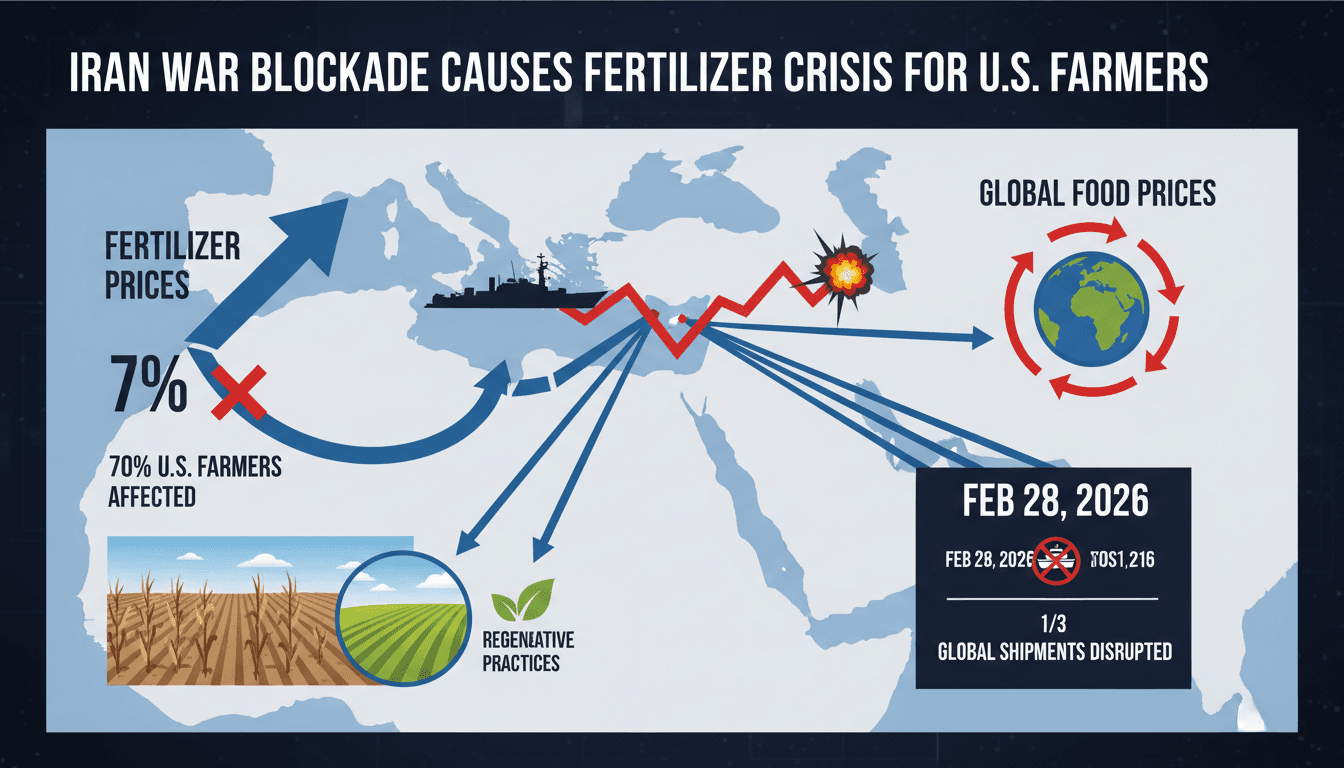
Here's what it means for you.
If you're involved in agriculture or food supply chains, the ongoing fertilizer crisis could significantly impact your costs and operations.
Why it matters
The blockade of the Strait of Hormuz has disrupted a critical supply chain, affecting global food prices and agricultural productivity.
What happened (in 30 seconds)
- February 28, 2026: U.S. and Israeli forces launch airstrikes on Iran, prompting Iran to blockade the Strait of Hormuz.
- March 2026: Fertilizer prices surge by 20-50%, with U.S. farmers reporting cost increases of up to 40%.
- April 2026: A Farm Bureau survey reveals that 70% of U.S. farmers cannot afford necessary fertilizer for the growing season.
The context you actually need
- The Strait of Hormuz is vital: It is a chokepoint for one-third of global fertilizer shipments, primarily from Gulf producers.
- U.S. agriculture is under pressure: Farmers are already facing challenges from tariffs and droughts, making the current crisis particularly acute.
- Financial strain is widespread: Nearly 60% of farmers report worsened financial conditions due to rising costs of nitrogen, phosphorus, and potassium.
What's really happening
The 2026 Iran War has escalated from a backdrop of longstanding tensions between the U.S. and Iran, culminating in a series of military actions that have disrupted global supply chains. The blockade of the Strait of Hormuz, a critical maritime route for fertilizer shipments, has led to a significant surge in prices, with costs rising as much as 49% since the conflict began. This spike is particularly damaging for U.S. farmers, 70% of whom are unable to afford the necessary fertilizer for the 2026 growing season.
The blockade has compounded existing pressures on U.S. agriculture, which has already been grappling with tariffs and adverse weather conditions. The American Farm Bureau's survey of 5,700 farmers highlights the financial strain, with nearly 60% reporting worsened finances due to elevated fertilizer costs. The USDA has projected a reduction in corn acreage as farmers shift to more affordable crops like soybeans, further impacting the agricultural landscape.
As the conflict continues, the implications extend beyond immediate price increases. Farmers are being forced to adapt their practices, reducing fertilizer use by 30-50% and shifting millions of acres from corn to soybeans. This shift not only affects crop yields but also alters the dynamics of supply and demand in the agricultural market, leading to a decline in crop prices—corn prices have dropped by 40% to $4.15 per bushel, while soybeans have decreased by 37% to $10.30 per bushel.
The ceasefire initiated around April 9, 2026, has allowed for limited shipping resumption, but uncertainty remains. Market volatility continues as farmers and suppliers navigate the ongoing disruptions. The Trump administration has issued warnings about potential price gouging, while the Farm Bureau advocates for stabilization measures to mitigate the crisis.
Who feels it first (and how)
- U.S. Farmers: 70% unable to afford necessary fertilizer, leading to reduced crop yields.
- Agricultural Suppliers: Facing decreased demand and potential financial instability.
- Consumers: Rising food prices as a result of reduced agricultural output.
- Global Markets: Increased volatility in food prices and supply chains affecting international trade.
What to watch next
- Fertilizer Price Trends: Monitor ongoing price fluctuations as the situation evolves, which will directly impact farming costs.
- Crop Acreage Changes: Keep an eye on shifts in crop planting decisions, particularly the transition from corn to soybeans, which could reshape market dynamics.
- Geopolitical Developments: Watch for any changes in the ceasefire status or further military actions that could exacerbate supply chain disruptions.
Fertilizer prices have surged significantly due to the blockade.
U.S. farmers will continue to adapt by reducing fertilizer use and shifting crop types.
The long-term impacts on global food prices and agricultural practices remain uncertain.
Frequently Asked Questions
- Why it matters?
- The blockade of the Strait of Hormuz has disrupted a critical supply chain, affecting global food prices and agricultural productivity.
- What happened (in 30 seconds)?
- February 28, 2026: U.S. and Israeli forces launch airstrikes on Iran, prompting Iran to blockade the Strait of Hormuz. March 2026: Fertilizer prices surge by 20-50%, with U.S. farmers reporting cost increases of up to 40%. April 2026: A Farm Bureau survey reveals that 70% of U.S. farmers cannot afford necessary fertilizer for the growing season.
- What's really happening?
- The 2026 Iran War has escalated from a backdrop of longstanding tensions between the U.S. and Iran, culminating in a series of military actions that have disrupted global supply chains. The blockade of the Strait of Hormuz, a critical maritime route for fertilizer shipments, has led to a significant surge in prices, with costs rising as much as 49% since the conflict began. This spike is particularly damaging for U.S. farmers, 70% of whom are unable to afford the necessary fertilizer for the 202
- Who feels it first (and how)?
- U.S. Farmers: 70% unable to afford necessary fertilizer, leading to reduced crop yields. Agricultural Suppliers: Facing decreased demand and potential financial instability. Consumers: Rising food prices as a result of reduced agricultural output. Global Markets: Increased volatility in food prices and supply chains affecting international trade.
- What to watch next?
- Fertilizer Price Trends: Monitor ongoing price fluctuations as the situation evolves, which will directly impact farming costs. Crop Acreage Changes: Keep an eye on shifts in crop planting decisions, particularly the transition from corn to soybeans, which could reshape market dynamics. Geopolitical Developments: Watch for any changes in the ceasefire status or further military actions that could exacerbate supply chain disruptions.
Corporate leadership, finance, technology, and market trends.
"Fortune covers financial trends, leadership, and innovation with a pragmatic editorial approach."
— A47 Editor
The Iran war’s fertilizer shock is hammering American farmers and 70% can’t afford what they need for this year’s growing season
The ongoing conflict in Iran has led to a significant increase in the prices of key fertilizers, with American farmers facing double-digit price hikes since the war began. Approximately 70% of these farmers report being unable to afford the necessary...
Regional coverage and analysis focused on politics, diplomacy, and business across the Middle East.
"Al-Monitor is known for analytical reporting on Middle East politics and policy developments."
— A47 Editor
Fertiliser shortages due to Iran war are a key worry for developing world, UN agency says
The ongoing conflict in Iran has led to significant fertiliser shortages, raising concerns for developing countries, as highlighted by the United Nations trade agency. The head of the agency indicated that the rising oil and gas prices benefiting som...
International stories from NPR’s global desk.
"NPR is an American public media organization known for thoughtful reporting and a slightly left-leaning editorial tone."
— A47 Editor
'Hanging by a thread': Fertilizer shortage in India deepens due to ongoing Iran war
The ongoing conflict in Iran has severely disrupted fertilizer shipments through the Strait of Hormuz, leading to deepening shortages across India. As the war escalates, the agricultural sector faces significant challenges due to limited access to es...