
UK Government Prepares for Food Shortages Amid Iran War-Induced CO2 Supply Disruptions
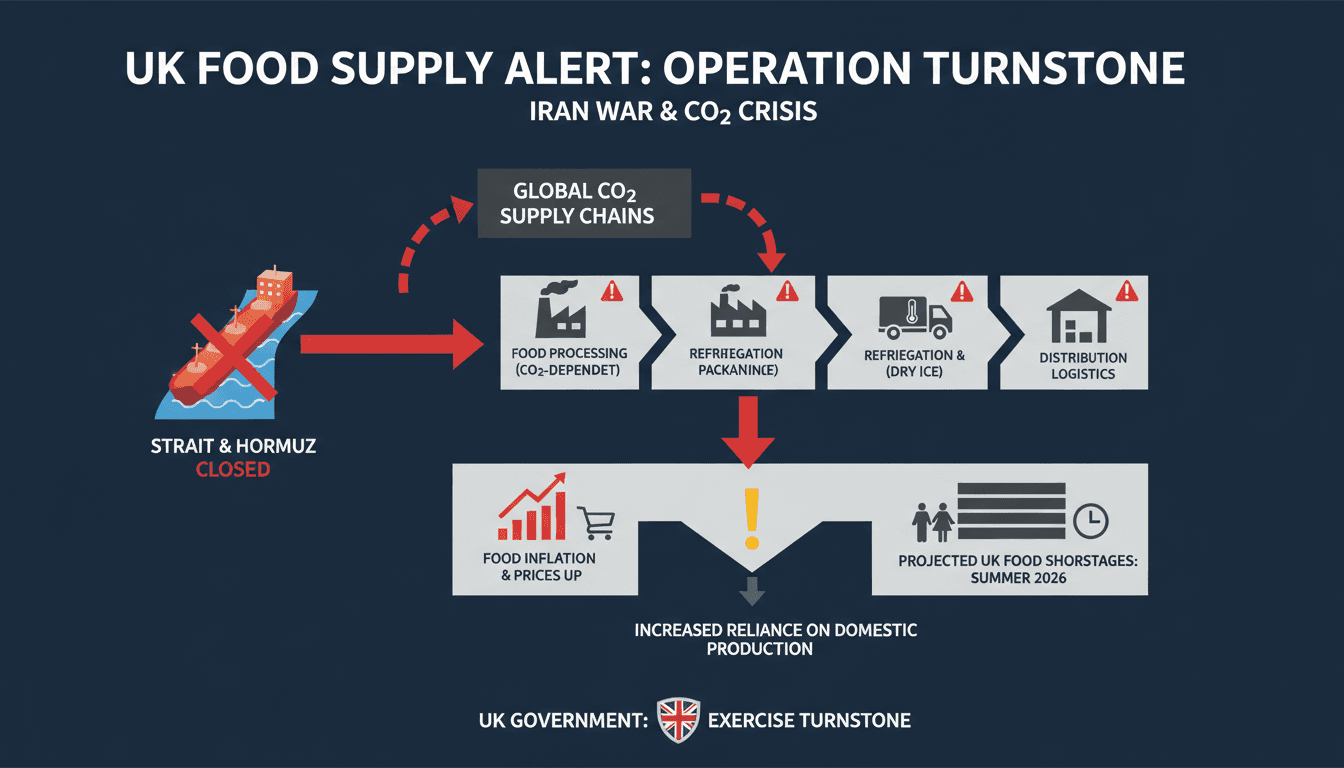
Here's what it means for you.
If you rely on UK supermarkets for fresh food, be prepared for potential shortages and price increases.
Why it matters
The ongoing Iran war threatens critical supply chains, potentially leading to food shortages and inflation in the UK.
What happened (in 30 seconds)
- April 15–17, 2026: UK officials conducted Exercise Turnstone, simulating severe food shortages due to CO2 supply disruptions.
- April 17, 2026: Reports emerged of potential chicken and pork shortages as CO2 supplies could drop to 18% of current levels by June.
- Current Status: The UK government is taking precautionary measures, including restarting CO2 production at the Ensus plant, but no active shortages are reported yet.
The context you actually need
- Iran War Impact: The conflict began on February 28, 2026, with US-Israeli strikes leading to the closure of the Strait of Hormuz, disrupting vital CO2 supplies.
- CO2 Supply Chain Vulnerabilities: The UK imports CO2 for food processing, primarily derived from natural gas, which is now in short supply due to the war.
- Historical Precedents: Previous CO2 shortages in 2021-2022 led to significant impacts on poultry and pork processing, highlighting the fragility of the UK's food supply chain.
What's really happening
The 2026 Iran war has escalated tensions in the Persian Gulf, particularly affecting the Strait of Hormuz, a crucial chokepoint for global energy and chemical shipments. The closure of this strait has led to significant disruptions in natural gas supplies, which are essential for producing fertilizers in Europe. A byproduct of this process is carbon dioxide (CO2), which the UK relies on for food processing, particularly in the slaughtering of animals and preservation of perishables.
As the UK government prepares for potential food shortages, officials have initiated Exercise Turnstone to simulate worst-case scenarios. This exercise revealed that CO2 supplies could plummet to just 18% of current levels by June 2026 if the conflict continues unabated. The implications of this are profound, as the UK currently imports around 35% of its food, with self-sufficiency hovering between 60-65%. This reliance on imports makes the UK particularly vulnerable to external shocks, especially in the context of rising fertilizer and fuel costs.
In response to these threats, the UK government has restarted the Ensus bioethanol plant to ramp up CO2 production for at least three months. Additionally, they are considering measures such as freezing fuel duties and relaxing competition laws to stabilize the market. However, the National Farmers' Union has already warned of imminent price increases for key staples like cucumbers, tomatoes, and milk, with food inflation projected to reach 9% by December 2026.
The situation is further complicated by the geopolitical landscape, as the UK is identified by the IMF as the most impacted G7 economy due to these disruptions. The government is actively engaging in diplomatic efforts to de-escalate the situation, with Prime Minister Starmer hosting a summit aimed at addressing the crisis.
Who feels it first (and how)
- Consumers: Households relying on supermarkets for fresh produce and meat will face higher prices and potential shortages.
- Farmers: Those in the agricultural sector may see increased costs for feed and production, impacting profitability.
- Food Retailers: Supermarkets and food distributors will need to navigate supply chain disruptions, potentially leading to stock shortages.
- Low-Income Families: Vulnerable populations may struggle more with rising food prices, exacerbating food insecurity.
What to watch next
- CO2 Production Levels: Monitor the output from the Ensus plant and other sources to gauge the UK's ability to meet food processing needs.
- Diplomatic Developments: Watch for any shifts in the Iran war, particularly regarding ceasefire negotiations and their impact on supply chains.
- Food Price Trends: Keep an eye on inflation rates and price changes in supermarkets, especially for meat and fresh produce.
The UK government is preparing for potential food shortages due to CO2 supply disruptions.
Food prices will rise as supply chain vulnerabilities become more pronounced.
The duration and extent of the Iran war's impact on global supply chains remain uncertain.
Frequently Asked Questions
- Why it matters?
- The ongoing Iran war threatens critical supply chains, potentially leading to food shortages and inflation in the UK.
- What happened (in 30 seconds)?
- April 15–17, 2026: UK officials conducted Exercise Turnstone, simulating severe food shortages due to CO2 supply disruptions. April 17, 2026: Reports emerged of potential chicken and pork shortages as CO2 supplies could drop to 18% of current levels by June. Current Status: The UK government is taking precautionary measures, including restarting CO2 production at the Ensus plant, but no active shortages are reported yet.
- What's really happening?
- The 2026 Iran war has escalated tensions in the Persian Gulf, particularly affecting the Strait of Hormuz, a crucial chokepoint for global energy and chemical shipments. The closure of this strait has led to significant disruptions in natural gas supplies, which are essential for producing fertilizers in Europe. A byproduct of this process is carbon dioxide (CO2), which the UK relies on for food processing, particularly in the slaughtering of animals and preservation of perishables. As the UK g
- Who feels it first (and how)?
- Consumers: Households relying on supermarkets for fresh produce and meat will face higher prices and potential shortages. Farmers: Those in the agricultural sector may see increased costs for feed and production, impacting profitability. Food Retailers: Supermarkets and food distributors will need to navigate supply chain disruptions, potentially leading to stock shortages. Low-Income Families: Vulnerable populations may struggle more with rising food prices, exacerbating food insecurity.
- What to watch next?
- CO2 Production Levels: Monitor the output from the Ensus plant and other sources to gauge the UK's ability to meet food processing needs. Diplomatic Developments: Watch for any shifts in the Iran war, particularly regarding ceasefire negotiations and their impact on supply chains. Food Price Trends: Keep an eye on inflation rates and price changes in supermarkets, especially for meat and fresh produce.
Corporate news, economic trends, and markets with UK and global scope.
"BBC News is widely regarded as reputable and impartial, with a public service mandate."
— A47 Editor
Why the UK is preparing for food shortages due to Iran war
The UK is bracing for potential food shortages as the ongoing conflict in Iran disrupts supply chains, particularly affecting essential goods like fizzy drinks, salad, and meat. Government officials are preparing for a worst-case scenario by summer, ...
United Kingdom-focused news including local politics, business, and social issues.
"BBC News is widely regarded as a reputable international news organization, known for its impartial tone and public service mandate."
— A47 Editor
Why the UK is preparing for food shortages due to Iran war
The UK government is bracing for potential food shortages this summer as the ongoing conflict in Iran disrupts supply chains, particularly affecting essential goods like fizzy drinks, salad, and meat. Officials have indicated that these shortages cou...
UAE-based English-language newspaper covering regional politics, economics, and global affairs.
"The National reflects Emirati policy perspectives while maintaining international editorial standards."
— A47 Editor
UK planning for food shortages as Iran war causes fall in carbon dioxide supplies
The UK is preparing for potential food shortages as the ongoing war in Iran has led to a significant decrease in carbon dioxide supplies, which are essential for food production. This situation arises amidst rising global inflation and energy prices,...
UK and international business news, economics, and corporate coverage.
"The Guardian’s business section covers finance and markets with a progressive editorial tone."
— A47 Editor
UK could face gaps on supermarket shelves by summer if Iran war continues
The UK is preparing for potential shortages in supermarkets this summer due to ongoing disruptions caused by the Iran war, particularly affecting the supply of carbon dioxide essential for food production. Ministers are developing contingency plans f...
International coverage from The Guardian's global desks.
"The Guardian is known for its progressive editorial stance and in-depth analysis."
— A47 Editor
UK could face gaps on supermarket shelves by summer if Iran war continues
The UK is preparing for potential shortages in supermarkets this summer due to ongoing disruptions caused by the Iran war, particularly affecting the supply of carbon dioxide essential for food production. Ministers are developing contingency plans f...