
United States Nears Net Crude Oil Exporter Status Amid Iran War Supply Disruptions
Here's what it means for you.
As the U.S. approaches net crude oil exporter status, expect fluctuations in global oil prices that could impact your energy costs.
Why it matters
This shift in U.S. oil exports signals a significant realignment in global energy markets, affecting supply chains and pricing structures worldwide.
What happened (in 30 seconds)
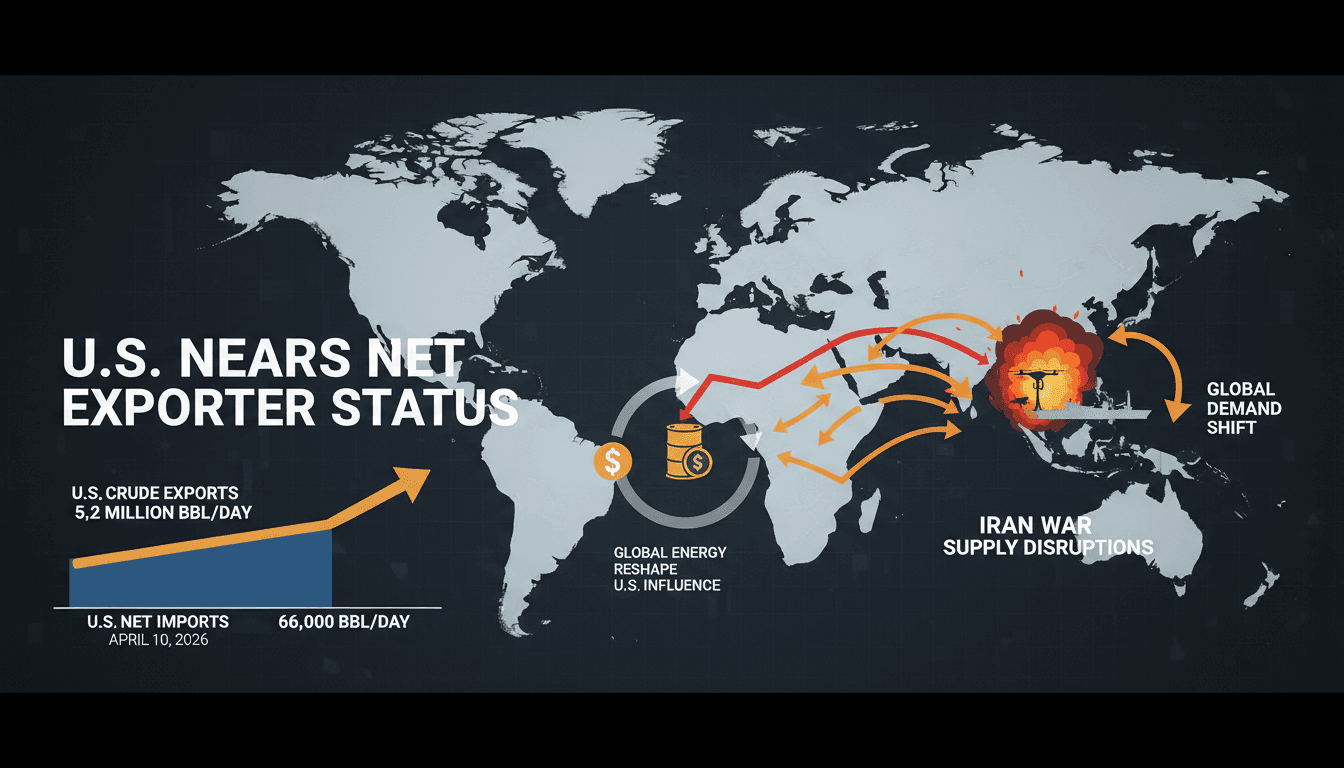
- U.S. net crude oil imports fell to a record-low 66,000 barrels per day, marking a historic shift toward net exporter status.
- Crude oil exports surged to 5.2 million barrels per day, driven by demand from Asia and Europe amid Middle Eastern supply disruptions.
- The ongoing U.S.-Israel-Iran war has led to the closure of the Strait of Hormuz, impacting 20% of global oil transit.
The context you actually need
- The 2026 Iran War began on February 28, 2026, with U.S. and Israeli airstrikes targeting Iranian military assets, prompting Iran to retaliate and close the Strait of Hormuz.
- The closure of the Strait of Hormuz has stranded significant oil exports, leading global refiners to seek alternative supplies from the U.S.
- U.S. crude exports are nearing a capacity limit of 6 million barrels per day, constrained by pipeline and tanker availability, while the Brent-WTI price differential has widened significantly.
What's really happening
The geopolitical landscape surrounding oil supply has shifted dramatically due to the ongoing U.S.-Israel-Iran conflict, which has disrupted traditional supply routes and created a surge in demand for U.S. crude oil. The closure of the Strait of Hormuz, a critical chokepoint for global oil transit, has stranded approximately 20% of the world's oil supply, leading to a scramble among refiners in Europe and Asia to secure alternative sources.
As a result, U.S. crude oil exports have surged to 5.2 million barrels per day, with refiners in Europe and Asia accounting for 84% of these exports. This shift has been further fueled by the widening price differential between Brent and West Texas Intermediate (WTI) crude, which has reached $20.69 per barrel. The U.S. is now positioned to capitalize on this demand, with analysts noting that the country is nearing its export capacity limit due to logistical constraints.
The U.S. Energy Information Administration (EIA) reported that net crude oil imports have dropped to a record-low 66,000 barrels per day, a stark contrast to previous years when the U.S. was a net importer. This transition is not merely a statistical anomaly; it reflects a broader trend in energy independence and the U.S.'s growing role as a key player in global energy markets.
The implications of this shift are profound. As U.S. exports increase, global oil prices are likely to remain volatile, influenced by ongoing geopolitical tensions and supply chain disruptions. The U.S. government has also considered releasing oil from the Strategic Petroleum Reserve to facilitate exports, which could further impact domestic prices and availability.
Moreover, the economic fallout from the Iran War is being felt globally, with countries like China urging the U.S. to engage in diplomatic talks to ensure energy security. The International Monetary Fund (IMF) has warned of uneven economic impacts across the Middle East, highlighting the interconnectedness of global energy markets.
In summary, the U.S. is on the brink of becoming a net crude oil exporter, a status not seen since World War II. This transition is driven by geopolitical disruptions and a strategic pivot toward energy independence, reshaping the landscape of global oil supply and demand.
Who feels it first (and how)
- Refiners in Europe and Asia: Increased reliance on U.S. crude oil to replace disrupted Middle Eastern supplies.
- Consumers in the U.S.: Potential fluctuations in gasoline prices as domestic supply dynamics shift.
- Dubai residents: Experiencing fuel price surges and economic pressures due to disrupted supply chains and tourism impacts.
- Global shipping companies: Adjusting routes and logistics in response to the closure of the Strait of Hormuz and U.S. naval blockades.
What to watch next
- U.S. export capacity: Monitor developments regarding pipeline and tanker availability, as reaching the 6 million bpd ceiling could limit further export growth.
- Global oil prices: Watch for fluctuations in Brent and WTI prices, which will reflect ongoing geopolitical tensions and supply chain adjustments.
- Diplomatic efforts: Keep an eye on U.S.-Iran negotiations, as any progress could significantly alter the current energy landscape and supply dynamics.
U.S. net crude oil imports have reached a record low of 66,000 barrels per day.
Continued volatility in global oil prices as geopolitical tensions persist and supply chains adjust.
The long-term impact of the U.S. becoming a net crude oil exporter on global energy markets and consumer prices.
Frequently Asked Questions
- Why it matters?
- This shift in U.S. oil exports signals a significant realignment in global energy markets, affecting supply chains and pricing structures worldwide.
- What happened (in 30 seconds)?
- U.S. net crude oil imports fell to a record-low 66,000 barrels per day, marking a historic shift toward net exporter status. Crude oil exports surged to 5.2 million barrels per day, driven by demand from Asia and Europe amid Middle Eastern supply disruptions. The ongoing U.S.-Israel-Iran war has led to the closure of the Strait of Hormuz, impacting 20% of global oil transit.
- What's really happening?
- The geopolitical landscape surrounding oil supply has shifted dramatically due to the ongoing U.S.-Israel-Iran conflict, which has disrupted traditional supply routes and created a surge in demand for U.S. crude oil. The closure of the Strait of Hormuz, a critical chokepoint for global oil transit, has stranded approximately 20% of the world's oil supply, leading to a scramble among refiners in Europe and Asia to secure alternative sources. As a result, U.S. crude oil exports have surged to 5.
- Who feels it first (and how)?
- Refiners in Europe and Asia: Increased reliance on U.S. crude oil to replace disrupted Middle Eastern supplies. Consumers in the U.S.: Potential fluctuations in gasoline prices as domestic supply dynamics shift. Dubai residents: Experiencing fuel price surges and economic pressures due to disrupted supply chains and tourism impacts. Global shipping companies: Adjusting routes and logistics in response to the closure of the Strait of Hormuz and U.S. naval blockades.
- What to watch next?
- U.S. export capacity: Monitor developments regarding pipeline and tanker availability, as reaching the 6 million bpd ceiling could limit further export growth. Global oil prices: Watch for fluctuations in Brent and WTI prices, which will reflect ongoing geopolitical tensions and supply chain adjustments. Diplomatic efforts: Keep an eye on U.S.-Iran negotiations, as any progress could significantly alter the current energy landscape and supply dynamics.
Oil, metals, and agriculture: supply/demand headlines, OPEC chatter, inventories, and price action.
"Solid tape for energy and metals traders tracking macro and micro catalysts."
— A47 Editor
Iran war brings US close to net crude exporter for first time since World War Two
The ongoing conflict in Iran has positioned the United States on the brink of becoming a net crude oil exporter for the first time since World War Two, as geopolitical tensions disrupt traditional oil supplies from the region. This shift is largely a...
Arabic-language UAE newspaper coverage focused on domestic affairs, public institutions, business, society, and regional developments.
"Al Khaleej coverage generally reflects a mainstream UAE editorial lens with strong attention to public affairs, institutions, and regional developments."
— A47 Editor
أمريكا مُصدّر صاف للنفط الخام لأول مرة منذ الحرب العالمية
The United States has transitioned to a net exporter of crude oil for the first time since World War II, with shipments reaching near-record levels to meet demand from Asian and European buyers. This surge is driven by the need to compensate for disr...
Editor-curated FT homepage stories spanning markets, business, world, and opinion.
"The Financial Times is a globally respected business publication with a centrist/center-left tone and strong markets focus."
— A47 Editor
US crude exports hit record as Iran war disrupts Middle East supplies
US crude oil exports have reached a record high as the ongoing conflict in Iran disrupts supplies from the Middle East, raising concerns about potential increases in petrol prices domestically. This surge in exports comes amid geopolitical tensions t...