
Meta Platforms Accelerates AI Development Amid Legal Challenges Over Social Media Liability
Here's what it means for you.
If you use social media, the evolving legal landscape around platforms like Facebook and Instagram could impact your experience and the content you see.
Why it matters
The outcome of ongoing litigation against Meta may set precedents that reshape social media regulations globally.
What happened (in 30 seconds)
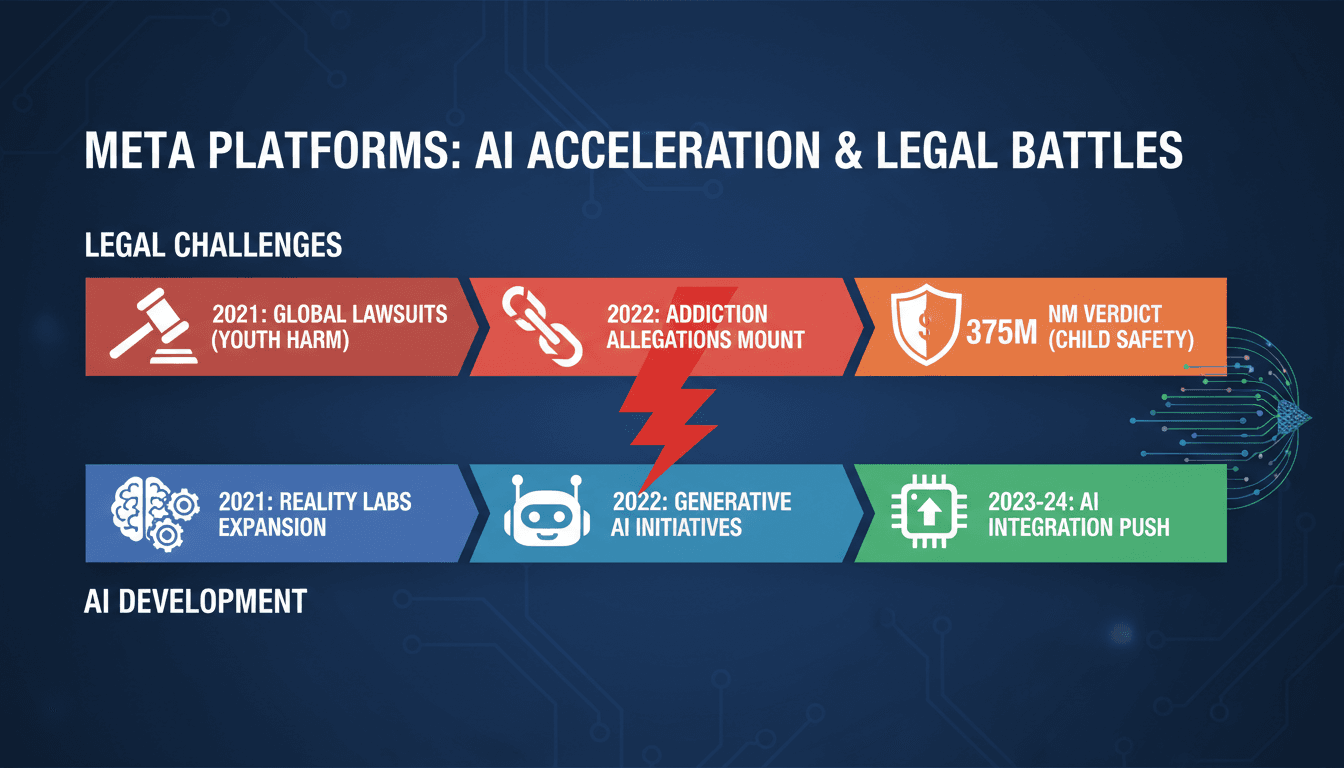
- Meta Platforms is facing thousands of lawsuits alleging that its platforms contribute to youth addiction and endanger children, resulting in over $378 million in penalties from recent verdicts.
- In response, Meta is accelerating AI development with the launch of its Muse Spark model, aiming to shift focus from legal liabilities to technological advancements.
- The company has begun removing ads that recruit plaintiffs for lawsuits from its platforms, indicating a strategic pivot in its legal defense.
The context you actually need
- Litigation against social media companies has escalated since 2023, with plaintiffs targeting platform design features that allegedly foster addiction and expose minors to harm.
- Recent jury verdicts in New Mexico and California have found Meta liable for misleading users about child safety, marking a significant shift in accountability for tech companies.
- Meta's internal research on mental health harms has been suppressed in court filings, raising questions about transparency and corporate responsibility.
What's really happening
Meta Platforms, the parent company of Facebook and Instagram, is navigating a turbulent legal environment marked by increasing scrutiny over its role in youth mental health issues. In March 2026, a New Mexico jury imposed civil penalties of $375 million on Meta for violating state consumer protection laws related to child safety. This verdict, along with a separate ruling in California that found Meta 70% liable in a bellwether case concerning addiction, underscores a growing trend where social media companies are held accountable for their design choices.
The legal challenges stem from a broader societal concern about the impact of social media on youth, particularly regarding addiction and mental health. Plaintiffs have successfully bypassed Section 230 immunity by focusing on how platform features contribute to harmful outcomes. This shift is significant; it indicates a potential redefinition of legal protections for tech companies, which have historically enjoyed broad immunity from liability for user-generated content.
In response to these mounting pressures, Meta is doubling down on artificial intelligence as a means to reshape its public narrative and mitigate legal risks. The recent launch of its Muse Spark AI model is part of a strategy to pivot attention from litigation to innovation. By investing in AI, Meta aims to enhance user experience and safety features, potentially reducing the likelihood of future lawsuits.
Moreover, the removal of ads recruiting plaintiffs from its platforms signals a strategic retreat from a contentious legal battleground. This move may limit the ability of law firms to mobilize users against Meta, but it also reflects the company's recognition of the need to control the narrative surrounding its legal challenges.
Despite these efforts, analysts caution that the litigation cloud continues to temper Meta's stock recovery. With over 5,700 cases pending against the company, the financial implications of these legal battles could be profound. The ongoing appeals and multidistrict litigation suggest that this issue is far from resolved, and the outcomes could have lasting effects on how social media operates.
As Meta navigates this complex landscape, the implications extend beyond the company itself. The evolving legal framework could influence regulations affecting social media platforms globally, raising questions about user safety, corporate accountability, and the ethical responsibilities of tech giants.
Who feels it first (and how)
- Parents and guardians: Increased awareness of social media risks may lead to heightened scrutiny of platform usage among children.
- Social media users: Changes in platform policies and features could alter user experience, particularly for younger demographics.
- Investors and analysts: Ongoing litigation could impact stock performance and investment strategies related to Meta and similar companies.
- Regulators and policymakers: The outcomes of these cases may prompt new regulations aimed at increasing accountability for tech companies.
What to watch next
- Legal outcomes: Monitor the results of ongoing appeals and new lawsuits, as they could set precedents for future social media liability.
- AI developments: Keep an eye on how Meta's AI initiatives evolve and whether they successfully mitigate legal risks or improve user safety.
- Regulatory changes: Watch for potential shifts in legislation that may arise in response to the growing concerns about social media's impact on youth.
Meta is facing significant legal challenges and financial penalties due to recent jury verdicts.
The company will continue to invest in AI as a strategy to counteract legal pressures and improve user safety.
The long-term effects of these legal battles on Meta's business model and user engagement remain uncertain.
Frequently Asked Questions
- Why it matters?
- The outcome of ongoing litigation against Meta may set precedents that reshape social media regulations globally.
- What happened (in 30 seconds)?
- Meta Platforms is facing thousands of lawsuits alleging that its platforms contribute to youth addiction and endanger children, resulting in over $378 million in penalties from recent verdicts. In response, Meta is accelerating AI development with the launch of its Muse Spark model, aiming to shift focus from legal liabilities to technological advancements. The company has begun removing ads that recruit plaintiffs for lawsuits from its platforms, indicating a strategic pivot in its legal de
- What's really happening?
- Meta Platforms, the parent company of Facebook and Instagram, is navigating a turbulent legal environment marked by increasing scrutiny over its role in youth mental health issues. In March 2026, a New Mexico jury imposed civil penalties of $375 million on Meta for violating state consumer protection laws related to child safety. This verdict, along with a separate ruling in California that found Meta 70% liable in a bellwether case concerning addiction, underscores a growing trend where social
- Who feels it first (and how)?
- Parents and guardians: Increased awareness of social media risks may lead to heightened scrutiny of platform usage among children. Social media users: Changes in platform policies and features could alter user experience, particularly for younger demographics. Investors and analysts: Ongoing litigation could impact stock performance and investment strategies related to Meta and similar companies. Regulators and policymakers: The outcomes of these cases may prompt new regulations aimed at i
- What to watch next?
- Legal outcomes: Monitor the results of ongoing appeals and new lawsuits, as they could set precedents for future social media liability. AI developments: Keep an eye on how Meta's AI initiatives evolve and whether they successfully mitigate legal risks or improve user safety. Regulatory changes: Watch for potential shifts in legislation that may arise in response to the growing concerns about social media's impact on youth.
Tech business coverage, major deals, product launches, and Silicon Valley trends.
"WSJ’s tech section offers authoritative reporting on the intersection of technology and business, including exclusive industry analysis."
— A47 Editor
Meta Banks on AI to Clear the Smoke of Social-Media Lawsuits
Meta is currently facing significant legal challenges as it battles multiple lawsuits related to its social media practices, including recent court rulings that found the company liable for negligence in protecting users, particularly children, from ...
Markets desk coverage, trading insights, and investor updates.
"WSJ’s markets reporting provides in-depth analysis and context for investors."
— A47 Editor
Meta Banks on AI to Clear the Smoke of Social-Media Lawsuits
Meta is currently facing significant legal challenges, including lawsuits related to social media addiction and allegations of negligence, which could hinder its long-term recovery in the stock market. The company is banking on advancements in artifi...