
Final Oil Tankers Depart Strait of Hormuz Before Iran War Commences
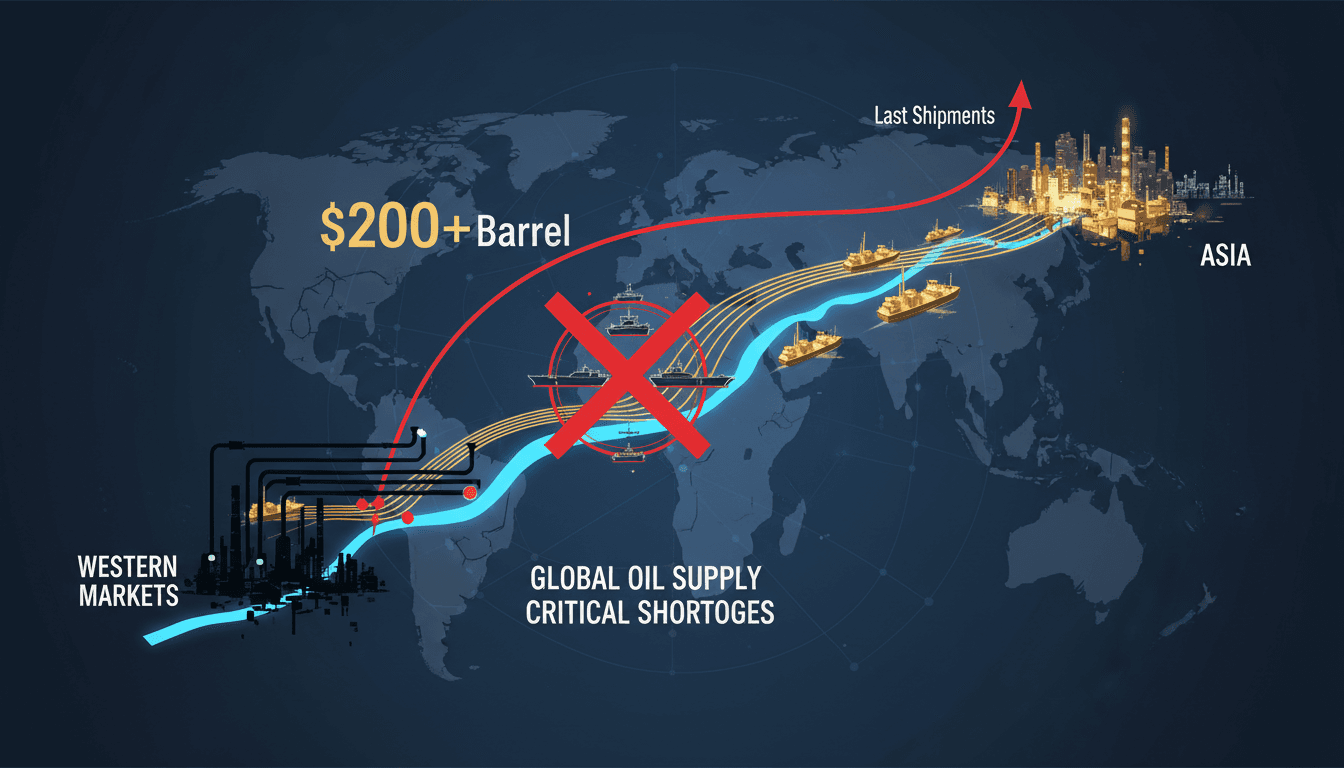
Here's what it means for you.
If you rely on oil or gas for your business or daily life, expect rising costs and potential shortages in the coming weeks.
Why it matters
The closure of the Strait of Hormuz, a critical oil transit route, threatens to escalate global energy prices and disrupt supply chains.
What happened (in 30 seconds)
- Final oil tankers reached Asian refineries between April 14 and April 20, 2026, just before the onset of the Iran war.
- U.S. naval embargo on Iranian ports began on April 14, effectively closing the Strait of Hormuz, which previously handled 20% of global oil flows.
- Spot crude prices surged, with Forties Blend nearing $149 per barrel, indicating immediate market strain and potential shortages in Western markets.
The context you actually need
- The Iran war began on February 28, 2026, following U.S. and Israeli airstrikes, leading to a halt in tanker transits through the Strait of Hormuz.
- Asian refiners are now aggressively sourcing alternative crude, having depleted strategic reserves and reduced operations due to supply constraints.
- Western refineries are expected to face significant reductions in output starting in May, as they struggle to secure adequate crude supplies.
What's really happening
The Strait of Hormuz is a vital chokepoint for global oil, with approximately 20% of the world's crude passing through it. The recent escalation of conflict in the region has led to a significant disruption in oil supply, particularly affecting Asian markets that rely heavily on Middle Eastern crude. As of mid-April 2026, the last oil tankers cleared the strait, delivering their cargoes to refineries in Malaysia and Australia. This marked the end of pre-war oil deliveries, as the U.S. imposed a naval blockade on Iranian ports, further tightening the supply chain.
Asian refiners, which typically source around 80% of their crude from the Middle East, have been forced to adapt quickly. With strategic reserves running low and operations reduced, they are now bidding aggressively for alternative supplies from the Atlantic Basin, including the U.S., Canada, and South America. This shift has led to a dramatic increase in spot crude prices, with Forties Blend reaching nearly $149 per barrel on April 14, compared to Brent futures at $100. The disparity in prices indicates a physical market strain, as immediate delivery costs exceed future contracts.
In the UAE, crude output has fallen by more than 50% due to the closure of the Strait of Hormuz, leading to record fuel price increases of 33% in April 2026. This surge in prices is impacting transportation, utility, and living costs for residents, creating a ripple effect throughout the economy. Governments in the region and beyond are responding to these challenges with various measures, including energy emergencies and strategic reserve releases.
As the situation unfolds, the implications for global energy markets are profound. The ongoing conflict and supply disruptions are likely to lead to physical shortages in Europe and the United States within weeks, as refiners scramble to secure alternative sources of crude. The interconnectedness of global oil markets means that these disruptions will not only affect prices but also have broader economic consequences, potentially pushing millions into poverty due to rising energy and food costs.
Who feels it first (and how)
- Asian refiners: Facing immediate supply shortages and increased competition for alternative crude.
- Western refineries: Anticipating significant reductions in output due to lack of available crude.
- Consumers: Experiencing rising fuel prices and potential shortages in everyday goods reliant on oil.
- Governments: Implementing emergency measures to mitigate the economic impact of rising energy costs.
What to watch next
- Crude price fluctuations: Monitor spot prices versus futures to gauge market strain and potential shortages.
- Government responses: Watch for new policies or emergency measures from affected countries, particularly in Asia and the West.
- Supply chain disruptions: Keep an eye on logistics and transportation sectors as rising fuel costs impact operations.
The Strait of Hormuz is effectively closed, and oil prices are surging.
Western markets will face physical shortages of oil and gas within weeks.
The duration of the conflict and its long-term impact on global energy markets.
Frequently Asked Questions
- Why it matters?
- The closure of the Strait of Hormuz, a critical oil transit route, threatens to escalate global energy prices and disrupt supply chains.
- What happened (in 30 seconds)?
- Final oil tankers reached Asian refineries between April 14 and April 20, 2026, just before the onset of the Iran war. U.S. naval embargo on Iranian ports began on April 14, effectively closing the Strait of Hormuz, which previously handled 20% of global oil flows. Spot crude prices surged, with Forties Blend nearing $149 per barrel, indicating immediate market strain and potential shortages in Western markets.
- What's really happening?
- The Strait of Hormuz is a vital chokepoint for global oil, with approximately 20% of the world's crude passing through it. The recent escalation of conflict in the region has led to a significant disruption in oil supply, particularly affecting Asian markets that rely heavily on Middle Eastern crude. As of mid-April 2026, the last oil tankers cleared the strait, delivering their cargoes to refineries in Malaysia and Australia. This marked the end of pre-war oil deliveries, as the U.S. imposed a
- Who feels it first (and how)?
- Asian refiners: Facing immediate supply shortages and increased competition for alternative crude. Western refineries: Anticipating significant reductions in output due to lack of available crude. Consumers: Experiencing rising fuel prices and potential shortages in everyday goods reliant on oil. Governments: Implementing emergency measures to mitigate the economic impact of rising energy costs.
- What to watch next?
- Crude price fluctuations: Monitor spot prices versus futures to gauge market strain and potential shortages. Government responses: Watch for new policies or emergency measures from affected countries, particularly in Asia and the West. Supply chain disruptions: Keep an eye on logistics and transportation sectors as rising fuel costs impact operations.
Editor-curated FT homepage stories spanning markets, business, world, and opinion.
"The Financial Times is a globally respected business publication with a centrist/center-left tone and strong markets focus."
— A47 Editor
Oil supply crunch intensifies as last Hormuz tankers reach refineries
The last oil tankers from the Strait of Hormuz are set to reach refineries, marking a critical moment as global demand for oil intensifies amid escalating geopolitical tensions. This situation follows the U.S. announcement of a blockade, which has le...
U.S. business news, corporate developments, and economy.
"The Wall Street Journal is respected for deep financial and economic reporting with a center-right editorial perspective."
— A47 Editor
OPEC Crude Output Drops as Iran War Chokes Exports
OPEC's crude oil production experienced a significant decline in March due to the near-closure of the Strait of Hormuz, compelling key member countries to reduce output and reroute exports. This disruption is primarily attributed to escalating tensio...
Global markets, investing, and macroeconomics from a premier financial newsroom.
"Bloomberg is respected for in-depth financial reporting and data-driven analysis."
— A47 Editor
Oil Rallies With Gas as US Blockade of Hormuz Escalates Crisis
Oil and natural gas prices surged following the U.S. announcement of a blockade on the Strait of Hormuz, escalating a global energy crisis after failed negotiations between Washington and Tehran. This blockade comes amid ongoing tensions in the Middl...