
China's Export Growth Declines to 2.5% Amid Iran War and Strait of Hormuz Disruptions
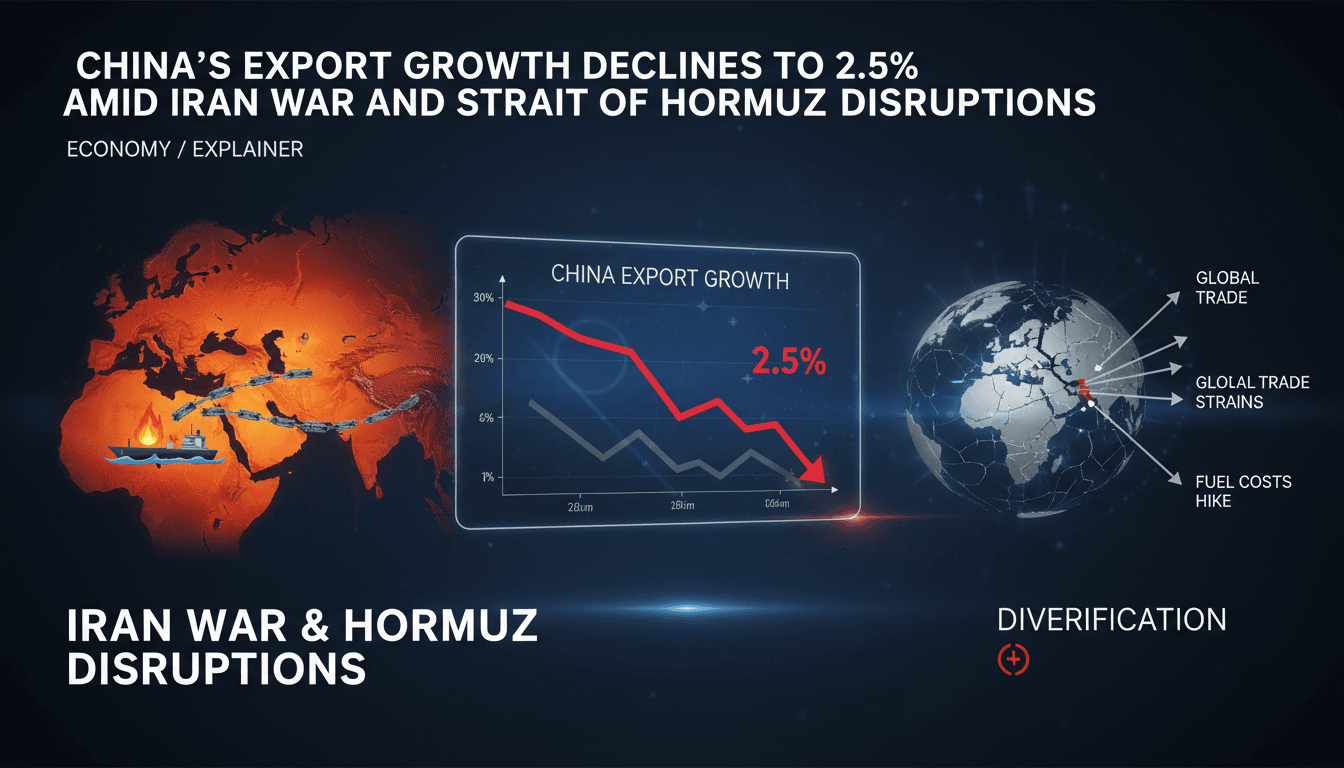
Here's what it means for you.
If you rely on global supply chains, the slowdown in Chinese exports could lead to increased costs and delays in your business operations.
Why it matters
This deceleration signals potential instability in global trade, affecting economies and industries reliant on Chinese goods.
What happened (in 30 seconds)
- China's export growth fell sharply to 2.5% year-on-year in March 2026, down from 21.8% in January-February.
- Geopolitical tensions in the Middle East, particularly the Iran war and disruptions in the Strait of Hormuz, are straining global trade routes.
- Imports surged by 27.8% as China stockpiled oil to mitigate the impact of the U.S. naval blockade on Iranian ports.
The context you actually need
- The Iran war, which began on February 28, 2026, has escalated tensions in a critical shipping lane, affecting oil and gas exports.
- China's economy is increasingly dependent on exports for growth, making it vulnerable to external shocks and rising fuel prices.
- The U.S. naval blockade on Iranian ports, initiated after failed peace talks, has further complicated trade dynamics in the region.
What's really happening
The slowdown in Chinese export growth to 2.5% in March 2026 is a direct consequence of escalating geopolitical tensions in the Middle East, particularly the ongoing war with Iran. This conflict has disrupted the Strait of Hormuz, a vital artery for global oil and gas exports, accounting for 20-30% of seaborne trade. The situation worsened when the U.S. imposed a naval blockade on Iranian ports following the collapse of peace talks in Pakistan, which has effectively curtailed oil shipments from Iran and increased shipping costs.
China's reliance on exports for economic growth has made it particularly vulnerable to these disruptions. The country has been striving to meet ambitious growth targets set by President Xi Jinping, but the combination of weak domestic demand and external pressures has created a precarious situation. The sharp decline in export growth from 21.8% in January-February to 2.5% in March highlights this vulnerability.
In response to the blockade and rising fuel prices, China has ramped up its imports, with a staggering 27.8% increase in March. This surge is largely driven by record oil purchases from Brazil, as China seeks to secure alternative energy sources to mitigate the impact of the blockade. The increased import activity reflects a strategic pivot to ensure energy security amid volatile market conditions.
The implications of these developments extend beyond China. Global supply chains are likely to experience disruptions, leading to increased costs and delays for businesses reliant on Chinese goods. Shipping firms are already warning of earnings slumps due to the disrupted networks, which could further exacerbate inflationary pressures in various markets.
As the situation evolves, analysts are closely monitoring the potential for resumed diplomatic negotiations, which could stabilize trade routes and alleviate some of the pressures on global markets. However, the immediate outlook remains uncertain, with the risk of further escalation in the region.
Who feels it first (and how)
- Manufacturers: Increased costs and delays in sourcing materials from China.
- Logistics companies: Disruptions in shipping routes leading to potential earnings slumps.
- Consumers: Possible price increases on goods due to supply chain constraints.
- Energy sector: Fluctuations in oil prices affecting operational costs and profitability.
What to watch next
- Diplomatic negotiations: The resumption of talks between the U.S. and China could signal a stabilization of trade routes, impacting global supply chains.
- Oil prices: Monitoring fluctuations in oil prices will be crucial, as they directly affect shipping costs and economic stability.
- China's import strategy: Observing how China diversifies its oil sources will provide insights into its long-term energy security and economic resilience.
China's export growth has slowed to 2.5% due to geopolitical tensions.
Continued volatility in oil prices and shipping disruptions as the situation evolves.
The timeline for diplomatic resolutions and their impact on global trade dynamics.
Frequently Asked Questions
- Why it matters?
- This deceleration signals potential instability in global trade, affecting economies and industries reliant on Chinese goods.
- What happened (in 30 seconds)?
- China's export growth fell sharply to 2.5% year-on-year in March 2026, down from 21.8% in January-February. Geopolitical tensions in the Middle East, particularly the Iran war and disruptions in the Strait of Hormuz, are straining global trade routes. Imports surged by 27.8% as China stockpiled oil to mitigate the impact of the U.S. naval blockade on Iranian ports.
- What's really happening?
- The slowdown in Chinese export growth to 2.5% in March 2026 is a direct consequence of escalating geopolitical tensions in the Middle East, particularly the ongoing war with Iran. This conflict has disrupted the Strait of Hormuz, a vital artery for global oil and gas exports, accounting for 20-30% of seaborne trade. The situation worsened when the U.S. imposed a naval blockade on Iranian ports following the collapse of peace talks in Pakistan, which has effectively curtailed oil shipments from I
- Who feels it first (and how)?
- Manufacturers: Increased costs and delays in sourcing materials from China. Logistics companies: Disruptions in shipping routes leading to potential earnings slumps. Consumers: Possible price increases on goods due to supply chain constraints. Energy sector: Fluctuations in oil prices affecting operational costs and profitability.
- What to watch next?
- Diplomatic negotiations: The resumption of talks between the U.S. and China could signal a stabilization of trade routes, impacting global supply chains. Oil prices: Monitoring fluctuations in oil prices will be crucial, as they directly affect shipping costs and economic stability. China's import strategy: Observing how China diversifies its oil sources will provide insights into its long-term energy security and economic resilience.
Pan-Arab news coverage spanning politics, business, sports, and regional affairs.
"Asharq Al-Awsat reflects a broad Arab editorial perspective with strong attention to regional geopolitics."
— A47 Editor
تباطؤ الصادرات الصينية تحت وطأة الاضطرابات في الشرق الأوسط
Recent trade data from China indicates a significant slowdown in export growth during March, attributed to ongoing disruptions in the Middle East. This decline reflects the challenges faced by Chinese exporters amid geopolitical tensions in the regio...
Arabic-language UAE newspaper coverage focused on domestic affairs, public institutions, business, society, and regional developments.
"Al Khaleej coverage generally reflects a mainstream UAE editorial lens with strong attention to public affairs, institutions, and regional developments."
— A47 Editor
تباطؤ نمو الصادرات الصينية في مارس.. وأفضل أداء للواردات منذ 4 سنوات
China's export growth slowed in March as manufacturers faced rising costs of raw materials and energy, influenced by the ongoing conflict in the Middle East affecting supply chains. Meanwhile, imports recorded their strongest growth in over four year...
Editor-curated FT homepage stories spanning markets, business, world, and opinion.
"The Financial Times is a globally respected business publication with a centrist/center-left tone and strong markets focus."
— A47 Editor
China’s exports slow as Middle East turmoil weighs on trade
China's exports have significantly slowed as of March 2026, primarily due to the ongoing turmoil in the Middle East, particularly the conflict in Iran, which has disrupted global supply chains and diminished trade confidence. This decline follows a p...