
Brent Crude Surges Above $100 Amid Iran War Supply Disruptions
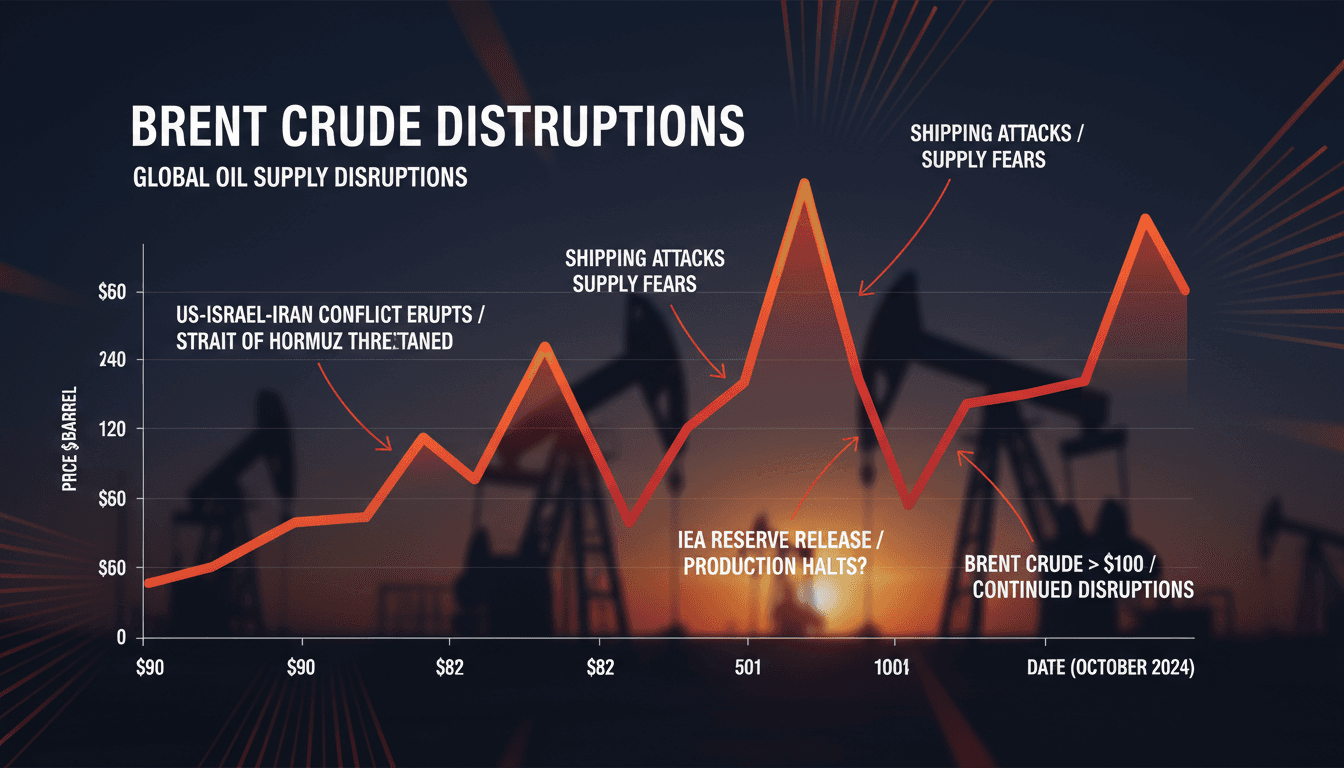
Here's what it means for you.
The ongoing conflict is driving oil prices up, impacting energy costs and economic stability worldwide.
Why it matters
The disruption in oil supply from the Persian Gulf has significant implications for global energy markets and economic growth.
What happened (in 30 seconds)
- Oil prices surged: Brent crude rose over a third from pre-conflict levels, hitting approximately $103.86 per barrel as of March 13, 2026.
- Market volatility: The trading day on March 13 marked the most volatile in history, with prices fluctuating dramatically due to fears of supply shortages.
- Emergency measures: The International Energy Agency (IEA) coordinated a record release of emergency reserves to stabilize the market.
The context you actually need
- Pre-conflict pricing: Prior to the conflict, Brent crude was trading around $71 per barrel, indicating a significant price increase due to geopolitical tensions.
- Strait of Hormuz: This critical waterway, responsible for a significant portion of global oil transport, has effectively been closed due to Iranian attacks, exacerbating supply fears.
- Short-term vs. long-term: While physical oil supplies remain intact in the short term, market reactions are driven by anticipated delivery shortages and uncertainty regarding the conflict's duration.
What's really happening
The current spike in oil prices is a direct result of geopolitical tensions stemming from the US-Israel-Iran conflict, which has severely disrupted energy flows in the Persian Gulf. The Strait of Hormuz, a vital shipping route for oil, has seen increased military activity and threats from Iran, leading to fears of a complete closure. This situation has created a perfect storm for oil markets, where speculative trading and panic buying have driven prices to two-year highs.
Investment firms and analysts are responding to this volatility by revising their forecasts upward, anticipating that prices could remain elevated for an extended period. The IEA's emergency reserve release, while significant, is seen as a temporary measure. Experts warn that refining bottlenecks may limit the effectiveness of these reserves, as the market grapples with both physical supply issues and the psychological impact of uncertainty.
The volatility was starkly illustrated on March 13, when Brent crude prices peaked at nearly $120 per barrel before falling nearly $30 by the end of the day. This kind of rapid fluctuation is indicative of a market in turmoil, where traders react to news and rumors rather than fundamental supply and demand dynamics. The fear of future shortages is compounded by the reality that many Gulf oil exporters, including Qatar, are facing production stoppages, further tightening the market.
As the conflict continues, the potential for further escalation remains high, which could lead to additional disruptions in oil supply. The global economy, already grappling with inflation and supply chain issues, is now facing another layer of complexity as energy costs rise. This situation is particularly concerning for countries heavily reliant on oil imports, as rising prices can lead to increased transportation and production costs, ultimately affecting consumers.
Who feels it first (and how)
- Energy consumers: Households and businesses reliant on oil for heating and transportation will see immediate impacts on their energy bills.
- Transport sector: Airlines and shipping companies will face higher fuel costs, potentially leading to increased prices for goods and services.
- Emerging markets: Countries dependent on oil imports may experience economic strain, affecting their currency stability and inflation rates.
What to watch next
- Supply chain disruptions: Monitor developments in the Strait of Hormuz for any further military actions that could impact oil transport.
- IEA responses: Watch for additional emergency reserve releases from the IEA and how effective they are in stabilizing prices.
- Market sentiment: Keep an eye on trader reactions to geopolitical news, as sentiment can drive prices even in the absence of physical supply changes.
Oil prices have risen significantly due to geopolitical tensions.
Continued volatility in oil prices as the conflict develops and market reactions unfold.
The duration of the conflict and its long-term impact on global oil supply and prices.
Frequently Asked Questions
- Why it matters?
- The disruption in oil supply from the Persian Gulf has significant implications for global energy markets and economic growth.
- What happened (in 30 seconds)?
- Oil prices surged: Brent crude rose over a third from pre-conflict levels, hitting approximately $103.86 per barrel as of March 13, 2026. Market volatility: The trading day on March 13 marked the most volatile in history, with prices fluctuating dramatically due to fears of supply shortages. Emergency measures: The International Energy Agency (IEA) coordinated a record release of emergency reserves to stabilize the market.
- What's really happening?
- The current spike in oil prices is a direct result of geopolitical tensions stemming from the US-Israel-Iran conflict, which has severely disrupted energy flows in the Persian Gulf. The Strait of Hormuz, a vital shipping route for oil, has seen increased military activity and threats from Iran, leading to fears of a complete closure. This situation has created a perfect storm for oil markets, where speculative trading and panic buying have driven prices to two-year highs. Investment firms and a
- Who feels it first (and how)?
- Energy consumers: Households and businesses reliant on oil for heating and transportation will see immediate impacts on their energy bills. Transport sector: Airlines and shipping companies will face higher fuel costs, potentially leading to increased prices for goods and services. Emerging markets: Countries dependent on oil imports may experience economic strain, affecting their currency stability and inflation rates.
- What to watch next?
- Supply chain disruptions: Monitor developments in the Strait of Hormuz for any further military actions that could impact oil transport. IEA responses: Watch for additional emergency reserve releases from the IEA and how effective they are in stabilizing prices. Market sentiment: Keep an eye on trader reactions to geopolitical news, as sentiment can drive prices even in the absence of physical supply changes.
Corporate news, economic trends, and markets with UK and global scope.
"BBC News is widely regarded as reputable and impartial, with a public service mandate."
— A47 Editor
Oil price back above $100 despite deal to release record amount of reserves
*# Oil prices have surged back above $100 per barrel despite a record release of strategic reserves, as Iranian attacks on ships intensified in the crucial Strait of Hormuz, causing major disruptions to global energy flows. *# The escalation in the S...
Global business, markets, and technology policy/industry coverage.
"France 24 provides balanced international coverage with a European perspective."
— A47 Editor
Oil prices top $100 as markets brace for prolonged Iran conflict
*# Brent crude oil prices have surged above $100 a barrel as markets brace for a prolonged conflict involving Iran, with disruptions in the Strait of Hormuz causing significant volatility and supply concerns. *# The escalation has led to higher energ...
24/7 international news from a French perspective in multiple languages.
"France 24 is viewed as a globally focused outlet with balanced coverage and a European perspective."
— A47 Editor
Oil prices top $100 as market braces for long conflict
*# Brent crude oil prices have surged above $100 per barrel as markets react to the ongoing conflict involving Iran, the US, and Israel, with disruptions in the Strait of Hormuz and attacks on tankers fueling supply fears. *# The escalation has led t...
Comprehensive coverage of Middle Eastern and global issues.
"Al Jazeera is a prominent voice from the Global South, especially the Middle East, with an emphasis on underreported stories."
— A47 Editor
How oil is at the center of the US-Israel war with Iran
*# The US-Israel conflict with Iran has placed oil at the center of escalating hostilities, driving global oil prices above $100 a barrel and causing widespread attacks on energy infrastructure across the Middle East. *# This development has led to s...
Global news coverage with extensive reporting on Middle Eastern conflicts and geopolitics.
"Al Jazeera is a Qatar-based broadcaster known for wide regional coverage and alternative perspectives."
— A47 Editor
How oil is at the center of the US-Israel war with Iran
The ongoing conflict involving the US, Israel, and Iran has intensified, particularly following joint military strikes on Iran that reportedly killed Supreme Leader Ayatollah Ali Khamenei and targeted critical infrastructure. This escalation has led ...
Corporate news, economic trends, and markets with UK and global scope.
"BBC News is widely regarded as reputable and impartial, with a public service mandate."
— A47 Editor
What on earth is going on with the oil price?
*# Oil prices have experienced sharp swings since the escalation of conflict involving Iran, with benchmarks like Brent and U.S. crude briefly surpassing $100 per barrel and triggering volatility in global markets. *# The instability in oil prices ha...
News from the United States including domestic politics, society, and culture.
"The Guardian is known for its progressive editorial stance and in-depth analysis, often advocating for social justice, environmental issues, and liberal values."
— A47 Editor
Oil price tops $100 again as Iran strikes economic targets across Middle East
*# Oil prices have surged above $100 a barrel as Iran launched widespread attacks on energy infrastructure across the Middle East, despite a major release of emergency crude reserves by governments to stabilize markets. *# The escalation has heighten...
Stock market news, investing ideas, and trading analysis.
"TheStreet provides market news and retail-investor-focused analysis."
— A47 Editor
Iran's shocking threat to boost oil to $200
*# Iran issued a stark warning that oil prices could surge to $200 per barrel, following extensive US and Israeli strikes on Iranian military assets and President Trump's assertion that the conflict is nearing its end. *# The threat underscores Iran'...
UK and global business, economy, and markets coverage.
"Sky News is often seen as a center-right outlet in the UK, known for rolling news and breaking business stories."
— A47 Editor
Oil rebounds above $100 as market counts cost of attacks on energy
*# Oil prices have rebounded above $100 a barrel after Iranian attacks on Middle East energy infrastructure, including reported strikes on fuel tankers near Iraq, raising concerns about long-term industry damage. *# The surge in oil prices is signifi...
UAE-based English-language newspaper covering regional politics, economics, and global affairs.
"The National reflects Emirati policy perspectives while maintaining international editorial standards."
— A47 Editor
Oil surges past $100 as Iranian strikes on energy infrastructure rattle markets
Oil prices have surged past $100 per barrel as Iranian military strikes on energy infrastructure have raised concerns about supply disruptions in the region. The attacks have intensified amid ongoing conflicts, leading to significant volatility in th...
International coverage from The Guardian's global desks.
"The Guardian is known for its progressive editorial stance and in-depth analysis."
— A47 Editor
US to release 172m barrels of oil from strategic petroleum reserve
*# The United States will release 172 million barrels of oil from its strategic petroleum reserve as part of a broader 400 million barrel release coordinated by the International Energy Agency, aiming to ease soaring oil prices caused by supply shock...