
IMF and World Bank Warn of Economic Risks from Iran War
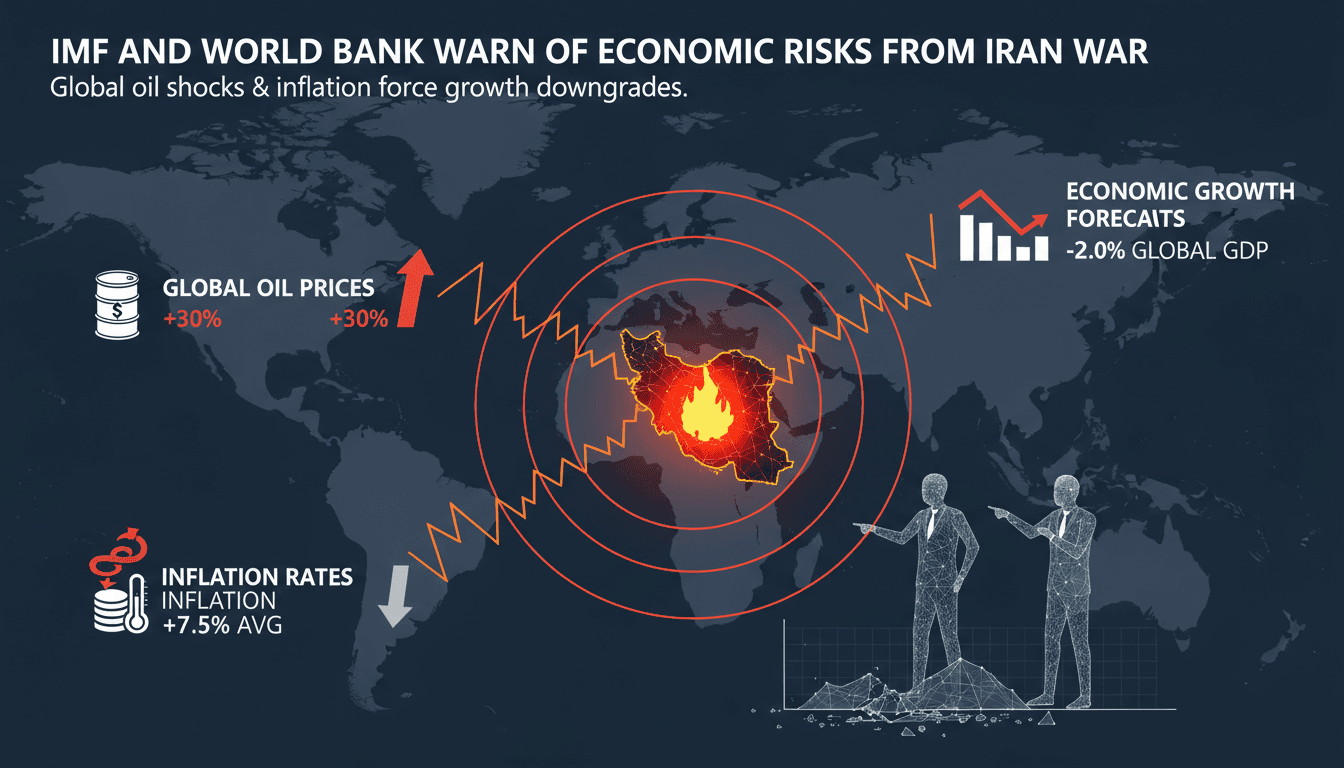
Here's what it means for you.
If you’re invested in global markets, the ongoing Iran war could significantly affect your portfolio and economic outlook.
Why it matters
The conflict is poised to disrupt global economic stability, impacting inflation, growth forecasts, and energy prices.
What happened (in 30 seconds)
- Policymakers issued warnings during the IMF and World Bank Spring Meetings on April 15, 2026, about market complacency regarding the Iran war's economic fallout.
- The war, which began in late February 2026, has led to a significant disruption in oil supplies, pushing Brent crude prices up by over 50%.
- Global growth forecasts have been downgraded, with the IMF projecting a 3.1% growth rate for 2026, reflecting the war's persistent economic effects.
The context you actually need
- The Iran war has resulted in the closure of the Strait of Hormuz, disrupting 15-20% of global oil and gas supplies, which has immediate implications for energy prices.
- Investor sentiment remains overly optimistic, with many expecting a quick resolution despite ongoing military actions and significant supply losses.
- Dubai and Abu Dhabi have seen a combined stock market capitalization decline of $120 billion, highlighting the regional economic impact and investor anxiety.
What's really happening
The ongoing Iran war has created a complex web of economic challenges that extend far beyond the immediate conflict. Since its escalation in late February 2026, the war has led to the effective closure of the Strait of Hormuz, a critical chokepoint for global oil transportation. This disruption has resulted in a staggering loss of over 8 million barrels per day in oil supply, which has driven Brent crude prices to exceed $110 per barrel—a 50-55% increase. Such price surges have triggered inflationary pressures worldwide, with the IMF revising its global growth forecast down to 3.1% for 2026.
Policymakers at the IMF and World Bank have expressed concern that financial markets are not adequately pricing in the long-term ramifications of the conflict. Investors appear to be betting on a rapid resolution, which is increasingly unlikely given the entrenched geopolitical tensions. The war has not only affected oil prices but has also led to significant disruptions in supply chains, particularly for food and essential goods, as countries grapple with import shortfalls. In Dubai, for instance, food prices have spiked between 40-120%, further straining household budgets and economic stability.
The IMF has advised against broad fuel subsidies as a response to rising energy costs, citing the risk of exacerbating inflation. Instead, the UAE has implemented an economic shield plan, which includes a $272 million business support package aimed at mitigating the adverse effects of the war. However, the long-term outlook remains uncertain, with global finance ministers warning that even after a potential ceasefire, the impacts on growth and inflation could linger.
As the conflict continues, the structural implications for global markets are profound. Heightened geopolitical risks, coupled with persistent energy price volatility, are likely to reshape investment strategies and economic policies worldwide. The complacency observed in financial markets could lead to a rude awakening for investors who have not accounted for these ongoing risks.
Who feels it first (and how)
- Investors in energy markets: Facing volatility and potential losses due to fluctuating oil prices.
- Consumers in Dubai and Abu Dhabi: Experiencing rising food prices and economic strain from reduced purchasing power.
- Global supply chain managers: Dealing with disruptions and increased costs in logistics and transportation.
- Businesses reliant on imports: Facing higher operational costs and potential revenue declines due to supply shortages.
What to watch next
- Oil price trends: Monitoring Brent crude prices will be crucial, as sustained high prices could further impact inflation and economic growth.
- Geopolitical developments: Any signs of de-escalation or escalation in the conflict will significantly influence market sentiment and economic forecasts.
- Economic policy responses: Watch for new measures from the UAE and other affected nations aimed at stabilizing their economies amidst ongoing disruptions.
The Iran war has disrupted global oil supplies and increased energy prices.
Continued inflationary pressures and growth downgrades as the conflict persists.
The timeline for resolution and its subsequent impact on global markets.
Frequently Asked Questions
- Why it matters?
- The conflict is poised to disrupt global economic stability, impacting inflation, growth forecasts, and energy prices.
- What happened (in 30 seconds)?
- Policymakers issued warnings during the IMF and World Bank Spring Meetings on April 15, 2026, about market complacency regarding the Iran war's economic fallout. The war, which began in late February 2026, has led to a significant disruption in oil supplies, pushing Brent crude prices up by over 50%. Global growth forecasts have been downgraded, with the IMF projecting a 3.1% growth rate for 2026, reflecting the war's persistent economic effects.
- What's really happening?
- The ongoing Iran war has created a complex web of economic challenges that extend far beyond the immediate conflict. Since its escalation in late February 2026, the war has led to the effective closure of the Strait of Hormuz, a critical chokepoint for global oil transportation. This disruption has resulted in a staggering loss of over 8 million barrels per day in oil supply, which has driven Brent crude prices to exceed $110 per barrel—a 50-55% increase. Such price surges have triggered inflati
- Who feels it first (and how)?
- Investors in energy markets: Facing volatility and potential losses due to fluctuating oil prices. Consumers in Dubai and Abu Dhabi: Experiencing rising food prices and economic strain from reduced purchasing power. Global supply chain managers: Dealing with disruptions and increased costs in logistics and transportation. Businesses reliant on imports: Facing higher operational costs and potential revenue declines due to supply shortages.
- What to watch next?
- Oil price trends: Monitoring Brent crude prices will be crucial, as sustained high prices could further impact inflation and economic growth. Geopolitical developments: Any signs of de-escalation or escalation in the conflict will significantly influence market sentiment and economic forecasts. Economic policy responses: Watch for new measures from the UAE and other affected nations aimed at stabilizing their economies amidst ongoing disruptions.
Global markets, investing, and macroeconomics from a premier financial newsroom.
"Bloomberg is respected for in-depth financial reporting and data-driven analysis."
— A47 Editor
Markets Are Too Blasé on War’s Economic Toll, Policymakers Warn
The International Monetary Fund (IMF) and World Bank have expressed concerns that investors are underestimating the economic repercussions of the ongoing war in Iran. During their spring meetings, they highlighted a significant downgrade in global gr...
Capitol Hill news, legislation, and policy insight.
"The Hill specializes in U.S. politics and policy, with a focus on Capitol Hill developments and a reputation for insider reporting."
— A47 Editor
IMF warns Iran War could lead to recession — even with quick end
The International Monetary Fund (IMF) has issued a stark warning that the ongoing conflict in Iran could lead to a global recession, even if the war ends swiftly. This situation arises from the potential economic fallout, including rising inflation a...
UAE-based English-language newspaper covering regional politics, economics, and global affairs.
"The National reflects Emirati policy perspectives while maintaining international editorial standards."
— A47 Editor
‘We must brace for tough times,’ IMF chief says on Iran war effects
The International Monetary Fund (IMF) chief Kristalina Georgieva has warned of impending economic difficulties due to the ongoing war in Iran, emphasizing the need for preparedness as global inflation and oil prices rise.
Macro commentary, policy analysis, growth/inflation themes, and global outlooks.
"Contextual macro coverage that complements day-to-day market headlines."
— A47 Editor
IMF cuts growth outlook, warns world already drifting toward more adverse scenario
The International Monetary Fund (IMF) has revised its global growth forecast for 2026, lowering it to 3.1% from 3.3%, primarily due to the ongoing conflict in Iran, which has disrupted energy supplies and economic momentum.
UK and international business news, economics, and corporate coverage.
"The Guardian’s business section covers finance and markets with a progressive editorial tone."
— A47 Editor
UK growth forecasts slashed by IMF as Iran war hurts global economy – business live
The International Monetary Fund (IMF) has revised its growth forecasts for the UK downward for 2026 and 2027, attributing this adjustment to the ongoing conflict in Iran and weak economic performance in late 2025.
UAE-based English-language newspaper covering regional politics, economics, and global affairs.
"The National reflects Emirati policy perspectives while maintaining international editorial standards."
— A47 Editor
IMF lowers Middle East growth forecast over Iran war shock
The International Monetary Fund (IMF) has lowered its growth forecast for the Middle East, attributing this adjustment to the ongoing war in Iran, which has disrupted oil supplies and heightened inflationary pressures. The IMF now projects a global g...