
European Commission Proposes Electricity Tax Cuts and Faster Fossil Fuel Phase-Out Amid Iran War Energy Crisis
Here's what it means for you.
If you rely on energy imports or are invested in European markets, the EU's new proposal could significantly impact your costs and investment strategies.
Why it matters
This initiative aims to stabilize energy prices and promote a transition to renewable sources, directly affecting consumers and investors across Europe.
What happened (in 30 seconds)
- On April 14, 2026, the European Commission unveiled a draft proposal for electricity tax reductions and a faster transition from fossil fuels.
- The proposal responds to energy price surges caused by the US-Israeli war on Iran, which has disrupted global oil and gas supplies.
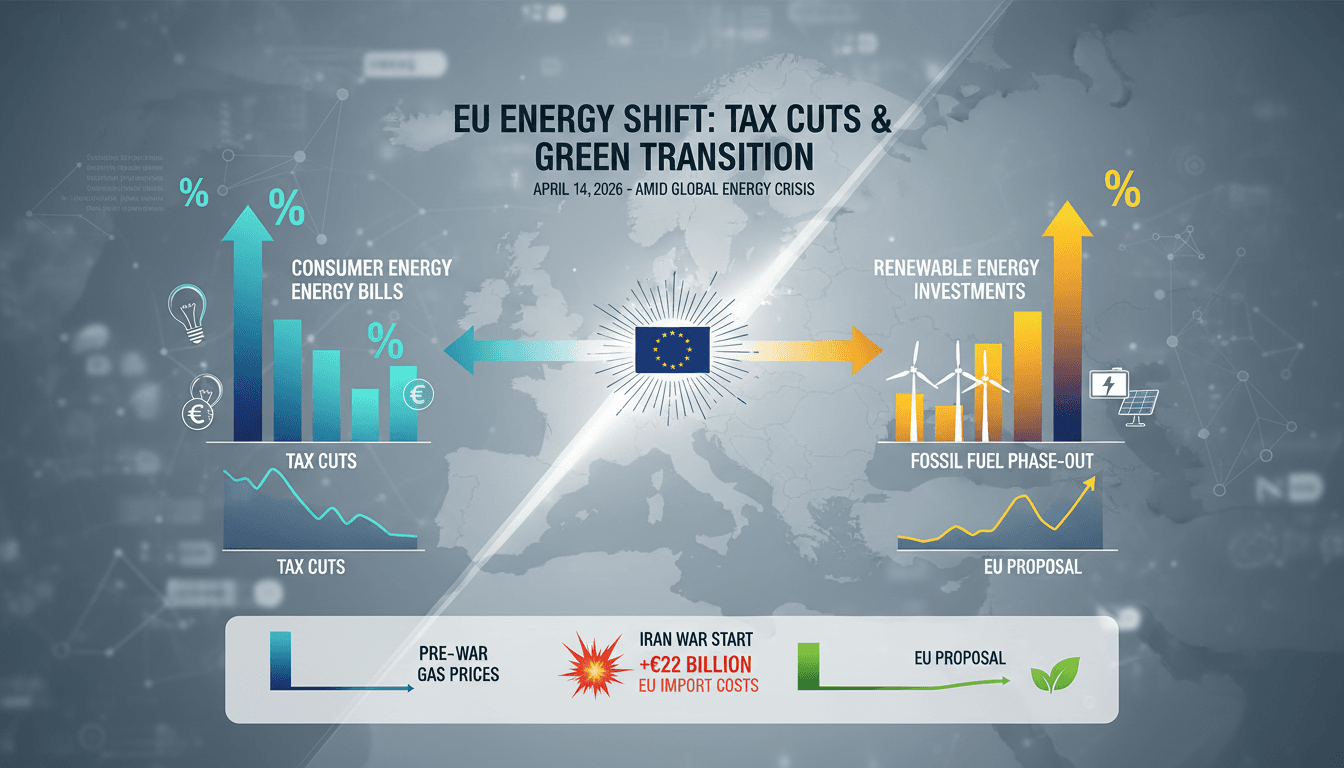
- Gas prices have nearly doubled since the war began, leading to over €22 billion in additional import costs for the EU.
The context you actually need
- The US-Israeli military campaign against Iran, starting February 28, 2026, has led to the closure of the Strait of Hormuz, a critical chokepoint for global oil and LNG.
- Europe's energy landscape has been further complicated by the legacy of the Russia-Ukraine war, increasing its dependence on fossil fuel imports.
- The draft proposal is set for publication on April 22, 2026, and aims to incentivize clean energy investments while addressing soaring gas prices.
What's really happening
The European Commission's draft proposal is a direct response to the energy crisis triggered by the US-Israeli war on Iran, which has severely disrupted oil and gas supplies. The closure of the Strait of Hormuz, through which 20% of global oil and LNG passes, has exacerbated Europe's already precarious energy situation, following the disruptions caused by the Russia-Ukraine conflict. As a result, gas prices have surged, nearly doubling within weeks and stabilizing at levels 35% higher than pre-war figures.
This proposal aims to alleviate the financial burden on consumers by reducing electricity taxes and accelerating the transition to renewable energy sources. The initiative is designed to lower consumer bills and incentivize investments in clean energy technologies, such as smart grids and electrification targets. By doing so, the EU hopes to reduce its vulnerability to future supply shocks and stabilize the energy market.
The cumulative extra costs incurred by the EU since the onset of the Iran war have exceeded €22 billion, prompting urgent calls for tax reforms that have been stalled since 2021. The draft proposal includes measures to lower energy taxes, adjust grid charges, and coordinate gas storage efforts among member states. It also outlines a catalog of low-carbon technologies to be prioritized in the coming months.
However, the proposal's reception has been mixed. While some EU member states have already enacted national tax cuts and subsidies, there is no unified response from energy ministers regarding the draft. The volatility in energy markets continues, with prices remaining elevated despite some partial retreats. The European Commission has yet to comment on the specifics of the draft, leaving many questions about its implementation and potential impact.
Who feels it first (and how)
- Consumers: Households facing rising energy bills will benefit from potential tax cuts and reduced electricity costs.
- Investors: Those with stakes in renewable energy sectors may see increased opportunities as the EU shifts focus towards clean energy investments.
- Energy firms: Companies involved in fossil fuel production may face windfall taxes and increased scrutiny, impacting their profitability.
- EU Member States: Countries heavily reliant on energy imports will need to adapt to new tax structures and potential subsidies.
What to watch next
- Publication of the draft proposal: The scheduled release on April 22, 2026, will provide clarity on the specifics of the tax cuts and energy transition plans.
- Market reactions: Monitor energy prices and stock market fluctuations in response to the proposal's announcement and subsequent developments.
- National responses: Watch for individual EU member states' actions regarding tax reforms and subsidies, which could influence the overall effectiveness of the proposal.
The EU is facing significant energy price increases due to the Iran war, leading to urgent calls for tax reforms.
The draft proposal will be published on April 22, 2026, and may lead to varying responses from member states.
The long-term effectiveness of the proposed tax cuts and energy transition measures in stabilizing the market remains uncertain.
Frequently Asked Questions
- Why it matters?
- This initiative aims to stabilize energy prices and promote a transition to renewable sources, directly affecting consumers and investors across Europe.
- What happened (in 30 seconds)?
- On April 14, 2026, the European Commission unveiled a draft proposal for electricity tax reductions and a faster transition from fossil fuels. The proposal responds to energy price surges caused by the US-Israeli war on Iran, which has disrupted global oil and gas supplies. Gas prices have nearly doubled since the war began, leading to over €22 billion in additional import costs for the EU.
- What's really happening?
- The European Commission's draft proposal is a direct response to the energy crisis triggered by the US-Israeli war on Iran, which has severely disrupted oil and gas supplies. The closure of the Strait of Hormuz, through which 20% of global oil and LNG passes, has exacerbated Europe's already precarious energy situation, following the disruptions caused by the Russia-Ukraine conflict. As a result, gas prices have surged, nearly doubling within weeks and stabilizing at levels 35% higher than pre-w
- Who feels it first (and how)?
- Consumers: Households facing rising energy bills will benefit from potential tax cuts and reduced electricity costs. Investors: Those with stakes in renewable energy sectors may see increased opportunities as the EU shifts focus towards clean energy investments. Energy firms: Companies involved in fossil fuel production may face windfall taxes and increased scrutiny, impacting their profitability. EU Member States: Countries heavily reliant on energy imports will need to adapt to new tax s
- What to watch next?
- Publication of the draft proposal: The scheduled release on April 22, 2026, will provide clarity on the specifics of the tax cuts and energy transition plans. Market reactions: Monitor energy prices and stock market fluctuations in response to the proposal's announcement and subsequent developments. National responses: Watch for individual EU member states' actions regarding tax reforms and subsidies, which could influence the overall effectiveness of the proposal.
Regional coverage and analysis focused on politics, diplomacy, and business across the Middle East.
"Al-Monitor is known for analytical reporting on Middle East politics and policy developments."
— A47 Editor
War spurs EU plan for electricity tax cuts, faster shift from fossil fuels, draft shows
The European Union has proposed a plan to reduce electricity taxes and accelerate the transition to clean energy technologies in response to the rising oil and gas prices exacerbated by the ongoing conflict in Iran. This initiative aims to mitigate t...
24/7 international news from a French perspective in multiple languages.
"France 24 is viewed as a globally focused outlet with balanced coverage and a European perspective."
— A47 Editor
Iran war prompts European rethink on energy security: How can the EU become more independent?
The ongoing war in Iran has significantly impacted Europe's energy security, revealing the continent's continued dependence on external energy sources, particularly as disruptions to liquefied natural gas (LNG) shipments through the Strait of Hormuz ...
UK and international business news, economics, and corporate coverage.
"The Guardian’s business section covers finance and markets with a progressive editorial tone."
— A47 Editor
Interest in EVs surges in Europe as fuel prices jump after Iran war
Interest in electric vehicles (EVs) has surged across Europe following the onset of the war in Iran, with online marketplaces in the UK, Germany, France, and Spain reporting significant increases in inquiries as fuel prices rise. Consumers are increa...
News and current affairs from across Europe.
"The Guardian is known for its progressive editorial stance and in-depth analysis."
— A47 Editor
Interest in EVs surges in Europe as fuel prices jump after Iran war
Interest in electric vehicles (EVs) has surged across Europe since the onset of the Iran war, with online marketplaces in the UK, Germany, France, and Spain reporting a significant increase in inquiries as rising petrol prices prompt consumers to see...