
EU Doubles Steel Import Tariffs and Cuts Quotas, Threatening UK Exports
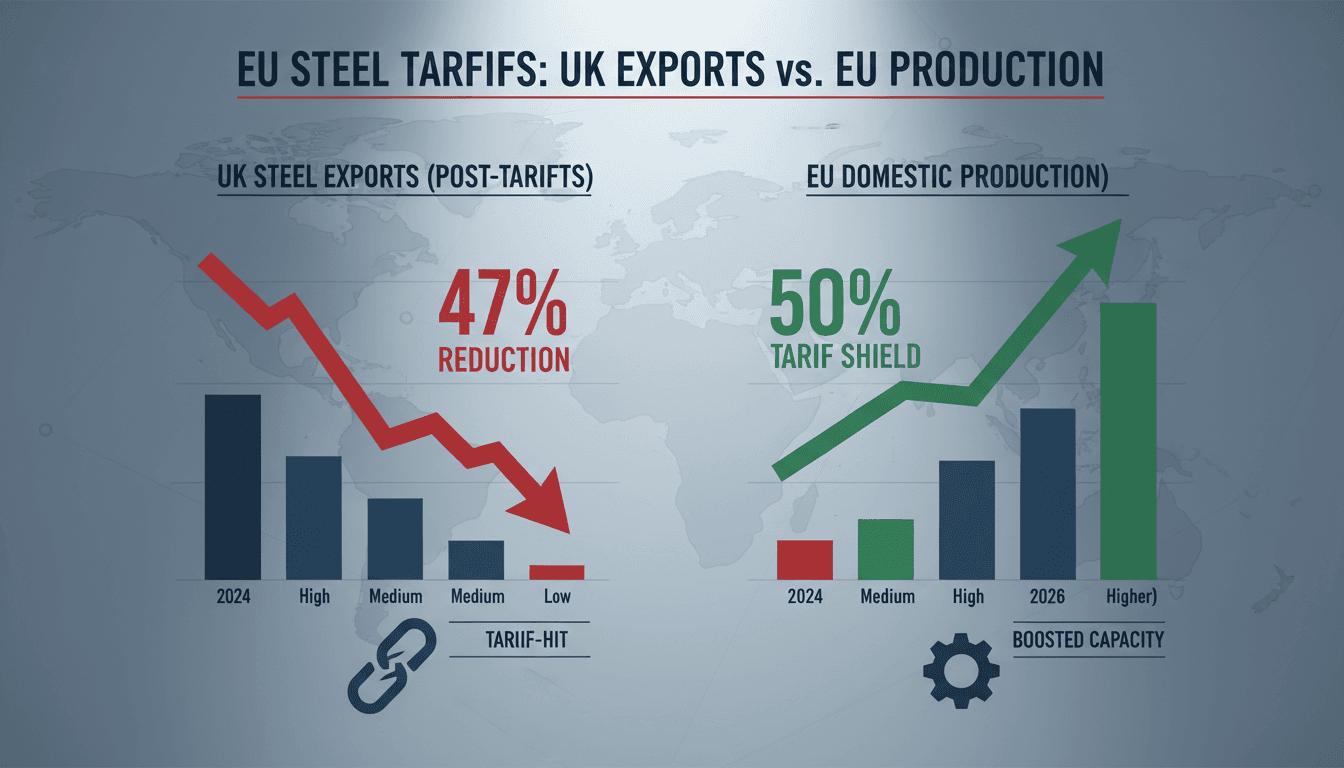
Here's what it means for you.
If you’re in the steel industry or rely on steel products, brace for potential price increases and supply chain disruptions.
Why it matters
This move by the EU could reshape the competitive landscape for steel exports, particularly affecting UK suppliers and their pricing strategies.
What happened (in 30 seconds)
- On April 14, 2026, the European Union approved a doubling of steel import tariffs to 50% and a 47% reduction in duty-free quotas.
- Effective July 1, 2026, these measures will cap imports at 18.7 million tonnes annually across 28 product categories, primarily targeting Chinese imports.
- UK steel exports, amounting to 1.8 million tonnes annually, are now at risk, as they represent 10% of the new EU import quota.
The context you actually need
- Post-Brexit dynamics have left the UK without the tariff exemptions that European Economic Area (EEA) countries enjoy, increasing its vulnerability.
- The EU's steel safeguards, initially implemented in 2018 to combat Chinese overcapacity, are set to expire, leading to record imports of 9.9 million tonnes in Q4 2025.
- UK's response includes a strategy announced in March 2026, imposing reciprocal tariffs and quota cuts, further complicating trade relations.
What's really happening
The EU's decision to double steel import tariffs and slash quotas is a strategic response to the influx of cheap steel, particularly from China, which has been flooding the market and undermining local industries. The new measures, finalized after intense negotiations, aim to protect EU steel producers by limiting foreign competition and encouraging domestic production.
The cap of 18.7 million tonnes on imports across 28 product categories is a significant reduction, especially for the UK, which has historically relied on the EU as its largest market for steel exports. With UK shipments at risk, industry leaders are sounding alarms about the potential existential threats posed by these tariffs and quotas. The UK steel sector, which exports 1.8 million tonnes annually to the EU, now faces a precarious future without preferential access.
The backdrop to this decision is the expiration of previous EU steel safeguards, which were put in place to address the overcapacity issues stemming from Chinese production. As these measures lapse, the EU is taking a more aggressive stance to protect its domestic market, aiming to bolster local production by an additional 15 million tonnes. This shift not only affects UK exports but also disrupts integrated supply chains that have developed over decades.
In response, UK Steel has called for a mutual quota agreement, emphasizing the interdependence of the UK and EU markets. Meanwhile, Eurofer, the European steel industry association, has welcomed the EU's protective measures, arguing they are essential for the survival of European mills. The EU Commissioner for Industry, Stéphane Séjourné, has framed this as a significant victory for EU sovereignty, highlighting the political dimensions of trade policy.
As the UK prepares to implement its own reciprocal tariffs and quota reductions, the stage is set for a tit-for-tat trade environment that could lead to further market distortions. The anticipated shifts in trade patterns may divert steel exports to non-EU destinations, complicating the global steel market landscape.
Who feels it first (and how)
- UK Steel Producers: Facing reduced access to the EU market, risking revenue and jobs.
- Manufacturers Relying on Steel: Increased costs and potential supply chain disruptions could impact pricing and production timelines.
- Consumers: Potential price hikes on steel products may lead to increased costs for end-users in construction and manufacturing sectors.
- EU Steel Mills: May benefit from reduced competition but could face higher prices for raw materials due to supply chain shifts.
What to watch next
- Quota Allocations: Monitor how the EU allocates the new quotas and whether the UK can negotiate carve-outs. This will directly impact UK steel exports.
- UK Government Response: Watch for any new trade measures or negotiations from the UK government aimed at mitigating the impact of these tariffs.
- Market Reactions: Keep an eye on steel prices and trade flows in the coming months, as shifts in supply chains could lead to volatility.
The EU has approved the tariff increase and quota cuts, effective July 1, 2026.
UK steel exports will decline unless new agreements are reached.
The long-term impact on global steel prices and trade dynamics remains uncertain.
Frequently Asked Questions
- Why it matters?
- This move by the EU could reshape the competitive landscape for steel exports, particularly affecting UK suppliers and their pricing strategies.
- What happened (in 30 seconds)?
- On April 14, 2026, the European Union approved a doubling of steel import tariffs to 50% and a 47% reduction in duty-free quotas. Effective July 1, 2026, these measures will cap imports at 18.7 million tonnes annually across 28 product categories, primarily targeting Chinese imports. UK steel exports, amounting to 1.8 million tonnes annually, are now at risk, as they represent 10% of the new EU import quota.
- What's really happening?
- The EU's decision to double steel import tariffs and slash quotas is a strategic response to the influx of cheap steel, particularly from China, which has been flooding the market and undermining local industries. The new measures, finalized after intense negotiations, aim to protect EU steel producers by limiting foreign competition and encouraging domestic production. The cap of 18.7 million tonnes on imports across 28 product categories is a significant reduction, especially for the UK, whi
- Who feels it first (and how)?
- UK Steel Producers: Facing reduced access to the EU market, risking revenue and jobs. Manufacturers Relying on Steel: Increased costs and potential supply chain disruptions could impact pricing and production timelines. Consumers: Potential price hikes on steel products may lead to increased costs for end-users in construction and manufacturing sectors. EU Steel Mills: May benefit from reduced competition but could face higher prices for raw materials due to supply chain shifts.
- What to watch next?
- Quota Allocations: Monitor how the EU allocates the new quotas and whether the UK can negotiate carve-outs. This will directly impact UK steel exports. UK Government Response: Watch for any new trade measures or negotiations from the UK government aimed at mitigating the impact of these tariffs. Market Reactions: Keep an eye on steel prices and trade flows in the coming months, as shifts in supply chains could lead to volatility.
UK and international business news, economics, and corporate coverage.
"The Guardian’s business section covers finance and markets with a progressive editorial tone."
— A47 Editor
UK steel exports to EU at risk as bloc doubles tariffs and halves quotas
The European Union has announced plans to double tariffs on steel imports to 50% and reduce duty-free quotas by 47%, effective from July. This decision aims to limit the influx of cheap Chinese steel into the EU market, which has been a growing conce...
News and current affairs from across Europe.
"The Guardian is known for its progressive editorial stance and in-depth analysis."
— A47 Editor
UK steel exports to EU at risk as bloc doubles tariffs and halves quotas
The European Union has announced plans to double tariffs on steel imports to 50% and reduce duty-free quotas by 47%, effective from July. This decision aims to limit the influx of cheap Chinese steel into the EU market, which has been a growing conce...
Pan-Arab news coverage spanning politics, business, sports, and regional affairs.
"Asharq Al-Awsat reflects a broad Arab editorial perspective with strong attention to regional geopolitics."
— A47 Editor
بين مطرقة الإنتاج الصيني ورسوم ترمب... أوروبا تضاعف جمارك الصلب الأجنبي
European Union lawmakers agreed on Monday to double tariffs on foreign steel, a move aimed at protecting local industries from the impact of Chinese production and U.S. tariffs imposed by former President Trump. This decision reflects ongoing tension...
Social/economic commentary and analysis relevant to business and markets.
"WSJ blends data-driven economic insight with commentary on policy and society."
— A47 Editor
EU Agrees to Double Steel Tariffs
The European Parliament reached an agreement to reduce the quota for tariff-free steel imports to 18.3 million metric tons annually and to increase tariffs on imports exceeding this limit to 50%. This decision was made late Monday and reflects the EU...
Global political, business, and cultural coverage from WSJ international desks.
"The Wall Street Journal offers extensive international reporting with a reputation for financial insight and a center-right editorial stance."
— A47 Editor
EU Agrees to Double Steel Tariffs
The European Parliament reached an agreement to reduce the quota for tariff-free steel imports to 18.3 million metric tons annually and to increase tariffs on imports exceeding this limit to 50%. This decision was made late Monday and reflects the EU...
European current affairs, EU politics, and regional developments.
"France 24 is viewed as a globally focused outlet with balanced coverage and a European perspective."
— A47 Editor
EU doubles steel tariffs to 50% to curb surge of cheap Chinese imports
EU lawmakers and member states have agreed to double tariffs on foreign steel to 50% in an effort to protect the bloc's struggling industry from an influx of inexpensive Chinese imports. Additionally, the agreement reduces duty-free import volumes by...