
Wall Street Gains Amid Rising Oil Prices and Middle East Tensions
Here's what it means for you.
Your investment strategies may need to adapt as market volatility and oil prices fluctuate.
Why it matters
The interplay between oil prices and stock market performance can significantly impact your investment portfolio and economic outlook.
What happened (in 30 seconds)
- Wall Street closed higher on April 9, 2026, with the Dow Jones, S&P 500, and Nasdaq showing modest gains.
- Oil prices surged, with WTI crude rising 3.7% to $97.87 per barrel amid escalating US-Iran tensions.
- Cautious optimism among investors helped stabilize markets despite concerns over geopolitical risks.
The context you actually need
- Geopolitical tensions in the Middle East, particularly involving the US and Iran, have raised fears of oil supply disruptions, impacting global markets.
- Oil price fluctuations directly affect inflation rates and consumer spending, which can ripple through various sectors of the economy.
- Dubai's economy, as an oil-exporting hub, is uniquely positioned to benefit from rising oil prices, but it also faces risks from regional instability.
What's really happening
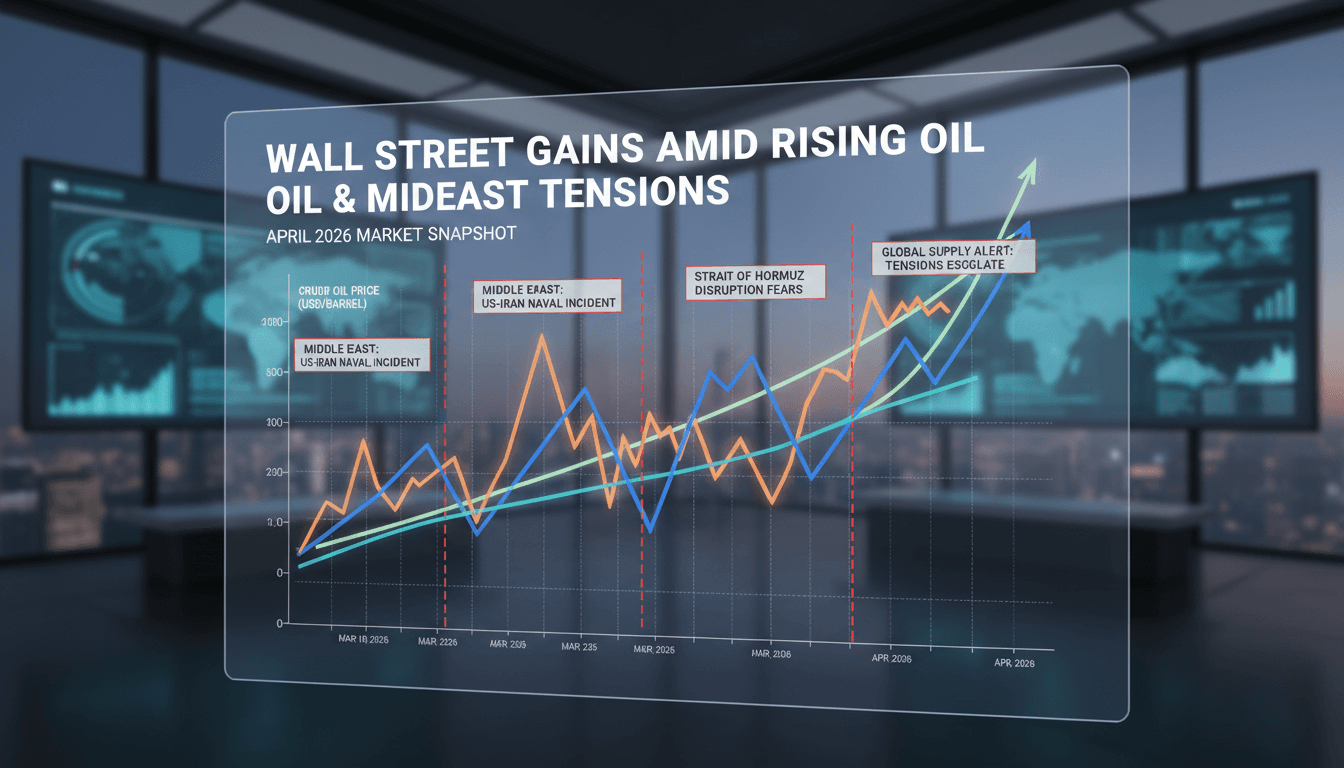
On April 9, 2026, Wall Street's major indices exhibited a surprising resilience amid a backdrop of rising oil prices and geopolitical tensions. The Dow Jones, S&P 500, and Nasdaq all closed with modest gains, a reflection of cautious optimism among investors despite the significant surge in oil prices. WTI crude oil prices rose 3.7% to close at $97.87 per barrel, nearly hitting $103 intraday, while Brent crude increased by 1.2%.
This surge in oil prices is primarily driven by escalating tensions in the Middle East, particularly the ongoing conflict between the US and Iran. The Strait of Hormuz, a critical chokepoint for global oil supply, has become a focal point of concern as Iran imposes restrictions, raising fears of supply disruptions. The geopolitical landscape has been further complicated by Israeli military actions in Lebanon, which add layers of uncertainty to the region.
Despite these challenges, investors displayed a degree of optimism, leading to a recovery in stock prices after initial losses. This cautious optimism is rooted in the belief that diplomatic efforts may de-escalate the situation, allowing for a stabilization of oil prices and a return to normalcy in the markets. The interplay between oil prices and stock market performance is crucial; rising oil prices can lead to inflationary pressures, affecting consumer spending and overall economic growth.
Moreover, the implications of these developments extend beyond Wall Street. For investors, the current environment necessitates a careful reassessment of portfolios, particularly for those heavily invested in sectors sensitive to oil price fluctuations. The potential for inflationary pressures could affect interest rates and borrowing costs, further complicating the economic landscape.
As the situation evolves, the ability of markets to absorb these shocks will be tested. Investors are closely monitoring signals from the geopolitical front, as any signs of de-escalation or further conflict will likely influence market sentiment and oil prices in the coming days.
Who feels it first (and how)
- Investors: Those with exposure to energy stocks may see immediate impacts on their portfolios.
- Consumers: Rising oil prices can lead to increased costs for goods and services, affecting household budgets.
- Businesses: Companies reliant on oil for operations may face higher costs, impacting profitability and pricing strategies.
- Geopolitical analysts: Professionals in this field will need to reassess risk models based on evolving tensions in the Middle East.
What to watch next
- Oil price trends: Continued fluctuations in oil prices will be critical to monitor, as they directly affect inflation and consumer behavior.
- Geopolitical developments: Any signs of de-escalation or heightened tensions in the US-Iran conflict will influence market stability.
- Economic indicators: Watch for inflation reports and consumer spending data, as these will provide insights into the broader economic impact of rising oil prices.
Oil prices are currently elevated due to geopolitical tensions.
Continued volatility in both oil and stock markets as investors react to unfolding events.
The long-term impact of these tensions on global economic growth and inflation rates.
Frequently Asked Questions
- Why it matters?
- The interplay between oil prices and stock market performance can significantly impact your investment portfolio and economic outlook.
- What happened (in 30 seconds)?
- Wall Street closed higher on April 9, 2026, with the Dow Jones, S&P 500, and Nasdaq showing modest gains. Oil prices surged, with WTI crude rising 3.7% to $97.87 per barrel amid escalating US-Iran tensions. Cautious optimism among investors helped stabilize markets despite concerns over geopolitical risks.
- What's really happening?
- On April 9, 2026, Wall Street's major indices exhibited a surprising resilience amid a backdrop of rising oil prices and geopolitical tensions. The Dow Jones, S&P 500, and Nasdaq all closed with modest gains, a reflection of cautious optimism among investors despite the significant surge in oil prices. WTI crude oil prices rose 3.7% to close at $97.87 per barrel, nearly hitting $103 intraday, while Brent crude increased by 1.2%. This surge in oil prices is primarily driven by escalating tensio
- Who feels it first (and how)?
- Investors: Those with exposure to energy stocks may see immediate impacts on their portfolios. Consumers: Rising oil prices can lead to increased costs for goods and services, affecting household budgets. Businesses: Companies reliant on oil for operations may face higher costs, impacting profitability and pricing strategies. Geopolitical analysts: Professionals in this field will need to reassess risk models based on evolving tensions in the Middle East.
- What to watch next?
- Oil price trends: Continued fluctuations in oil prices will be critical to monitor, as they directly affect inflation and consumer behavior. Geopolitical developments: Any signs of de-escalation or heightened tensions in the US-Iran conflict will influence market stability. Economic indicators: Watch for inflation reports and consumer spending data, as these will provide insights into the broader economic impact of rising oil prices.
Arabic-language UAE newspaper coverage focused on domestic affairs, public institutions, business, society, and regional developments.
"Al Khaleej coverage generally reflects a mainstream UAE editorial lens with strong attention to public affairs, institutions, and regional developments."
— A47 Editor
إغلاق إيجابي للأسهم الأمريكية مع تحسن المعنويات بشأن وقف إطلاق النار
U.S. stocks rose on Thursday as ongoing negotiations for a peaceful resolution to the six-week conflict in the Middle East eased concerns regarding the fragile ceasefire between the United States and Iran.
Arabic-language digital news outlet covering UAE, regional, and international developments with broad general-news coverage.
"Al Ain News coverage typically blends UAE-focused reporting with wider Arab regional and international news."
— A47 Editor
وول ستريت تتماسك عند الإغلاق.. تفاؤل حذر يكبح تقلبات الأسواق
U.S. stocks rose on Thursday, despite an increase in oil prices, as financial markets moved at a more moderate pace following strong gains driven by optimism regarding a ceasefire in the war with Iran.
Pan-Arab news coverage spanning politics, business, sports, and regional affairs.
"Asharq Al-Awsat reflects a broad Arab editorial perspective with strong attention to regional geopolitics."
— A47 Editor
هدوء بـ«وول ستريت» مع اهتزاز الثقة في وقف إطلاق النار
Wall Street experienced little change early Thursday morning as oil prices resumed their upward trend amid doubts regarding the sustainability of the ceasefire.