
U.S. Naval Blockade of Strait of Hormuz Causes Oil Prices to Exceed $100 per Barrel
Here's what it means for you.
Rising oil prices could impact your fuel costs and overall inflation, affecting both personal budgets and business expenses.
Why it matters
This blockade disrupts a critical global oil supply route, influencing energy markets and economic stability worldwide.
What happened (in 30 seconds)
- On April 13, 2026, the U.S. initiated a naval blockade of the Strait of Hormuz, targeting Iranian vessels.
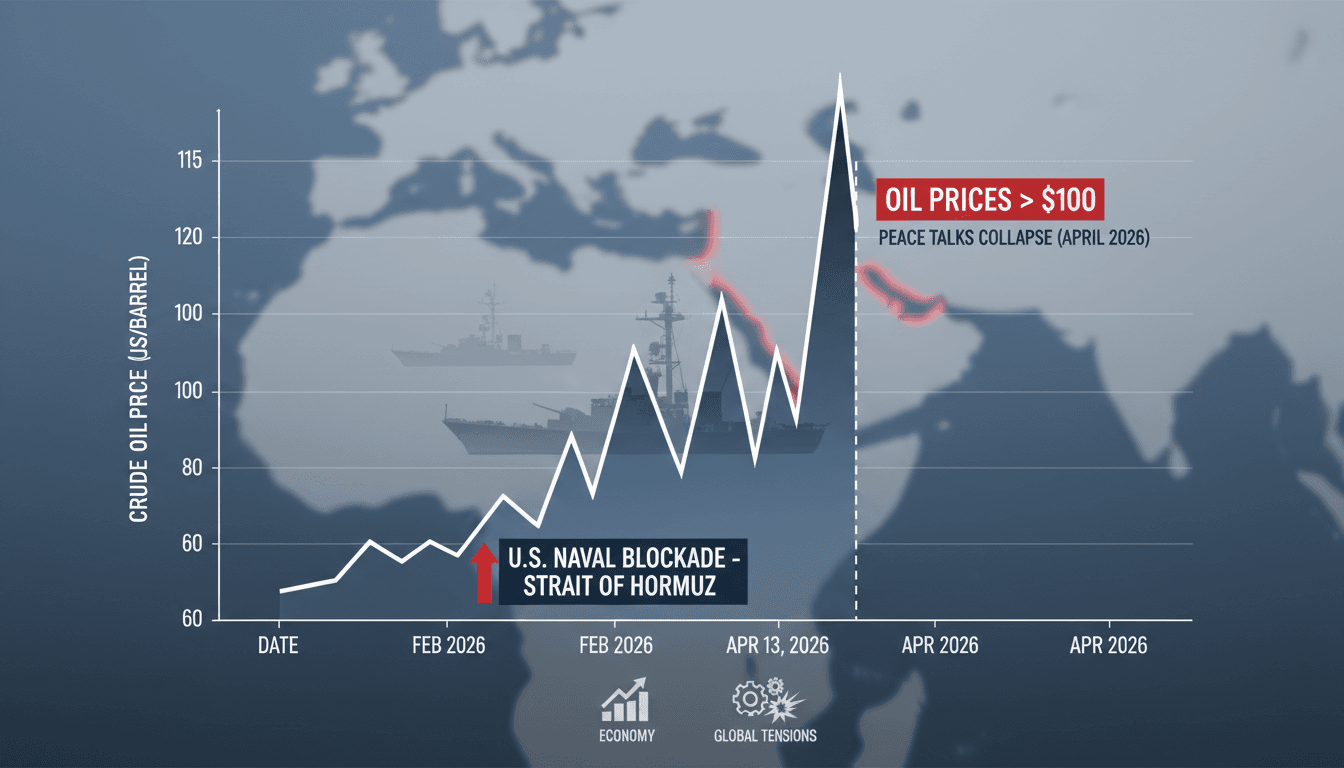
- Oil prices surged, with Brent crude reaching $101.74 per barrel, reflecting a 6.9% increase amid heightened tensions.
- Goldman Sachs reported strong earnings, with a 19% year-over-year profit increase, coinciding with the market volatility.
The context you actually need
- The Strait of Hormuz is a vital chokepoint for global oil, with approximately 20% of the world's oil passing through it.
- U.S.-Iran relations have deteriorated significantly, with earlier military actions leading to a state of war and failed peace negotiations.
- Market reactions are mixed, with energy stocks gaining while broader markets show volatility, indicating investor uncertainty.
What's really happening
The U.S. naval blockade of the Strait of Hormuz is a direct response to escalating tensions with Iran, particularly following the collapse of peace talks in Islamabad on April 11-12, 2026. President Donald Trump announced the blockade on April 12, citing Iran's nuclear ambitions and threats to maritime security. The U.S. Central Command activated the blockade at 1400 GMT on April 13, warning mariners of potential interceptions of unauthorized Iranian-linked traffic while allowing neutral vessels to pass.
This blockade is significant because it directly impacts a key maritime route for oil transport, leading to immediate price surges in global oil markets. Brent crude prices jumped to $101.74 per barrel, while West Texas Intermediate (WTI) reached $103.55, reflecting a 7.2% increase. The spike in oil prices is not just a reflection of supply concerns but also a response to geopolitical instability, which often leads to speculative trading in energy markets.
Goldman Sachs reported a robust first quarter, with net earnings of $5.63 billion, up 19% year-over-year, indicating that while some sectors may suffer from rising oil prices, others, particularly in finance and energy, may benefit. This divergence highlights the complex interplay between geopolitical events and market dynamics.
As the blockade continues, the implications for global oil supply and prices remain uncertain. The U.S. and its allies, including Gulf states, are likely to support the blockade, but they are also preparing for contingencies, such as alternative shipping routes. The Organization of the Petroleum Exporting Countries (OPEC) has already adjusted its demand forecast, trimming it by 500,000 barrels per day for Q2 2026, indicating a cautious approach to the evolving situation.
Who feels it first (and how)
- Consumers: Higher fuel prices will directly affect transportation and living costs.
- Businesses: Companies reliant on oil will face increased operational costs, potentially leading to higher prices for goods and services.
- Investors: Energy sector investors may see gains, while those in broader markets could experience volatility and losses.
- Governments: Countries dependent on oil imports will face inflationary pressures, impacting economic stability.
What to watch next
- U.S.-Iran negotiations: Any signs of renewed talks could stabilize oil prices and ease market tensions.
- Global oil supply levels: Monitoring OPEC's adjustments and production levels will provide insight into future price movements.
- Market reactions: Watch for shifts in energy stock performance and broader market indices as the situation evolves.
Oil prices surged above $100 per barrel due to the blockade.
Continued volatility in energy markets as geopolitical tensions persist.
The long-term impact on global oil supply and economic stability remains uncertain.
Frequently Asked Questions
- Why it matters?
- This blockade disrupts a critical global oil supply route, influencing energy markets and economic stability worldwide.
- What happened (in 30 seconds)?
- On April 13, 2026, the U.S. initiated a naval blockade of the Strait of Hormuz, targeting Iranian vessels. Oil prices surged, with Brent crude reaching $101.74 per barrel, reflecting a 6.9% increase amid heightened tensions. Goldman Sachs reported strong earnings, with a 19% year-over-year profit increase, coinciding with the market volatility.
- What's really happening?
- The U.S. naval blockade of the Strait of Hormuz is a direct response to escalating tensions with Iran, particularly following the collapse of peace talks in Islamabad on April 11-12, 2026. President Donald Trump announced the blockade on April 12, citing Iran's nuclear ambitions and threats to maritime security. The U.S. Central Command activated the blockade at 1400 GMT on April 13, warning mariners of potential interceptions of unauthorized Iranian-linked traffic while allowing neutral vessels
- Who feels it first (and how)?
- Consumers: Higher fuel prices will directly affect transportation and living costs. Businesses: Companies reliant on oil will face increased operational costs, potentially leading to higher prices for goods and services. Investors: Energy sector investors may see gains, while those in broader markets could experience volatility and losses. Governments: Countries dependent on oil imports will face inflationary pressures, impacting economic stability.
- What to watch next?
- U.S.-Iran negotiations: Any signs of renewed talks could stabilize oil prices and ease market tensions. Global oil supply levels: Monitoring OPEC's adjustments and production levels will provide insight into future price movements. Market reactions: Watch for shifts in energy stock performance and broader market indices as the situation evolves.
UK and international business news, economics, and corporate coverage.
"The Guardian’s business section covers finance and markets with a progressive editorial tone."
— A47 Editor
Oil price tops $100 a barrel as US prepares strait of Hormuz blockade; Goldman Sachs posts rise in profits – business live
Oil prices have surged above $100 per barrel following President Donald Trump's announcement of a naval blockade on the Strait of Hormuz, effective immediately. This decision comes after the collapse of peace talks with Iran, which lasted 21 hours wi...
Global markets, investing, and macroeconomics from a premier financial newsroom.
"Bloomberg is respected for in-depth financial reporting and data-driven analysis."
— A47 Editor
Oil Rises Back Above $100/Barrel as Trump Threatens to Blockade Hormuz | Bloomberg Brief 4/13/2026
Oil prices have surged back above $100 per barrel following President Donald Trump's announcement of a blockade on the Strait of Hormuz, effective immediately. This decision comes after the collapse of peace talks with Iran, significantly impacting g...
Global markets, investing, and macroeconomics from a premier financial newsroom.
"Bloomberg is respected for in-depth financial reporting and data-driven analysis."
— A47 Editor
Oil, Gas Surge as Trump Orders Hormuz Blockade & Hungary's Orbán Ousted| Daybreak Europe 4/13/2026
Oil and gas prices surged following President Donald Trump's order to blockade the Strait of Hormuz after peace talks with Iran collapsed. The blockade, effective from 10 AM NY time on Monday, aims to halt maritime traffic to and from Iranian ports, ...