
AI Industry Faces Global Compute Shortages and Rising Costs
Here's what it means for you.
If you're in tech, the escalating costs and limited access to AI resources could impact your projects and budgets.
Why it matters
The AI industry's rapid growth is now constrained by critical resource shortages, affecting innovation and operational costs.
What happened (in 30 seconds)
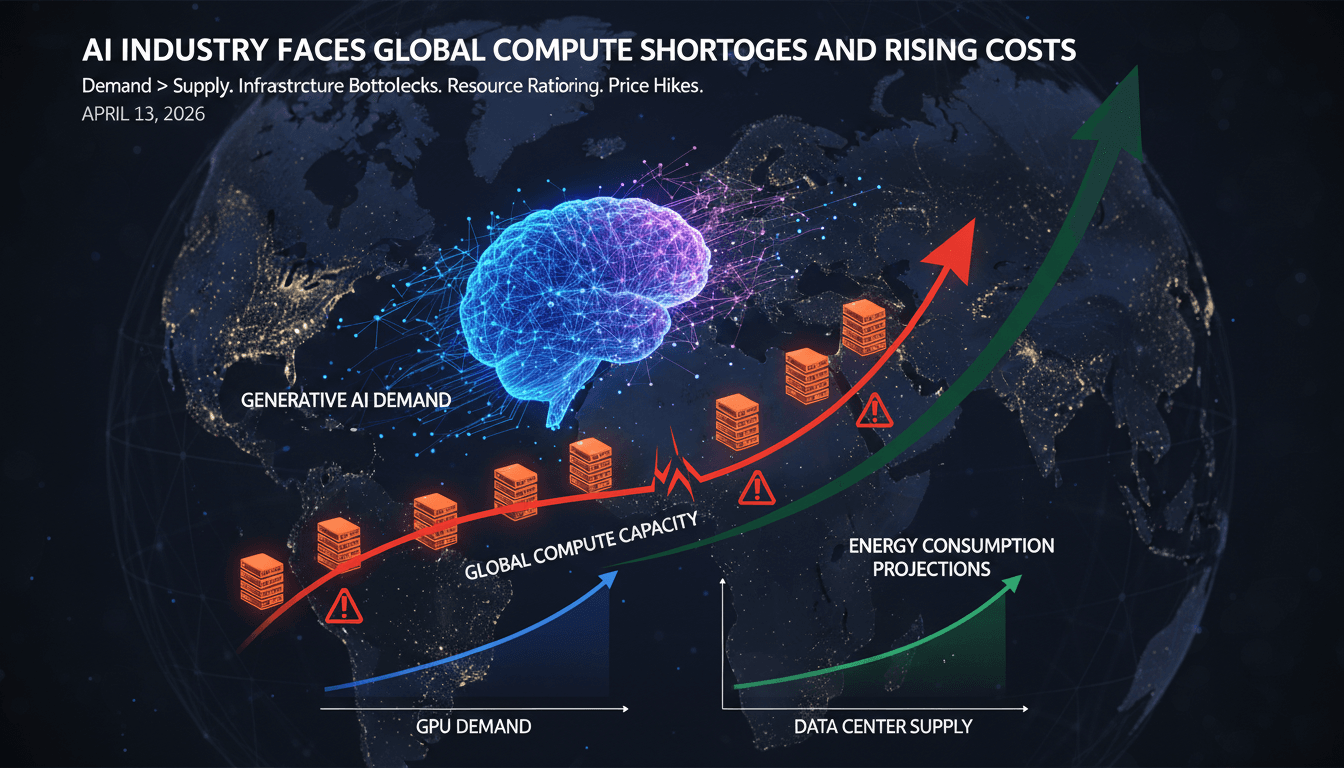
- Compute capacity constraints emerged on April 13, 2026, as demand for GPUs and data centers exceeded supply.
- Leading developers like OpenAI and Anthropic initiated resource rationing and faced rental price surges exceeding 48%.
- Infrastructure bottlenecks are causing outages and limiting expansion, impacting the entire AI ecosystem.
The context you actually need
- Surge in demand: Since late 2022, the generative AI boom has driven demand for high-performance computing, particularly Nvidia GPUs, far beyond supply capabilities.
- Energy strain: Global electricity consumption for data centers is projected to double from 415 TWh in 2024 to 945 TWh by 2030, straining energy grids.
- Market shifts: Major AI providers have begun enforcing usage quotas and product limitations to manage the crisis, indicating a shift in how AI services are delivered.
What's really happening
The AI sector is experiencing a compute capacity crisis, primarily driven by an explosive demand for high-performance computing resources. Since late 2022, the generative AI boom has propelled the need for Nvidia GPUs and other computing resources to unprecedented levels. By early 2026, OpenAI's API token usage skyrocketed from 6 billion to 15 billion per minute, highlighting the insatiable appetite for AI capabilities. This surge has outstripped supply chain capacities, leading to significant resource constraints.
As demand surged, energy grids began to reach their allocation limits, with data center construction lagging by years. The International Energy Agency projects that global data center electricity consumption will double by 2030, exacerbating the existing strain on energy resources. This situation has led to a perfect storm where AI developers are now facing outages and escalating costs. For instance, Nvidia Blackwell GPU hourly rental rates surged by 48%, from $2.75 to $4.08, within just two months. CoreWeave, a major player in the AI infrastructure space, implemented over 20% price hikes and extended contracts to manage the increased demand.
In response to these challenges, AI providers have enforced token limits, session quotas, and product curtailments. OpenAI even discontinued its Sora video generation service to reallocate compute resources more effectively. These measures indicate a significant shift in how AI services are being managed and delivered, as companies scramble to maintain service levels amid resource shortages.
The UAE, particularly Dubai, is positioning itself as a resilient hub for AI infrastructure. With data centers in the UAE consuming 3 TWh in 2025—2% of the national electricity—this figure is projected to double by 2030. Investments like Microsoft's $15.2 billion commitment to AI infrastructure are crucial for sustaining availability amid global shortages. However, this growth comes with risks, as the increased demand for electricity could strain local energy grids.
Who feels it first (and how)
- AI Developers: Companies like OpenAI and Anthropic face operational challenges and increased costs.
- Data Center Operators: Firms like CoreWeave are experiencing price hikes and resource rationing.
- Tech Startups: Smaller companies relying on AI services may struggle with access and affordability.
- Energy Providers: Increased demand for electricity from data centers could strain local energy grids.
- Consumers: End-users may see higher costs for AI-driven products and services.
What to watch next
- Infrastructure investments: Monitor how companies like Microsoft and others invest in data centers to alleviate shortages, as this will impact availability and pricing.
- Energy consumption trends: Keep an eye on electricity consumption projections for data centers, as rising demand could lead to regulatory changes or energy shortages.
- AI service adaptations: Watch for how AI providers adjust their service offerings and pricing models in response to ongoing compute constraints.
The AI sector is facing significant compute capacity constraints and rising costs.
Continued resource rationing and price increases will affect AI service availability and innovation.
The long-term impact on energy grids and how quickly infrastructure can adapt to meet demand.
Frequently Asked Questions
- Why it matters?
- The AI industry's rapid growth is now constrained by critical resource shortages, affecting innovation and operational costs.
- What happened (in 30 seconds)?
- Compute capacity constraints emerged on April 13, 2026, as demand for GPUs and data centers exceeded supply. Leading developers like OpenAI and Anthropic initiated resource rationing and faced rental price surges exceeding 48%. Infrastructure bottlenecks are causing outages and limiting expansion, impacting the entire AI ecosystem.
- What's really happening?
- The AI sector is experiencing a compute capacity crisis, primarily driven by an explosive demand for high-performance computing resources. Since late 2022, the generative AI boom has propelled the need for Nvidia GPUs and other computing resources to unprecedented levels. By early 2026, OpenAI's API token usage skyrocketed from 6 billion to 15 billion per minute, highlighting the insatiable appetite for AI capabilities. This surge has outstripped supply chain capacities, leading to significant r
- Who feels it first (and how)?
- AI Developers: Companies like OpenAI and Anthropic face operational challenges and increased costs. Data Center Operators: Firms like CoreWeave are experiencing price hikes and resource rationing. Tech Startups: Smaller companies relying on AI services may struggle with access and affordability. Energy Providers: Increased demand for electricity from data centers could strain local energy grids. Consumers: End-users may see higher costs for AI-driven products and services.
- What to watch next?
- Infrastructure investments: Monitor how companies like Microsoft and others invest in data centers to alleviate shortages, as this will impact availability and pricing. Energy consumption trends: Keep an eye on electricity consumption projections for data centers, as rising demand could lead to regulatory changes or energy shortages. AI service adaptations: Watch for how AI providers adjust their service offerings and pricing models in response to ongoing compute constraints.
Global business headlines with AI angles.
"General business outlet that frequently covers AI."
— A47 Editor
AI Boom Hits a Wall As Computing Power Runs Short And Costs Surge: Report
The artificial intelligence sector is experiencing significant challenges as the rapid adoption of advanced AI tools surpasses global computing capacity, leading to increased costs and restricted access, according to a recent report.
Daily AI news: models, tools, and policy.
"Independent outlet tracking the fast pace of AI."
— A47 Editor
The AI industry is running out of compute, with outages, rationing, and rising GPU prices
The AI industry is facing significant challenges as surging demand for AI agents collides with limited compute capacity, leading to outages and a sharp increase in GPU prices by nearly 50%. Companies like Anthropic are struggling with service interru...
Tech business coverage, major deals, product launches, and Silicon Valley trends.
"WSJ’s tech section offers authoritative reporting on the intersection of technology and business, including exclusive industry analysis."
— A47 Editor
We’re Using So Much AI That Computing Firepower Is Running Out
AI companies are facing a critical shortage of computing power as demand for artificial intelligence technologies surges, leading to rationing of their offerings and products, which is causing dissatisfaction among users. This situation serves as a w...