
Nafis Program Announces Gradual Reduction in Salary Support for Emiratis Earning Over 20,000 AED
Here's what it means for you.
If you're an Emirati in the private sector earning over 20,000 AED, expect a gradual decrease in salary support that could affect your financial planning.
Why it matters
This adjustment reflects a broader shift towards self-sufficiency and labor market reform in the UAE.
What happened (in 30 seconds)
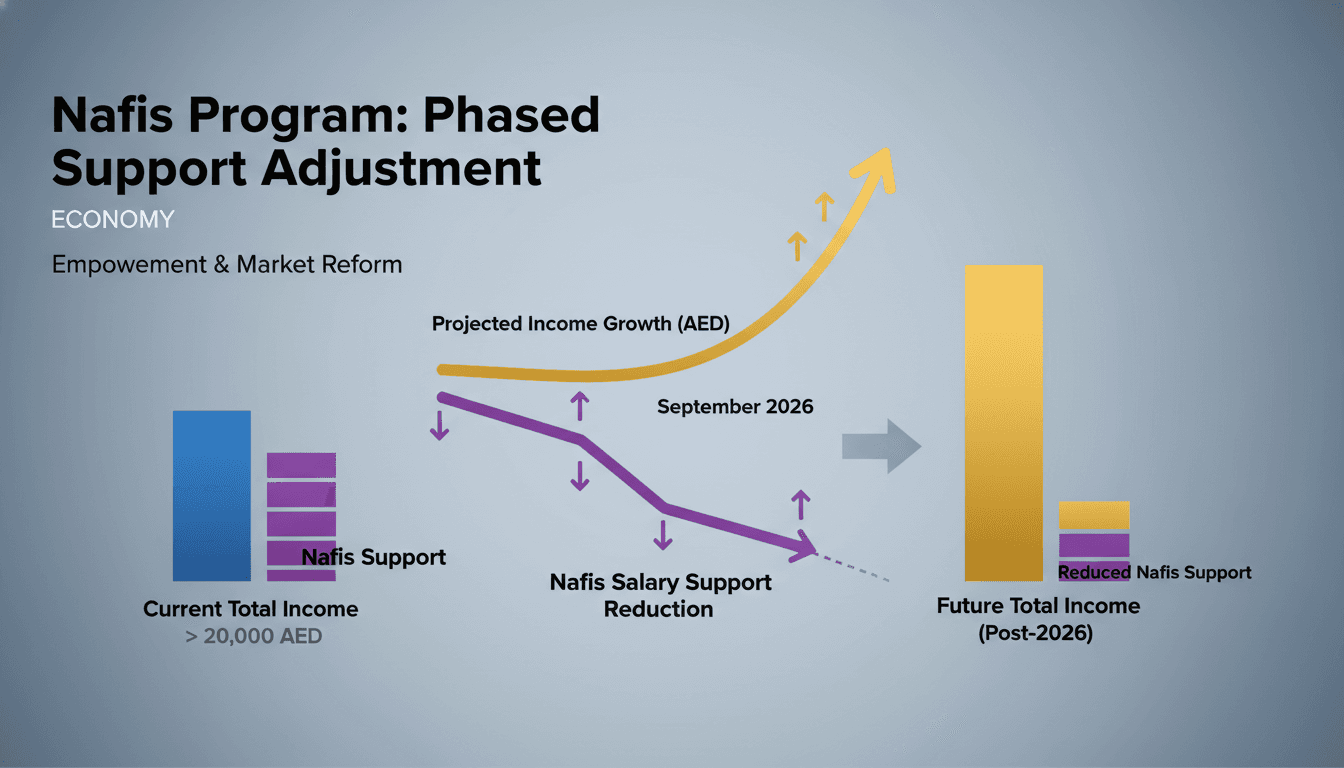
- On April 16, 2026, the Nafis program announced a tapering of financial support for Emiratis earning above 20,000 AED.
- Effective September 2026, support will decrease by 500 AED every six months, emphasizing a transitional approach.
- This aligns with ongoing labor market reforms, including minimum wage mandates across the UAE.
The context you actually need
- Nafis was initiated in 2021 to integrate 75,000 Emiratis into the private sector by 2026, with a focus on skill development and financial independence.
- The program's recent updates come amid geopolitical pressures for national workforce sustainability and economic diversification.
- Dubai's Emiratisation quotas (4-10% across sectors) make this federal adjustment particularly relevant, promoting a performance-driven culture.
What's really happening
The Nafis program, overseen by the Emirates Cadres Competitiveness Council, is designed to empower Emiratis in the private sector while gradually reducing reliance on government subsidies. The decision to taper financial support for those earning above 20,000 AED monthly is rooted in a strategic vision for a more self-sufficient workforce.
By implementing a structured reduction of 500 AED every six months starting in September 2026, the program aims to encourage Emiratis to enhance their skills and seek higher-paying positions, thereby fostering a culture of performance and accountability. This aligns with the UAE's broader labor market reforms, which include minimum wage mandates intended to uplift the overall income levels of workers across various sectors.
The rationale behind this adjustment is not merely fiscal; it reflects a commitment to transitioning Emiratis from dependency on government support to achieving financial independence. The program has already shown promising results, with a reported 50% increase in average income among beneficiaries, indicating that the initiative is driving career progression and skill enhancement.
However, the reduction in support has sparked polarized reactions on social media, with some praising the move towards self-sufficiency while others express concerns about the viability of salaries in the private sector. The ongoing discourse highlights the delicate balance between empowering citizens and ensuring that they can sustain their livelihoods without government assistance.
As the UAE continues to refine its Emiratisation policies, the Nafis program's adjustments signal a pivotal moment in the country's economic landscape. The focus on skill development and financial independence is likely to reshape the employment dynamics in the private sector, pushing Emiratis to adapt to a more competitive job market.
Who feels it first (and how)
- Emirati professionals earning above 20,000 AED in the private sector will see a direct impact on their salary support.
- Employers in sectors with high Emiratisation quotas will need to adjust their hiring and salary strategies.
- Families of Emiratis may experience changes in household income stability as support decreases.
What to watch next
- Monitoring salary trends: Keep an eye on how private sector salaries evolve in response to the tapering support, as this will indicate the market's adaptability.
- Skill development initiatives: Watch for new programs or incentives aimed at enhancing the skills of Emiratis, which will be crucial for their career advancement.
- Public sentiment: Gauge the public's reaction to these changes, as ongoing discussions could influence future policy adjustments.
The Nafis program will reduce salary support for Emiratis earning over 20,000 AED starting September 2026.
There will be an increased emphasis on skill development and performance in the private sector.
The long-term impact on employment rates and income stability for Emiratis in the private sector remains to be seen.
Frequently Asked Questions
- Why it matters?
- This adjustment reflects a broader shift towards self-sufficiency and labor market reform in the UAE.
- What happened (in 30 seconds)?
- On April 16, 2026, the Nafis program announced a tapering of financial support for Emiratis earning above 20,000 AED. Effective September 2026, support will decrease by 500 AED every six months, emphasizing a transitional approach. This aligns with ongoing labor market reforms, including minimum wage mandates across the UAE.
- What's really happening?
- The Nafis program, overseen by the Emirates Cadres Competitiveness Council, is designed to empower Emiratis in the private sector while gradually reducing reliance on government subsidies. The decision to taper financial support for those earning above 20,000 AED monthly is rooted in a strategic vision for a more self-sufficient workforce. By implementing a structured reduction of 500 AED every six months starting in September 2026, the program aims to encourage Emiratis to enhance their skill
- Who feels it first (and how)?
- Emirati professionals earning above 20,000 AED in the private sector will see a direct impact on their salary support. Employers in sectors with high Emiratisation quotas will need to adjust their hiring and salary strategies. Families of Emiratis may experience changes in household income stability as support decreases.
- What to watch next?
- Monitoring salary trends: Keep an eye on how private sector salaries evolve in response to the tapering support, as this will indicate the market's adaptability. Skill development initiatives: Watch for new programs or incentives aimed at enhancing the skills of Emiratis, which will be crucial for their career advancement. Public sentiment: Gauge the public's reaction to these changes, as ongoing discussions could influence future policy adjustments.
Arabic-language UAE newspaper coverage focused on domestic affairs, public institutions, business, society, and regional developments.
"Al Khaleej coverage generally reflects a mainstream UAE editorial lens with strong attention to public affairs, institutions, and regional developments."
— A47 Editor
«نافس» يوضح أسباب خفض الدعم للمواطنين في القطاع الخاص
The program 'Nafes' has clarified that the gradual reduction of support for citizens working in the private sector is not a retreat from the state's commitment to its citizens. It emphasizes that the support was designed as a transitional empowerment...
Arabic-language local coverage focused on UAE domestic issues, civic affairs, and community reporting.
"Emarat Al Youm local coverage emphasizes UAE institutions, public services, and community-level developments."
— A47 Editor
«نافس» يوضح مبررات شمول أبناء المواطنات وزوجات المواطنين بدعم الرواتب في القطاع الخاص «نافس» يوضح مبررات شمول أبناء المواطنات وزوجات المواطنين بدعم الرواتب في القطاع الخاص
The federal program 'Nafes' has expanded its support to include the children of female citizens and the wives of male citizens in salary support for the private sector, aiming to enhance the competitiveness of Emirati talent and increase their employ...
Arabic-language local coverage focused on UAE domestic issues, civic affairs, and community reporting.
"Emarat Al Youm local coverage emphasizes UAE institutions, public services, and community-level developments."
— A47 Editor
«نافس» يشرح أسباب خفض الدعم المخصص لرواتب المواطنين العاملين في القطاع الخاص «نافس» يشرح أسباب خفض الدعم المخصص لرواتب المواطنين العاملين في القطاع الخاص
The federal program Naif has explained the reasons behind the reduction of support allocated to the salaries of Emirati citizens working in the private sector, indicating a shift in policy that may affect employment dynamics.