
Monetary Authority of Singapore Tightens Monetary Policy to Combat Rising Inflation
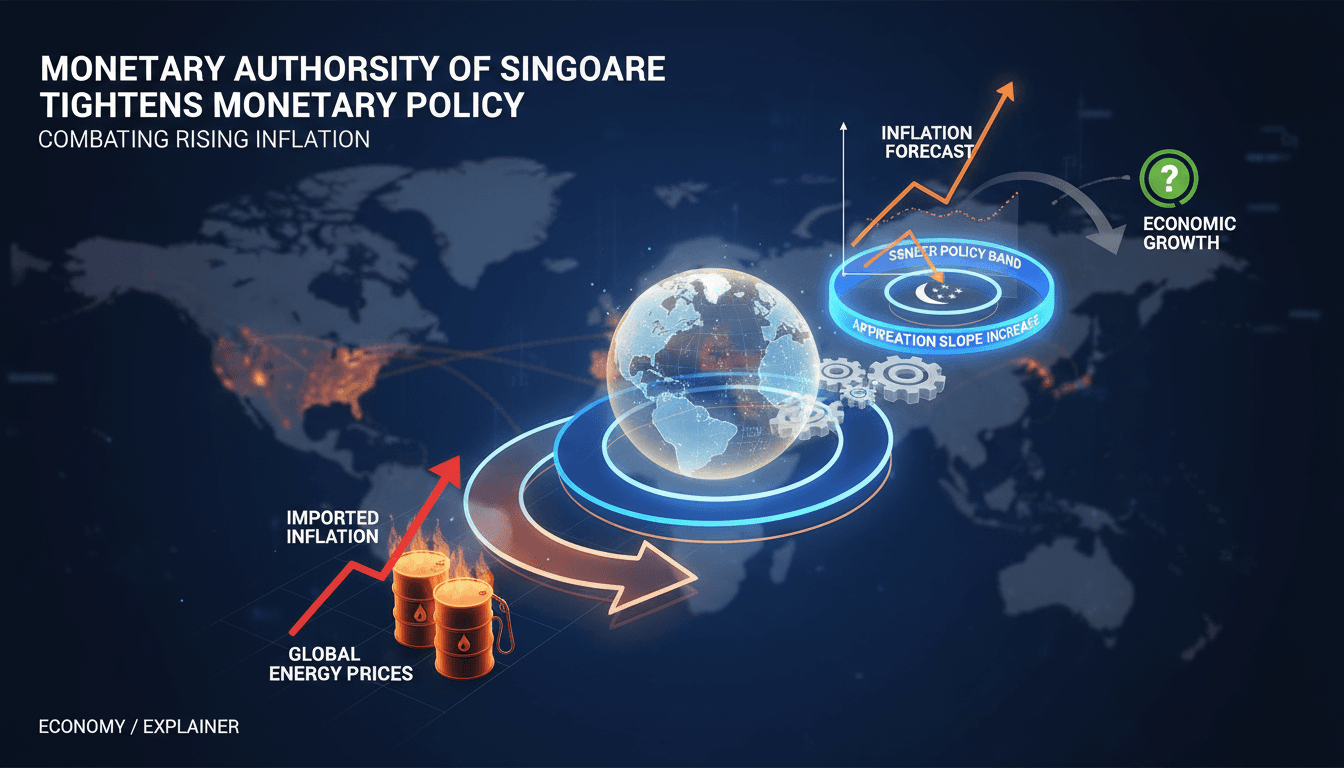
Here's what it means for you.
If you’re involved in international trade or energy markets, this policy shift could influence pricing and cost structures in your operations.
Why it matters
This adjustment signals a proactive approach to managing inflation risks that could ripple through global markets.
What happened (in 30 seconds)
- The Monetary Authority of Singapore (MAS) tightened its monetary policy on April 14, 2026, by increasing the S$NEER appreciation slope.
- Inflation forecasts for 2026 were raised to 1.5–2.5% from 1.0–2.0%, reflecting rising energy costs.
- GDP growth projections were downgraded amid global uncertainties, with Q1 growth slowing to 4.6% year-on-year.
The context you actually need
- MAS manages monetary policy through the S$NEER policy band, targeting medium-term price stability.
- Geopolitical tensions in the Middle East have led to increased energy prices, impacting Singapore's import costs.
- Previous settings were maintained in January 2026, but recent developments necessitated a policy response.
What's really happening
On April 14, 2026, the Monetary Authority of Singapore (MAS) announced a slight increase in the appreciation slope of the Singapore nominal effective exchange rate (S$NEER) policy band. This marks the first adjustment since 2022 and comes in response to rising imported inflation driven by surging energy costs, particularly due to geopolitical tensions in the Middle East. The Strait of Hormuz, a critical shipping route, has faced disruptions, leading to sharp increases in global crude oil and natural gas prices.
The MAS's decision reflects a balancing act: while core inflation remained steady at 1.2% year-on-year in early 2026, the central bank anticipates a pickup in inflation due to elevated energy prices. By tightening monetary policy, MAS aims to mitigate the impact of these rising costs on the economy. The adjustment does not alter the width or centering level of the S$NEER policy band, indicating a measured approach to tightening.
In its updated forecasts, MAS projected core and headline inflation for 2026 to rise to 1.5–2.5%, up from the previous estimate of 1.0–2.0%. This revision underscores the central bank's concern over imported inflation, particularly as Singapore relies heavily on energy imports. The MAS also noted a slowdown in GDP growth, with Q1 2026 growth at 4.6% year-on-year, down from the above-trend pace of 2025. This contraction, coupled with geopolitical uncertainties, suggests that the MAS is preparing for a potentially volatile economic environment.
Market reactions to the announcement were stable, with the Singapore dollar holding steady against the USD. Analysts from major financial institutions described the MAS's move as cautious, indicating that further tightening could occur if inflationary pressures persist. The MAS has signaled its readiness to respond to market volatility, emphasizing its commitment to maintaining price stability.
Who feels it first (and how)
- Importers: Increased costs for energy and goods could squeeze margins.
- Consumers: Higher prices for imported goods may lead to increased living costs.
- Businesses in energy sectors: Fluctuations in energy prices could impact operational costs and profitability.
- Financial markets: Investors may adjust portfolios in response to anticipated inflation and currency fluctuations.
What to watch next
- Inflation trends: Monitor core and headline inflation rates to gauge the effectiveness of MAS's policy adjustments.
- Geopolitical developments: Watch for changes in Middle East tensions that could further impact energy prices.
- GDP growth forecasts: Keep an eye on economic growth indicators to assess the broader impact of monetary policy on Singapore's economy.
MAS has increased the S$NEER appreciation slope to combat inflation.
Further tightening may occur if inflation continues to rise.
The long-term effects of this policy on Singapore's economic growth and stability.
Frequently Asked Questions
- Why it matters?
- This adjustment signals a proactive approach to managing inflation risks that could ripple through global markets.
- What happened (in 30 seconds)?
- The Monetary Authority of Singapore (MAS) tightened its monetary policy on April 14, 2026, by increasing the S$NEER appreciation slope. Inflation forecasts for 2026 were raised to 1.5–2.5% from 1.0–2.0%, reflecting rising energy costs. GDP growth projections were downgraded amid global uncertainties, with Q1 growth slowing to 4.6% year-on-year.
- What's really happening?
- On April 14, 2026, the Monetary Authority of Singapore (MAS) announced a slight increase in the appreciation slope of the Singapore nominal effective exchange rate (S$NEER) policy band. This marks the first adjustment since 2022 and comes in response to rising imported inflation driven by surging energy costs, particularly due to geopolitical tensions in the Middle East. The Strait of Hormuz, a critical shipping route, has faced disruptions, leading to sharp increases in global crude oil and nat
- Who feels it first (and how)?
- Importers: Increased costs for energy and goods could squeeze margins. Consumers: Higher prices for imported goods may lead to increased living costs. Businesses in energy sectors: Fluctuations in energy prices could impact operational costs and profitability. Financial markets: Investors may adjust portfolios in response to anticipated inflation and currency fluctuations.
- What to watch next?
- Inflation trends: Monitor core and headline inflation rates to gauge the effectiveness of MAS's policy adjustments. Geopolitical developments: Watch for changes in Middle East tensions that could further impact energy prices. GDP growth forecasts: Keep an eye on economic growth indicators to assess the broader impact of monetary policy on Singapore's economy.
Arabic-language political and world news coverage for UAE readers.
"Emarat Al Youm world coverage usually presents international developments through a UAE and Arab audience lens."
— A47 Editor
سنغافورة تشدد سياستها النقدية سنغافورة تشدد سياستها النقدية
The Monetary Authority of Singapore has tightened its monetary policy and raised its inflation forecasts, responding to the volatility caused by the ongoing conflict in the Middle East. This decision reflects concerns over economic stability and infl...
Social/economic commentary and analysis relevant to business and markets.
"WSJ blends data-driven economic insight with commentary on policy and society."
— A47 Editor
Singapore Central Bank Tightens Policy as It Braces for Slower Growth, Higher Prices
Singapore's central bank has tightened its monetary policy for the first time in over three years, responding to economic challenges posed by the ongoing conflict in the Middle East, which is expected to lead to slower growth and higher prices.
Macro commentary, policy analysis, growth/inflation themes, and global outlooks.
"Contextual macro coverage that complements day-to-day market headlines."
— A47 Editor
Singapore tightens monetary policy as Iran war fuels inflation risks
Singapore's central bank has tightened its monetary policy for the first time in over three years, responding to inflation risks exacerbated by the ongoing conflict in Iran, which has driven up energy prices and import costs.
Editor-curated FT homepage stories spanning markets, business, world, and opinion.
"The Financial Times is a globally respected business publication with a centrist/center-left tone and strong markets focus."
— A47 Editor
Singapore tightens monetary policy as energy shock hits Asia
Singapore has tightened its monetary policy in response to rising energy prices and inflationary pressures, driven by the ongoing conflict in the Middle East, particularly in Iran. This marks a significant shift for the trade-dependent nation, which ...
Global markets, investing, and macroeconomics from a premier financial newsroom.
"Bloomberg is respected for in-depth financial reporting and data-driven analysis."
— A47 Editor
Singapore May Tighten Policy as Oil Shock Lifts Prices
Singapore's central bank is expected to tighten monetary policy in response to rising import costs driven by the ongoing conflict in Iran, which has significantly increased energy prices and inflationary pressures. This adjustment may position Singap...