
Meta Platforms Expected to Surpass Google in Global Digital Ad Revenue by 2026
Here's what it means for you.
As a marketer or business owner, understanding this shift can help you optimize your ad strategies and budget allocations.
Why it matters
This change indicates a significant shift in the digital advertising landscape, impacting how brands engage with consumers.
What happened (in 30 seconds)
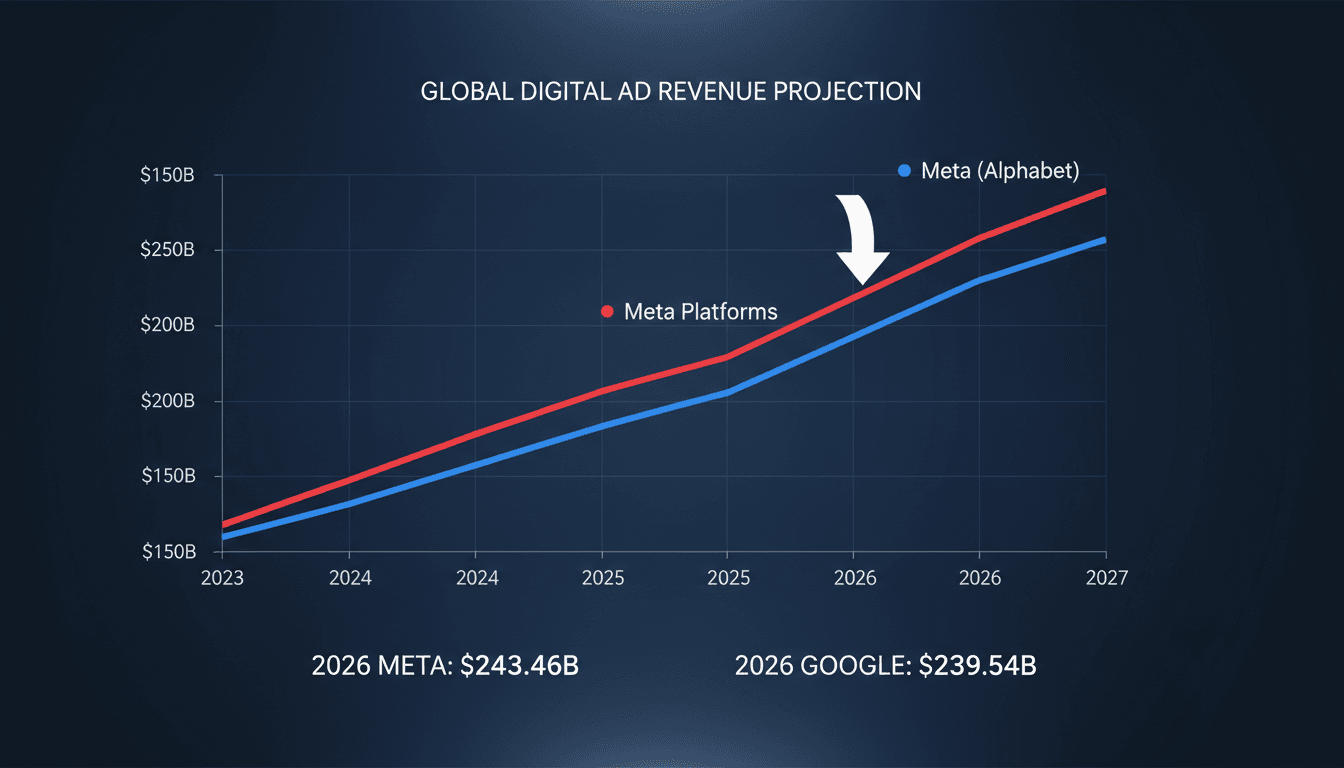
- Meta Platforms is projected to surpass Alphabet's Google in net digital ad revenue by 2026, with estimates of $243.46 billion compared to Google's $239.54 billion.
- Meta's growth is fueled by AI-driven ad products and the popularity of platforms like Instagram Reels, while Google faces challenges from rising content acquisition costs.
- This marks the first time Meta is expected to lead in global digital ad revenue, reflecting a broader trend of changing consumer engagement.
The context you actually need
- Meta's ad revenue grew by 22% in 2025, reaching $196.8 billion, driven by record demand during the holiday season.
- Google's ad growth has slowed, with annual increases around 10-13%, as it navigates higher traffic acquisition costs and subscription models.
- The digital advertising market has been dominated by Google since the early 2010s, with Meta emerging as a strong competitor through innovative ad formats and platforms.
What's really happening
The projected shift in digital ad revenue leadership from Google to Meta Platforms is rooted in several interrelated factors. Meta's strategic pivot towards artificial intelligence (AI) has significantly enhanced its advertising capabilities. The company has invested heavily in AI-driven ad optimization tools, which allow for more personalized and effective ad targeting. This has translated into higher engagement rates and, consequently, increased ad spend from brands looking to capitalize on these innovations.
In contrast, Google, while still a dominant player, is experiencing moderated growth due to rising traffic acquisition costs (TAC) and a shift towards subscription-based revenue models, such as YouTube Premium. These factors have constrained Google's ability to expand its ad revenue at the same pace as Meta. The competition between these two tech giants is not just about revenue figures; it reflects a broader transformation in how consumers interact with digital content. Meta's success with short-form video content, particularly through Instagram Reels, has resonated with users, particularly younger demographics who prefer engaging, bite-sized content.
Moreover, Meta's recovery from previous setbacks, such as the ad revenue slowdown linked to Apple's privacy changes, has positioned it for a resurgence. The company has adeptly navigated these challenges by diversifying its offerings and enhancing monetization strategies across platforms like Instagram and WhatsApp. This adaptability has allowed Meta to capture a larger share of the digital advertising pie.
As the digital ad market evolves, the implications extend beyond just Meta and Google. The anticipated shift in leadership could influence how advertisers allocate their budgets, with a potential increase in investment towards Meta's platforms. This could lead to a more competitive landscape where brands must continually innovate to capture consumer attention across multiple channels.
Who feels it first (and how)
- Marketers: They will need to adjust strategies to leverage Meta's enhanced ad capabilities.
- Small and Medium Enterprises (SMEs): These businesses often rely on digital ads for growth and may benefit from lower costs on Meta's platforms.
- Consumers: Increased personalization in ads on platforms like Instagram and Facebook may enhance user experience but also raise privacy concerns.
- Advertising Agencies: They will need to adapt to shifting client demands and optimize campaigns across both Meta and Google platforms.
What to watch next
- Meta's AI ad suite performance: Monitoring how effectively Meta's AI tools drive ad revenue growth will be crucial.
- Google's response strategies: Watch for any new initiatives from Google aimed at countering Meta's growth, particularly in AI and content monetization.
- Market trends in digital ad spending: Keep an eye on overall trends in digital ad budgets, especially in emerging markets like the Middle East, where both platforms are heavily invested.
Meta is projected to surpass Google in digital ad revenue by 2026.
Advertisers will increasingly shift budgets towards Meta as its ad products become more effective.
The long-term impact on Google's market position and its strategies to regain ad revenue growth remains uncertain.
Frequently Asked Questions
- Why it matters?
- This change indicates a significant shift in the digital advertising landscape, impacting how brands engage with consumers.
- What happened (in 30 seconds)?
- Meta Platforms is projected to surpass Alphabet's Google in net digital ad revenue by 2026, with estimates of $243.46 billion compared to Google's $239.54 billion. Meta's growth is fueled by AI-driven ad products and the popularity of platforms like Instagram Reels, while Google faces challenges from rising content acquisition costs. This marks the first time Meta is expected to lead in global digital ad revenue, reflecting a broader trend of changing consumer engagement.
- What's really happening?
- The projected shift in digital ad revenue leadership from Google to Meta Platforms is rooted in several interrelated factors. Meta's strategic pivot towards artificial intelligence (AI) has significantly enhanced its advertising capabilities. The company has invested heavily in AI-driven ad optimization tools, which allow for more personalized and effective ad targeting. This has translated into higher engagement rates and, consequently, increased ad spend from brands looking to capitalize on th
- Who feels it first (and how)?
- Marketers: They will need to adjust strategies to leverage Meta's enhanced ad capabilities. Small and Medium Enterprises (SMEs): These businesses often rely on digital ads for growth and may benefit from lower costs on Meta's platforms. Consumers: Increased personalization in ads on platforms like Instagram and Facebook may enhance user experience but also raise privacy concerns. Advertising Agencies: They will need to adapt to shifting client demands and optimize campaigns across both Meta and
- What to watch next?
- Meta's AI ad suite performance: Monitoring how effectively Meta's AI tools drive ad revenue growth will be crucial. Google's response strategies: Watch for any new initiatives from Google aimed at countering Meta's growth, particularly in AI and content monetization. Market trends in digital ad spending: Keep an eye on overall trends in digital ad budgets, especially in emerging markets like the Middle East, where both platforms are heavily invested.
Tech business coverage, major deals, product launches, and Silicon Valley trends.
"WSJ’s tech section offers authoritative reporting on the intersection of technology and business, including exclusive industry analysis."
— A47 Editor
Meta Expected to Unseat Google as World’s Largest Digital-Ad Player
Meta is poised to surpass Google as the world's largest digital advertising player, driven by innovative advertising products and advancements in artificial intelligence. This shift reflects a growing confidence in Meta's ability to leverage its plat...
U.S. business news, corporate developments, and economy.
"The Wall Street Journal is respected for deep financial and economic reporting with a center-right editorial perspective."
— A47 Editor
Meta Expected to Unseat Google as World’s Largest Digital-Ad Player
Meta is poised to surpass Google as the world's largest digital advertising player, driven by the introduction of innovative advertising products and advancements in artificial intelligence. This shift comes as Meta continues to enhance its platforms...