
Record $18.84 Billion Outflow from Indian Equities Amid US-Iran War and Economic Concerns
Here's what it means for you.
If you’re invested in Indian equities or considering entering the market, the recent outflows signal heightened volatility and potential long-term shifts in investment strategies.
Why it matters
The unprecedented withdrawal of foreign funds from Indian equities reflects deepening concerns about economic stability and growth prospects.
What happened (in 30 seconds)
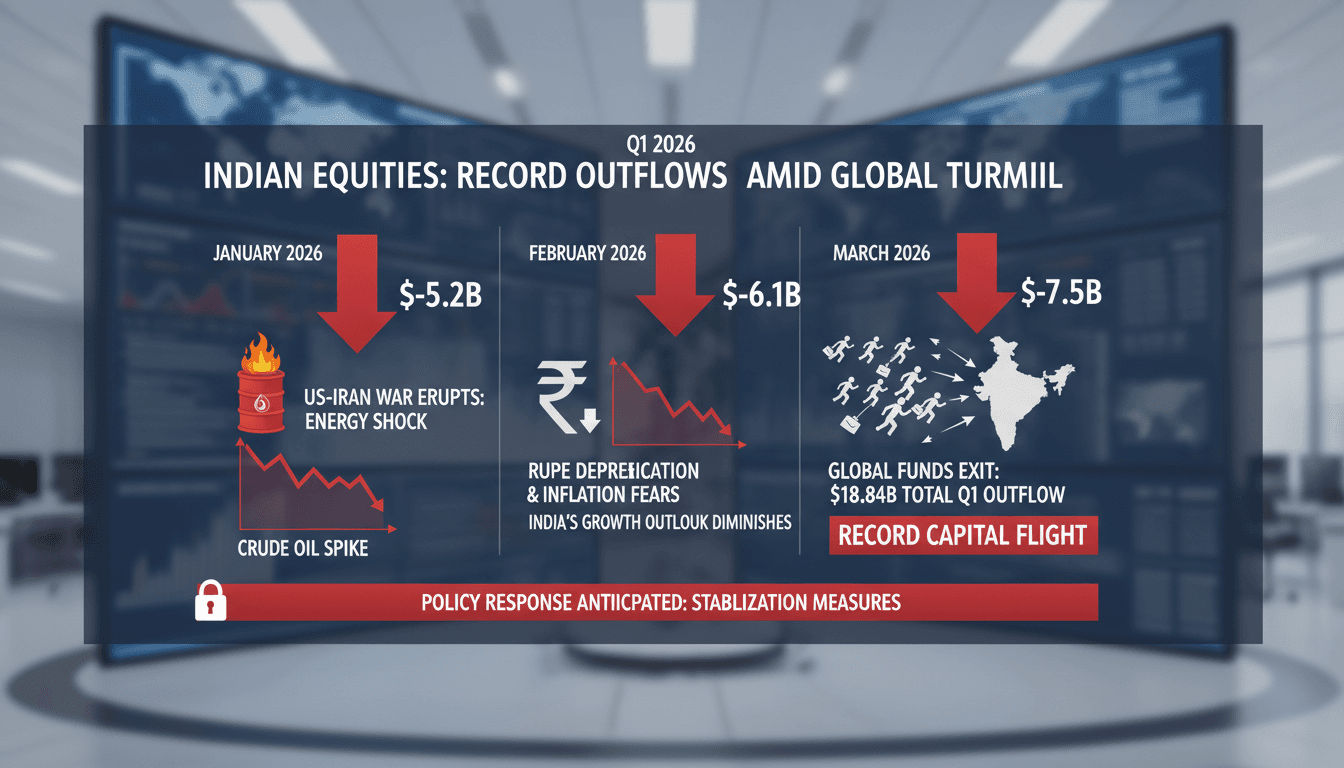
- Global funds withdrew a record $18.84 billion from Indian equities in just over three months, marking the largest outflow ever.
- March alone saw approximately $12 billion in sales, driven by geopolitical tensions and economic fears.
- The Nifty 50 index declined by 8% year-to-date, with market capitalization shrinking by $600 billion from previous highs.
The context you actually need
- India had previously attracted significant foreign investment due to strong GDP growth projections exceeding 7%, but rising US yields and stretched valuations in 2025 led to record outflows.
- The US-Iran war, beginning in late February 2026, disrupted oil supplies and pushed crude prices higher, further weakening the Indian rupee and exacerbating economic concerns.
- Domestic institutional investors have stepped in, infusing $31 billion year-to-date, but analysts warn of the risks associated with reliance on foreign portfolio investors (FPIs).
What's really happening
The record outflow from Indian equities is a multifaceted issue rooted in geopolitical tensions and economic vulnerabilities. The US-Iran war, which escalated around February 28, 2026, significantly impacted global oil supplies, particularly through the Strait of Hormuz, a critical shipping route. This disruption led to elevated oil prices, which not only affected inflation but also raised concerns about India's energy security and economic growth.
As crude prices surged, the Indian rupee depreciated to record lows against the US dollar, making imports more expensive and further straining the economy. The combination of high oil prices and a weakening currency created a perfect storm, prompting foreign investors to reassess their positions in Indian equities. In March 2026 alone, FPIs sold over ₹52,704 crore (approximately $6.4 billion) in just two weeks, with financials being the most targeted sector.
The Securities and Exchange Board of India (SEBI) and the Reserve Bank of India (RBI) responded to these challenges by implementing measures to stabilize the market. SEBI eased FPI settlement rules, while the RBI intervened in the forex markets to curb the rupee's decline. Despite these efforts, the Nifty 50 index experienced its worst month in years, plummeting by 11.3% to 13%.
The absence of AI-driven growth narratives, which have buoyed markets in countries like South Korea and Taiwan, further compounded the situation. Investors are increasingly cautious, leading to a significant drop in market capitalization—$600 billion lost since the peak. While domestic mutual funds and institutions have provided some support, the overall sentiment remains fragile, with foreign investors largely sidelined.
As the situation evolves, the Indian market faces the dual challenge of restoring investor confidence while navigating the ongoing geopolitical landscape.
Who feels it first (and how)
- Foreign Portfolio Investors (FPIs): Directly impacted by losses and reduced confidence in Indian equities.
- Domestic Institutional Investors (DIIs): May face increased pressure to stabilize the market amid foreign sell-offs.
- Retail Investors: Likely to experience volatility in their portfolios and may reconsider investment strategies.
- Energy Sector: Companies reliant on stable oil prices and currency exchange rates are particularly vulnerable.
- General Public: Consumers may face higher inflation due to rising fuel prices, impacting disposable income.
What to watch next
- Foreign Investment Trends: Monitoring FPI inflows and outflows will provide insights into market sentiment and economic stability.
- Rupee Exchange Rate: Fluctuations in the rupee's value against the dollar will indicate the effectiveness of RBI interventions and overall economic health.
- Oil Prices: Continued volatility in crude oil prices will impact inflation and economic growth, influencing investor confidence.
Record outflows from Indian equities have occurred, driven by geopolitical tensions and economic fears.
Continued caution from foreign investors, with potential for further outflows if geopolitical tensions persist.
The long-term impact on India's economic growth and investor sentiment as the geopolitical landscape evolves.
Frequently Asked Questions
- Why it matters?
- The unprecedented withdrawal of foreign funds from Indian equities reflects deepening concerns about economic stability and growth prospects.
- What happened (in 30 seconds)?
- Global funds withdrew a record $18.84 billion from Indian equities in just over three months, marking the largest outflow ever. March alone saw approximately $12 billion in sales, driven by geopolitical tensions and economic fears. The Nifty 50 index declined by 8% year-to-date, with market capitalization shrinking by $600 billion from previous highs.
- What's really happening?
- The record outflow from Indian equities is a multifaceted issue rooted in geopolitical tensions and economic vulnerabilities. The US-Iran war, which escalated around February 28, 2026, significantly impacted global oil supplies, particularly through the Strait of Hormuz, a critical shipping route. This disruption led to elevated oil prices, which not only affected inflation but also raised concerns about India's energy security and economic growth. As crude prices surged, the Indian rupee depre
- Who feels it first (and how)?
- Foreign Portfolio Investors (FPIs): Directly impacted by losses and reduced confidence in Indian equities. Domestic Institutional Investors (DIIs): May face increased pressure to stabilize the market amid foreign sell-offs. Retail Investors: Likely to experience volatility in their portfolios and may reconsider investment strategies. Energy Sector: Companies reliant on stable oil prices and currency exchange rates are particularly vulnerable. General Public: Consumers may face higher inflation d
- What to watch next?
- Foreign Investment Trends: Monitoring FPI inflows and outflows will provide insights into market sentiment and economic stability. Rupee Exchange Rate: Fluctuations in the rupee's value against the dollar will indicate the effectiveness of RBI interventions and overall economic health. Oil Prices: Continued volatility in crude oil prices will impact inflation and economic growth, influencing investor confidence.
Arabic-language digital news outlet covering UAE, regional, and international developments with broad general-news coverage.
"Al Ain News coverage typically blends UAE-focused reporting with wider Arab regional and international news."
— A47 Editor
هروب قياسي لصناديق الاستثمار من الهند وسط مخاوف بشأن النمو
Indian financial markets are experiencing an unprecedented wave of foreign investment outflows amid rising concerns over economic slowdown due to the repercussions of the U.S.-Iran conflict, which has cast a heavy shadow over the global economy and e...