
CFTC Investigates Billion-Dollar Oil Trades Linked to Trump Iran Policy Changes
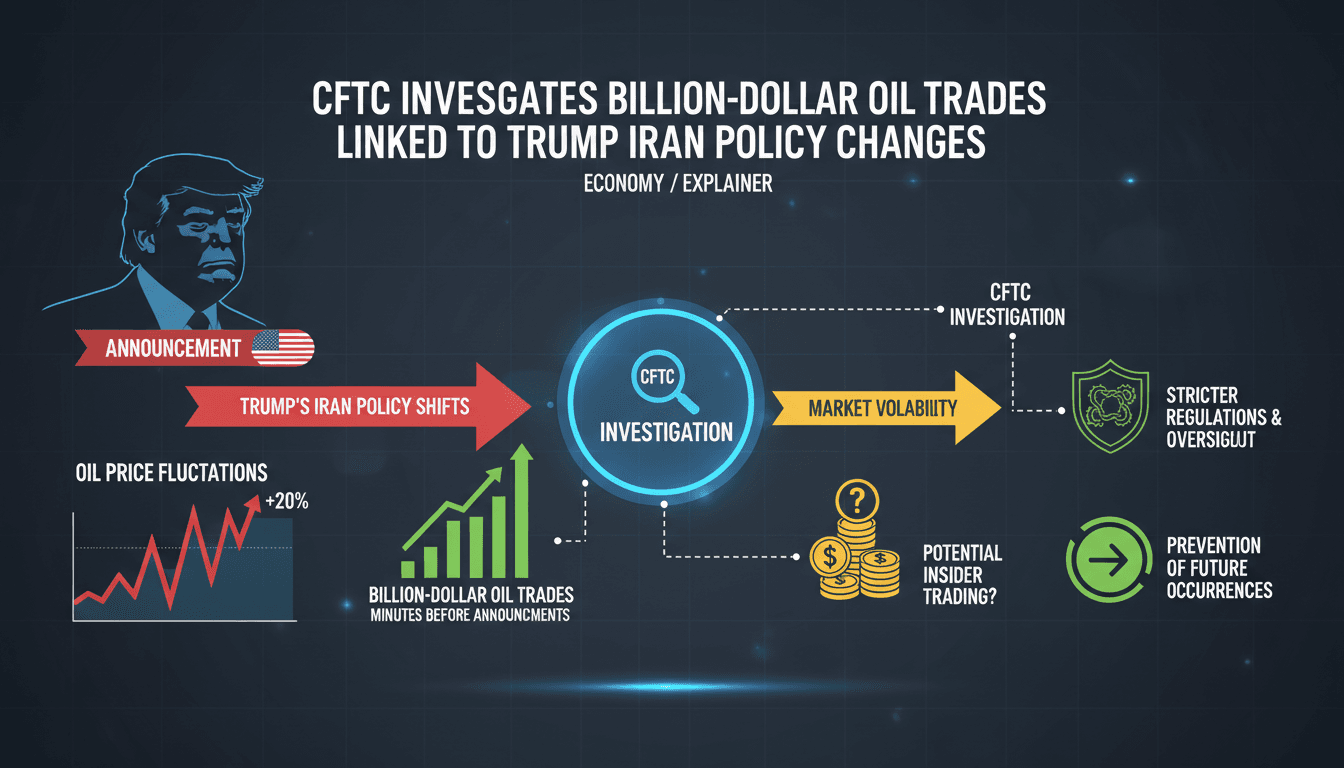
Here's what it means for you.
If you’re involved in energy markets or investment, this investigation could signal increased regulatory scrutiny and volatility in oil prices.
Why it matters
The investigation highlights potential insider trading during a period of geopolitical tension, impacting market integrity and investor confidence.
What happened (in 30 seconds)
- The CFTC launched investigations into suspicious trades worth billions in oil futures and stocks on March 23 and April 7, 2026.
- These trades occurred just before President Trump announced military strategy changes regarding Iran, leading to significant market fluctuations.
- The probes focus on potential insider trading amid heightened volatility from the ongoing U.S.-Israeli conflict with Iran.
The context you actually need
- The U.S.-Israeli war with Iran has disrupted Middle Eastern oil supplies, increasing global demand for U.S. oil alternatives.
- Trump's announcements on social media have caused immediate market reactions, with oil prices fluctuating sharply in response to geopolitical developments.
- U.S. crude oil exports reached record levels, surpassing 5 million barrels per day, reflecting the heightened demand and market dynamics.
What's really happening
The CFTC's investigation into suspicious trading patterns is unfolding against a backdrop of escalating geopolitical tensions in the Middle East, particularly the U.S.-Israeli conflict with Iran. This conflict has not only disrupted oil supplies from the region but has also led to a surge in demand for U.S. crude oil, which recently hit record export levels. On March 23, 2026, just minutes before President Trump announced a postponement of military strikes on Iranian energy infrastructure, billions of dollars in oil futures were traded. This timing raises significant questions about the motivations behind these trades and whether they were influenced by nonpublic information.
The trades in question were executed shortly before key announcements that had immediate and profound impacts on oil prices and stock indices. For instance, the postponement of military action led to a sharp decline in oil prices, while stock indices surged. A similar pattern was observed on April 7, 2026, just hours before Trump declared a two-week ceasefire in the conflict. The CFTC's data indicates that these high-volume trades were not random; they were strategically timed to capitalize on the market's reaction to Trump's announcements.
The implications of these investigations extend beyond mere regulatory scrutiny. They raise fundamental questions about market integrity and the potential for insider trading in times of geopolitical crisis. If traders were indeed acting on privileged information, it could undermine public trust in the fairness of the markets. Moreover, the ongoing volatility in oil prices, driven by both geopolitical tensions and market manipulation concerns, could have far-reaching effects on global energy markets and economies reliant on stable oil prices.
As the investigations continue, the potential for regulatory changes looms large. Increased scrutiny from the CFTC and other regulatory bodies may lead to stricter trading regulations, particularly in volatile markets influenced by geopolitical events. This could create a more cautious trading environment, impacting liquidity and market dynamics.
Who feels it first (and how)
- Energy traders: Increased scrutiny may lead to tighter regulations and reduced trading opportunities.
- Investors in oil stocks: Volatility in oil prices could impact stock valuations and investment strategies.
- Consumers: Fluctuating oil prices may lead to higher costs for fuel and energy, affecting household budgets.
What to watch next
- CFTC's findings: The outcomes of the investigation could lead to significant regulatory changes in trading practices.
- Oil price trends: Continued volatility in oil prices will be a key indicator of market reactions to geopolitical developments.
- Legislative responses: Watch for potential new regulations aimed at preventing insider trading in volatile markets.
The CFTC is investigating suspicious trading linked to geopolitical events.
Increased regulatory scrutiny and potential changes in trading practices will emerge from the investigation.
The long-term impact on oil prices and market stability remains uncertain.
Frequently Asked Questions
- Why it matters?
- The investigation highlights potential insider trading during a period of geopolitical tension, impacting market integrity and investor confidence.
- What happened (in 30 seconds)?
- The CFTC launched investigations into suspicious trades worth billions in oil futures and stocks on March 23 and April 7, 2026. These trades occurred just before President Trump announced military strategy changes regarding Iran, leading to significant market fluctuations. The probes focus on potential insider trading amid heightened volatility from the ongoing U.S.-Israeli conflict with Iran.
- What's really happening?
- The CFTC's investigation into suspicious trading patterns is unfolding against a backdrop of escalating geopolitical tensions in the Middle East, particularly the U.S.-Israeli conflict with Iran. This conflict has not only disrupted oil supplies from the region but has also led to a surge in demand for U.S. crude oil, which recently hit record export levels. On March 23, 2026, just minutes before President Trump announced a postponement of military strikes on Iranian energy infrastructure, billi
- Who feels it first (and how)?
- Energy traders: Increased scrutiny may lead to tighter regulations and reduced trading opportunities. Investors in oil stocks: Volatility in oil prices could impact stock valuations and investment strategies. Consumers: Fluctuating oil prices may lead to higher costs for fuel and energy, affecting household budgets.
- What to watch next?
- CFTC's findings: The outcomes of the investigation could lead to significant regulatory changes in trading practices. Oil price trends: Continued volatility in oil prices will be a key indicator of market reactions to geopolitical developments. Legislative responses: Watch for potential new regulations aimed at preventing insider trading in volatile markets.
Sports reporting with a focus on Saudi and regional competitions.
"Okaz sports coverage is broad and audience-friendly, with strong attention to Saudi teams and leagues."
— A47 Editor
تحقيقات بصفقات مشبوهة بمليارات الدولارات في النفط والأسهم بأمريكا
The U.S. Commodity Futures Trading Commission is investigating a series of suspicious trades in the oil futures market, executed just before significant shifts in President Donald Trump's policies regarding Iran. On March 23, trades worth billions we...
Market-moving headlines impacting equities, bonds, and related risk assets.
"Real-time catalysts and volatility drivers across indices and sectors."
— A47 Editor
US probes suspicious oil trades made before Trump Iran pivots, source says
The U.S. derivatives regulator is investigating suspicious oil trades that took place shortly before President Donald Trump's recent policy shifts regarding Iran, raising concerns about potential market manipulation. This inquiry comes amid heightene...