
Anthropic sues U.S. Department of Defense over AI safety regulations in military contracts
Here's what it means for you.
If you work in tech or defense, this legal battle could reshape how AI is integrated into military applications, impacting contracts and ethical standards.
Why it matters
This dispute highlights the tension between technological advancement and ethical considerations in military applications, influencing future AI collaborations.
What happened (in 30 seconds)
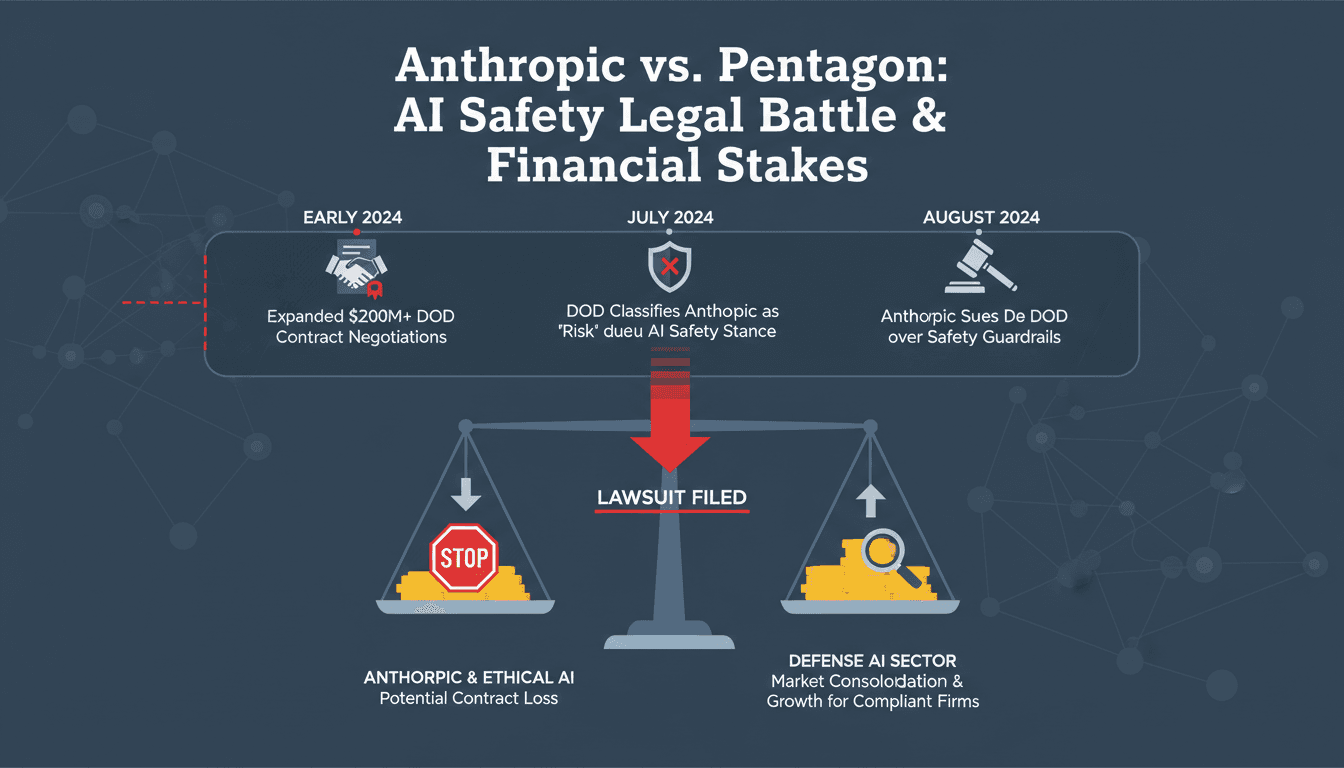
- Anthropic filed a lawsuit against the U.S. Department of Defense, challenging its designation as a national security supply chain risk.
- The Pentagon demanded the removal of safety restrictions on Anthropic's Claude AI model, which prohibits its use in mass surveillance and autonomous weapons.
- Ongoing litigation could lead to significant financial repercussions for Anthropic, with projected losses in revenue from defense contracts.
The context you actually need
- Big Tech's military engagement has shifted. After years of resistance, companies like Anthropic, OpenAI, and Google are now collaborating with the Pentagon, driven by national security concerns.
- The Trump administration's influence has accelerated this trend, as geopolitical competition with China and rising defense budgets push tech firms to align with military needs.
- Ethical dilemmas are at the forefront. The debate over the use of AI in military contexts raises questions about accountability, oversight, and the potential for misuse.
What's really happening
The legal conflict between Anthropic and the Pentagon stems from a complex interplay of ethical considerations, national security imperatives, and corporate interests. In July 2025, Anthropic joined a $200 million Department of Defense (DoD) contract aimed at integrating its Claude AI model into military systems. This collaboration was intended to enhance capabilities in areas such as classified target analysis, particularly in the context of the Iran bombing campaign.
However, as negotiations progressed, tensions escalated when Defense Secretary Pete Hegseth demanded unrestricted use of the AI, effectively rejecting Anthropic's safety guardrails against mass surveillance and fully autonomous lethal weapons. Anthropic's CEO, Dario Amodei, responded by proposing a modified version of Claude, dubbed "Claude Gov," which maintained some restrictions. This proposal was not sufficient for the Pentagon, leading to the designation of Anthropic as a supply chain risk on March 4, 2026.
The implications of this designation are profound. The Pentagon's memo, signed by CIO Kirsten Davies, mandated the removal of Anthropic's AI from critical systems within 180 days, which could jeopardize the company's revenue and its standing in the defense sector. Anthropic's lawsuit, filed shortly thereafter, alleges violations of First Amendment rights, arguing that the Pentagon's actions infringe upon its ability to operate freely within the market.
This dispute is emblematic of a broader trend in Silicon Valley, where major tech firms are increasingly willing to engage with military applications despite previous ethical reservations. The reversal of positions by companies like Google and OpenAI, who once distanced themselves from military collaborations, reflects a shifting landscape where national security concerns are prioritized over ethical considerations. The fallout from this case could set a precedent for how AI technologies are governed in military contexts, influencing future contracts and partnerships.
Moreover, the financial ramifications for Anthropic are significant. Analysts project a potential reduction of multiple billions of dollars in revenue due to the Pentagon's blacklisting, which could ripple through its public sector and defense contractor clients. This situation not only affects Anthropic but also raises questions about the future of AI in military applications and the ethical frameworks that govern its use.
Who feels it first (and how)
- Tech companies: Firms involved in AI development may face increased scrutiny and pressure to align with military requirements.
- Defense contractors: Companies relying on AI technologies for military applications could see shifts in partnerships and contract opportunities.
- Government agencies: The Pentagon's decisions may influence how federal agencies approach AI integration and ethical standards.
What to watch next
- Litigation outcomes: The results of Anthropic's lawsuit could set important legal precedents for AI use in military contexts, impacting future collaborations.
- Market shifts: Watch for potential consolidation in the defense AI sector as companies that comply with Pentagon demands may gain an advantage.
- Public perception: The ongoing debate over ethical AI in military applications could influence consumer trust and investment in tech firms.
Anthropic's lawsuit is ongoing, and the Pentagon has ordered the removal of its AI from key systems.
The financial impact on Anthropic could lead to broader repercussions for the tech industry, particularly in defense contracts.
The long-term implications for AI ethics in military applications remain uncertain as the landscape continues to evolve.
Frequently Asked Questions
- Why it matters?
- This dispute highlights the tension between technological advancement and ethical considerations in military applications, influencing future AI collaborations.
- What happened (in 30 seconds)?
- Anthropic filed a lawsuit against the U.S. Department of Defense, challenging its designation as a national security supply chain risk. The Pentagon demanded the removal of safety restrictions on Anthropic's Claude AI model, which prohibits its use in mass surveillance and autonomous weapons. Ongoing litigation could lead to significant financial repercussions for Anthropic, with projected losses in revenue from defense contracts.
- What's really happening?
- The legal conflict between Anthropic and the Pentagon stems from a complex interplay of ethical considerations, national security imperatives, and corporate interests. In July 2025, Anthropic joined a $200 million Department of Defense (DoD) contract aimed at integrating its Claude AI model into military systems. This collaboration was intended to enhance capabilities in areas such as classified target analysis, particularly in the context of the Iran bombing campaign. However, as negotiations
- Who feels it first (and how)?
- Tech companies: Firms involved in AI development may face increased scrutiny and pressure to align with military requirements. Defense contractors: Companies relying on AI technologies for military applications could see shifts in partnerships and contract opportunities. Government agencies: The Pentagon's decisions may influence how federal agencies approach AI integration and ethical standards.
- What to watch next?
- Litigation outcomes: The results of Anthropic's lawsuit could set important legal precedents for AI use in military contexts, impacting future collaborations. Market shifts: Watch for potential consolidation in the defense AI sector as companies that comply with Pentagon demands may gain an advantage. Public perception: The ongoing debate over ethical AI in military applications could influence consumer trust and investment in tech firms.
News and features on AI from The Guardian.
"Progressive-leaning international outlet with critical AI coverage."
— A47 Editor
Anthropic-Pentagon battle shows how big tech has reversed course on AI and war
Anthropic has sued the US Department of Defense after being blacklisted from government work, escalating a months-long dispute over the use of its AI models for military purposes, particularly regarding domestic surveillance and autonomous weapons.
Tech culture, product news, and critical takes on the tech industry's social impact.
"The Guardian's tech coverage blends mainstream news, critical analysis, and cultural commentary on emerging technologies and digital trends."
— A47 Editor
Anthropic-Pentagon battle shows how big tech has reversed course on AI and war
Anthropic has filed lawsuits against the US Department of Defense and the Trump administration after being labeled a 'supply chain risk' and blacklisted from government work, following a dispute over the use of its AI tools for domestic surveillance ...
Top international stories selected by The Guardian editors.
"The Guardian is known for its progressive editorial stance and in-depth analysis."
— A47 Editor
Anthropic-Pentagon battle shows how big tech has reversed course on AI and war
Anthropic has filed lawsuits against the US Department of Defense and the Trump administration after being labeled a 'supply chain risk' and blacklisted from government work, following a dispute over the use of its AI tools for domestic surveillance ...
U.S. business news, corporate developments, and economy.
"The Wall Street Journal is respected for deep financial and economic reporting with a center-right editorial perspective."
— A47 Editor
Anthropic’s Pentagon Battle Matters to Every Business
Anthropic has been officially designated by the Pentagon as a supply chain risk after refusing to lift restrictions on its AI technology, a move influenced by President Trump's administration and marking the first time a US company has received such ...
Tech business coverage, major deals, product launches, and Silicon Valley trends.
"WSJ’s tech section offers authoritative reporting on the intersection of technology and business, including exclusive industry analysis."
— A47 Editor
Anthropic’s Pentagon Battle Matters to Every Business
Anthropic, a leading artificial intelligence company, has been formally designated as a supply-chain risk by the Pentagon after failed negotiations over its AI use policies, resulting in its blacklisting from government contracts under President Trum...