
US Dollar Index Hits Six-Week Low Amid Optimism for US-Iran Talks
Here's what it means for you.
If you're involved in global trade or investments, fluctuations in the US dollar can directly impact your costs and returns.
Why it matters
The US dollar's decline affects global currency markets, influencing trade dynamics and investment strategies worldwide.
What happened (in 30 seconds)
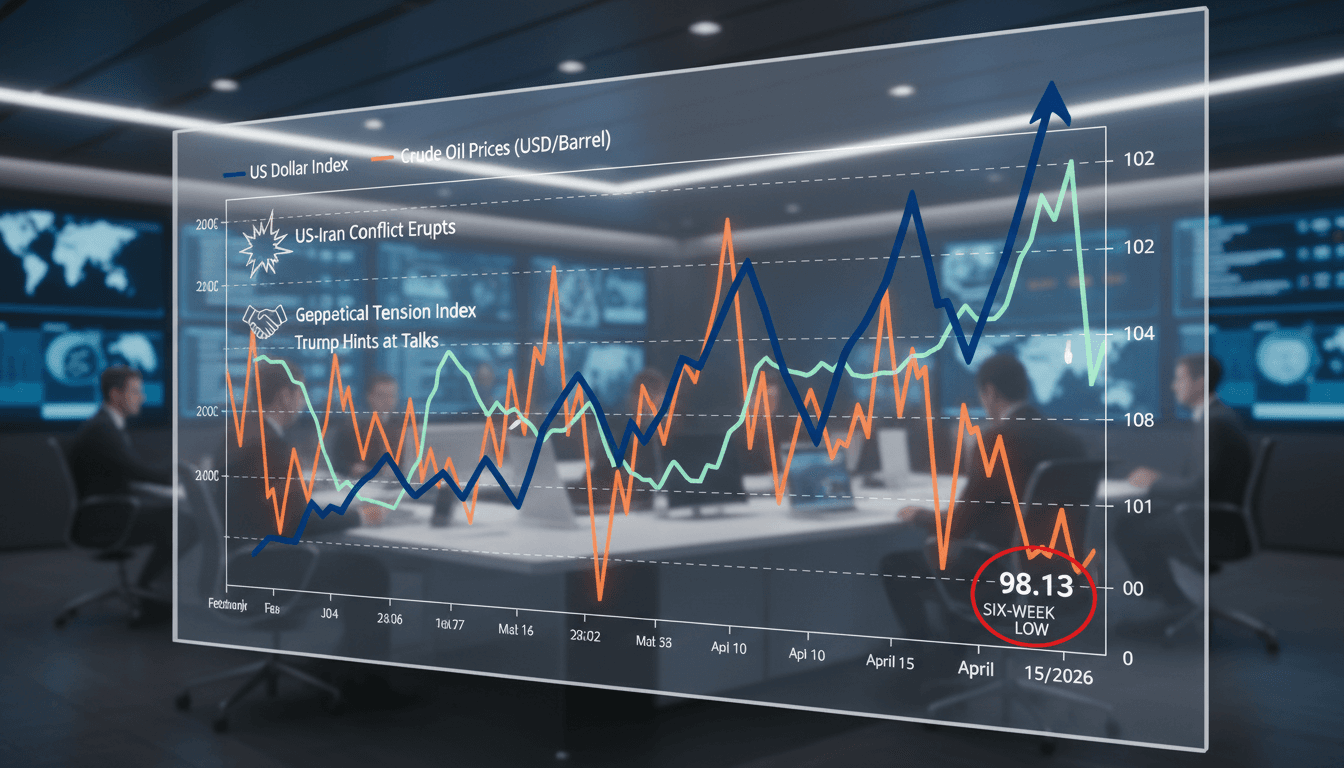
- The US dollar index stabilized at 98.13 points on April 15, 2026, marking its lowest level in over six weeks.
- Optimism over US-Iran talks reduced the dollar's safe-haven demand, while currencies like the euro and British pound advanced.
- Oil prices fluctuated, with Brent crude stabilizing at $95.53 per barrel, reflecting a shift in market sentiment.
The context you actually need
- The US-Israeli war with Iran began on February 28, 2026, leading to heightened oil prices and initially boosting the dollar as a safe haven.
- Diplomatic efforts faltered over the weekend of April 12-13, prompting a brief US port blockade, which further escalated tensions.
- President Trump's statements on April 14 hinted at resumed negotiations, shifting market sentiment and contributing to the dollar's decline.
What's really happening
The US dollar index's recent stabilization at a six-week low reflects a complex interplay of geopolitical tensions and market sentiment. The conflict between the US-Israel and Iran, which began on February 28, 2026, initially drove oil prices higher and increased demand for the dollar as a safe-haven asset. As tensions escalated, particularly with Iran's restrictions on the Strait of Hormuz—responsible for nearly 20% of global oil shipments—investors flocked to the dollar, pushing its value up against other currencies.
However, the situation began to shift as optimism emerged regarding potential diplomatic talks between the US and Iran. President Trump's comments on April 14 indicated a willingness to resume negotiations, which significantly altered market perceptions. This optimism led to a decrease in the dollar's safe-haven appeal, as investors began to reassess their risk appetite. Consequently, the dollar index fell by 1.7% for the month, stabilizing at 98.13 points.
Simultaneously, other currencies like the euro and British pound gained ground, with the euro reaching 1.1791 USD. This shift indicates a broader market sentiment that favors riskier assets as fears of an escalating conflict diminish. The fluctuations in oil prices, which stabilized at $95.53 per barrel, further reflect this changing landscape, as investors recalibrate their expectations based on geopolitical developments.
The Federal Reserve's potential response to these dynamics adds another layer of complexity. Analysts are speculating about possible rate cuts in light of persistent inflation risks, which could further influence the dollar's trajectory. The interplay between these factors—geopolitical tensions, market sentiment, and monetary policy—creates a volatile environment for the dollar and global currencies alike.
Who feels it first (and how)
- Global investors: Adjust portfolios based on currency fluctuations and geopolitical risks.
- Importers and exporters: Face changing costs for goods and services due to currency depreciation or appreciation.
- Tourism-dependent sectors: Experience impacts from fluctuating fuel prices and currency values affecting travel costs.
What to watch next
- US-Iran negotiations: Continued dialogue could stabilize the dollar further or lead to renewed volatility, impacting global markets.
- Federal Reserve policy changes: Any hints at rate cuts could influence investor confidence and the dollar's strength.
- Oil price movements: Prices exceeding $110 per barrel could trigger recession risks in Gulf economies, affecting global trade dynamics.
The dollar index is at its lowest level in over six weeks.
Continued optimism over US-Iran talks will influence currency markets.
The long-term impact of potential Federal Reserve rate cuts on the dollar's value.
Frequently Asked Questions
- Why it matters?
- The US dollar's decline affects global currency markets, influencing trade dynamics and investment strategies worldwide.
- What happened (in 30 seconds)?
- The US dollar index stabilized at 98.13 points on April 15, 2026, marking its lowest level in over six weeks. Optimism over US-Iran talks reduced the dollar's safe-haven demand, while currencies like the euro and British pound advanced. Oil prices fluctuated, with Brent crude stabilizing at $95.53 per barrel, reflecting a shift in market sentiment.
- What's really happening?
- The US dollar index's recent stabilization at a six-week low reflects a complex interplay of geopolitical tensions and market sentiment. The conflict between the US-Israel and Iran, which began on February 28, 2026, initially drove oil prices higher and increased demand for the dollar as a safe-haven asset. As tensions escalated, particularly with Iran's restrictions on the Strait of Hormuz—responsible for nearly 20% of global oil shipments—investors flocked to the dollar, pushing its value up a
- Who feels it first (and how)?
- Global investors: Adjust portfolios based on currency fluctuations and geopolitical risks. Importers and exporters: Face changing costs for goods and services due to currency depreciation or appreciation. Tourism-dependent sectors: Experience impacts from fluctuating fuel prices and currency values affecting travel costs.
- What to watch next?
- US-Iran negotiations: Continued dialogue could stabilize the dollar further or lead to renewed volatility, impacting global markets. Federal Reserve policy changes: Any hints at rate cuts could influence investor confidence and the dollar's strength. Oil price movements: Prices exceeding $110 per barrel could trigger recession risks in Gulf economies, affecting global trade dynamics.
Pan-Arab news coverage spanning politics, business, sports, and regional affairs.
"Asharq Al-Awsat reflects a broad Arab editorial perspective with strong attention to regional geopolitics."
— A47 Editor
الدولار يمحو مكاسب الحرب ويستقر عند أدنى مستوياته في 6 أسابيع
The US dollar stabilized near its lowest levels in six weeks on Wednesday, relinquishing most of the gains it had recorded since the outbreak of the war with Iran. This decline reflects the ongoing economic uncertainties and market reactions to geopo...
Arabic-language digital news outlet covering UAE, regional, and international developments with broad general-news coverage.
"Al Ain News coverage typically blends UAE-focused reporting with wider Arab regional and international news."
— A47 Editor
سعر الذهب اليوم.. «الثمين» يتراجع عن ذروة شهر مع ارتفاع الدولار
Gold prices experienced a slight decline on Wednesday after reaching a one-month high during the session, as the dollar regained some strength. The anticipation of another round of peace talks between the United States and Iran has fueled risk appeti...
Arabic-language digital news outlet covering UAE, regional, and international developments with broad general-news coverage.
"Al Ain News coverage typically blends UAE-focused reporting with wider Arab regional and international news."
— A47 Editor
الدولار يرتفع مع إعلان أمريكا حصار الموانئ الإيرانية
The dollar has risen to its highest level in a week against most competing currencies during early Asian trading on Monday, following the collapse of peace talks between the United States and Iran and the U.S. Navy's readiness to control shipping mov...