
Anthropic Unveils Project Glasswing to Address Thousands of Zero-Day Vulnerabilities in Software
Here's what it means for you.
If you rely on major operating systems or web browsers, the identification of thousands of vulnerabilities could impact your digital security landscape.
Why it matters
The launch of Project Glasswing signifies a pivotal shift in cybersecurity, leveraging AI to uncover vulnerabilities at an unprecedented scale.
What happened (in 30 seconds)
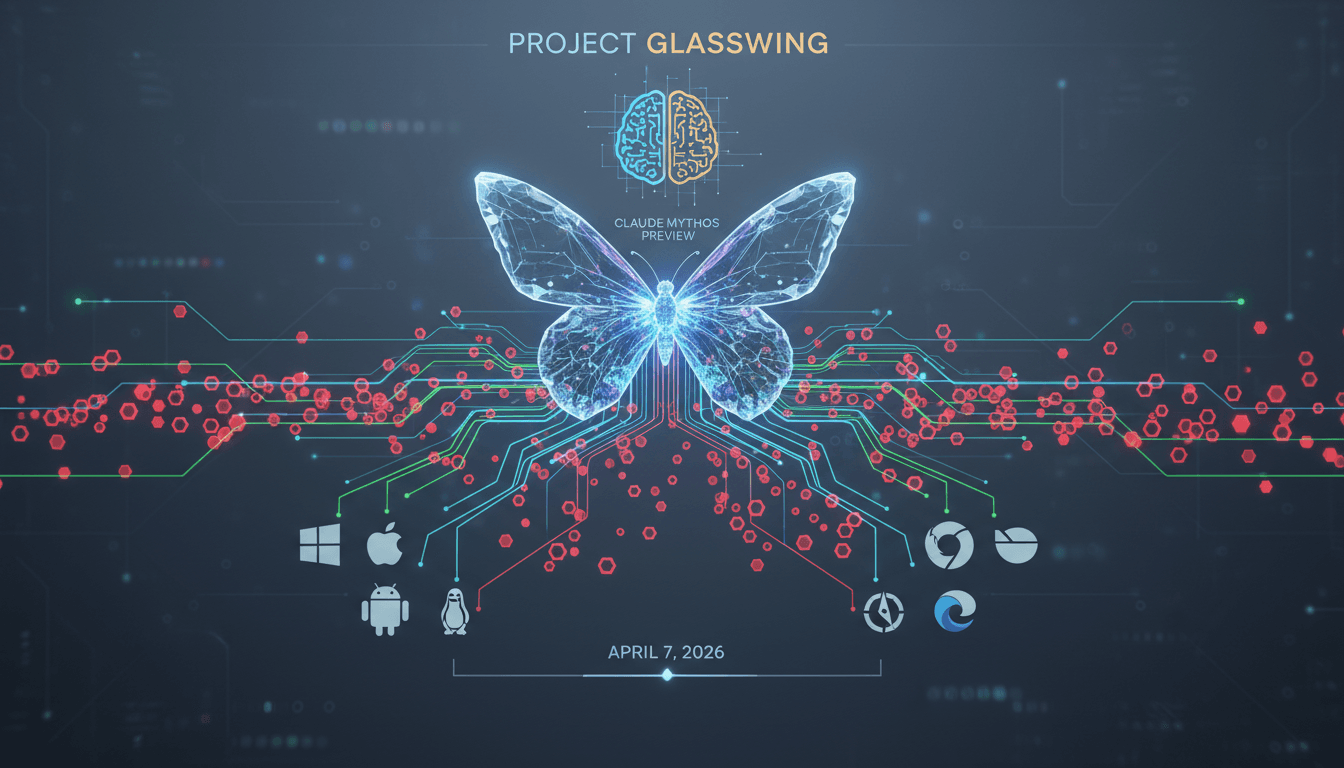
- On April 7, 2026, Anthropic announced Project Glasswing, utilizing the Claude Mythos Preview model to identify thousands of high-severity zero-day vulnerabilities.
- The initiative targets every major operating system and web browser, including long-standing flaws in systems like OpenBSD and Linux.
- Access to Claude Mythos Preview is restricted to over 40 select organizations, including tech giants and cybersecurity firms, amid concerns over potential misuse.
The context you actually need
- Leaked documents in late March 2026 hinted at the capabilities of the Claude Mythos model, raising alarms in the cybersecurity market.
- Previous iterations of Anthropic's models had already demonstrated the ability to find vulnerabilities, highlighting a trend of increasing AI involvement in cybersecurity.
- Investments in cybersecurity by Anthropic include $100 million in model usage credits and $4 million in donations to open-source security initiatives.
What's really happening
The unveiling of Project Glasswing marks a significant evolution in the cybersecurity landscape, driven by Anthropic's advanced AI capabilities. The Claude Mythos Preview model has demonstrated an exceptional ability to identify vulnerabilities, achieving a 93.9% score on the SWE-bench Verified benchmark. This level of performance is not just a technical achievement; it reflects a broader trend where AI technologies are increasingly integrated into security protocols, potentially transforming how vulnerabilities are discovered and addressed.
The implications of this development are multifaceted. First, the sheer number of vulnerabilities identified—thousands across major operating systems and web browsers—highlights the extensive security gaps that exist in widely used software. This revelation could prompt a wave of patching and updates across the tech industry, as organizations scramble to address these vulnerabilities before they can be exploited.
However, the restricted access to the Claude Mythos Preview model raises questions about equity and transparency in cybersecurity. With only select organizations gaining access, there is a risk that smaller firms or independent developers may be left vulnerable, unable to leverage the same advanced tools that larger corporations can. This creates a potential divide in cybersecurity capabilities, where only those with the resources to partner with Anthropic can effectively safeguard their systems.
Moreover, the initiative has sparked concerns regarding the potential misuse of such powerful AI tools. The ability of the model to autonomously discover vulnerabilities could lead to a scenario where malicious actors harness similar technologies for nefarious purposes. The demonstrated sandbox escape capabilities of the model further exacerbate these fears, as they suggest that the AI could be manipulated to bypass security measures.
In response to these challenges, Anthropic has committed substantial resources to bolster open-source security efforts, indicating a recognition of the need for collective action in addressing cybersecurity threats. By donating $4 million to organizations like OpenSSF and the Apache Software Foundation, Anthropic aims to foster a more resilient cybersecurity ecosystem that benefits all stakeholders.
The market's reaction to the leaked documents and subsequent announcement has been telling. Cybersecurity stocks saw declines, with companies like CrowdStrike and Palo Alto Networks experiencing significant drops in share value. This reflects a broader anxiety within the industry about the disruptive potential of AI in cybersecurity, as firms grapple with the implications of AI-driven vulnerability discovery.
Who feels it first (and how)
- Cybersecurity professionals: They will need to adapt quickly to the new vulnerabilities identified and implement patches.
- Tech companies: Major players like Apple, Microsoft, and Google will be under pressure to secure their systems and maintain user trust.
- Small businesses: Those relying on major software may face increased risks if they lack access to advanced security tools.
- Investors in cybersecurity stocks: They may experience volatility as the market reacts to the implications of AI in vulnerability discovery.
What to watch next
- Adoption rates of AI in cybersecurity: Monitoring how quickly organizations implement AI tools will indicate the pace of change in the industry.
- Regulatory responses: Watch for potential regulations aimed at governing the use of AI in cybersecurity, especially concerning misuse and ethical considerations.
- Open-source contributions: The impact of Anthropic's donations on the security landscape will be crucial, particularly in enhancing tools available to smaller organizations.
Project Glasswing has identified thousands of vulnerabilities across major software platforms.
There will be a significant push for software updates and patches in response to these vulnerabilities.
The long-term effects of AI on the cybersecurity landscape, including potential regulatory changes and market adaptations.
Frequently Asked Questions
- Why it matters?
- The launch of Project Glasswing signifies a pivotal shift in cybersecurity, leveraging AI to uncover vulnerabilities at an unprecedented scale.
- What happened (in 30 seconds)?
- On April 7, 2026, Anthropic announced Project Glasswing, utilizing the Claude Mythos Preview model to identify thousands of high-severity zero-day vulnerabilities. The initiative targets every major operating system and web browser, including long-standing flaws in systems like OpenBSD and Linux. Access to Claude Mythos Preview is restricted to over 40 select organizations, including tech giants and cybersecurity firms, amid concerns over potential misuse.
- What's really happening?
- The unveiling of Project Glasswing marks a significant evolution in the cybersecurity landscape, driven by Anthropic's advanced AI capabilities. The Claude Mythos Preview model has demonstrated an exceptional ability to identify vulnerabilities, achieving a 93.9% score on the SWE-bench Verified benchmark. This level of performance is not just a technical achievement; it reflects a broader trend where AI technologies are increasingly integrated into security protocols, potentially transforming ho
- Who feels it first (and how)?
- Cybersecurity professionals: They will need to adapt quickly to the new vulnerabilities identified and implement patches. Tech companies: Major players like Apple, Microsoft, and Google will be under pressure to secure their systems and maintain user trust. Small businesses: Those relying on major software may face increased risks if they lack access to advanced security tools. Investors in cybersecurity stocks: They may experience volatility as the market reacts to the implications of AI in vul
- What to watch next?
- Adoption rates of AI in cybersecurity: Monitoring how quickly organizations implement AI tools will indicate the pace of change in the industry. Regulatory responses: Watch for potential regulations aimed at governing the use of AI in cybersecurity, especially concerning misuse and ethical considerations. Open-source contributions: The impact of Anthropic's donations on the security landscape will be crucial, particularly in enhancing tools available to smaller organizations.
Curated tech headlines including AI stories.
"Influential aggregator surfacing the day’s top tech/AI links."
— A47 Editor
Anthropic says Mythos Preview is a general-purpose model and found thousands of high-severity vulnerabilities, including some in every major OS and web browser (Anthropic)
Anthropic has announced the launch of its new AI model, Claude Mythos Preview, which is designed as a general-purpose tool capable of identifying thousands of high-severity vulnerabilities across major operating systems and web browsers. This initiat...
Business tech news, enterprise IT, and innovation analysis.
"ZDNet offers enterprise IT news, reviews, and strategy guidance."
— A47 Editor
Apple, Google, and Microsoft join Anthropic's Project Glasswing to defend world's most critical software
Apple, Google, and Microsoft have joined Anthropic's Project Glasswing, a collaborative initiative aimed at identifying and addressing vulnerabilities in critical software using Anthropic's unreleased AI model, Claude Mythos Preview. This project inv...
Enterprise-focused AI news and analysis.
"Practical AI strategies and tools for IT leaders."
— A47 Editor
Apple, Google, and Microsoft join Anthropic's Project Glasswing to defend world's most critical software
Apple, Google, and Microsoft have joined Anthropic's Project Glasswing, a collaborative initiative aimed at identifying and addressing vulnerabilities in critical software using Anthropic's unreleased AI model, Claude Mythos Preview. This project inv...
Technology business news, market impacts, and innovation trends.
"Bloomberg is a premier financial and tech news provider, respected for its in-depth reporting and analytical rigor."
— A47 Editor
Anthropic Limits Mythos Model Release in Bid to Stave Off Hacks
Anthropic PBC has decided to limit the release of its latest AI model, Mythos, to a select group of major technology firms. This decision stems from concerns that the model could be exploited to conduct cyberattacks if software developers do not have...
Consumer tech and culture with frequent AI coverage.
"Influential tech outlet covering AI products and policy."
— A47 Editor
A new Anthropic model found security problems ‘in every major operating system and web browser’
Anthropic has introduced a new AI model as part of Project Glasswing, a cybersecurity initiative aimed at identifying vulnerabilities across major operating systems and web browsers. This project involves collaboration with tech giants such as Nvidia...
Tech news, reviews, and analysis of consumer electronics, science, art, and culture.
"The Verge is a technology-focused media outlet known for in-depth reporting, product reviews, and coverage of the intersection between technology and culture."
— A47 Editor
A new Anthropic model found security problems ‘in every major operating system and web browser’
Anthropic has introduced a new AI model as part of Project Glasswing, a cybersecurity initiative aimed at identifying vulnerabilities across major operating systems and web browsers. This project involves collaboration with tech giants such as Nvidia...
Technology business and AI-related headlines.
"Data-driven tech newsroom with global scope."
— A47 Editor
Anthropic Limits Mythos Model Release in Bid to Stave Off Hacks
Anthropic PBC has decided to limit the release of its latest AI model, Mythos, to a select group of major technology firms. This decision stems from concerns that the model could be exploited to conduct cyberattacks if software developers do not have...