
UAE Initiates Currency Swap Discussions with US Amid Economic Strain from Iran War
Here's what it means for you.
If you're involved in global finance or energy markets, the UAE's potential currency swap line with the U.S. could impact liquidity and investment strategies.
Why it matters
This move reflects broader economic vulnerabilities in the Gulf region, which could influence global oil prices and financial stability.
What happened (in 30 seconds)
- April 12-18, 2026: UAE Central Bank Governor Khaled Mohamed Balama discussed a currency swap line with U.S. officials to enhance dollar liquidity.
- February 28, 2026: The Iran war began with U.S.-Israeli strikes, leading to severe disruptions in Gulf oil exports and significant economic strain on the UAE.
- April 19, 2026: Reports emerged of these discussions, highlighting the UAE's urgent need for financial support amid ongoing market volatility.
The context you actually need
- Iran war escalation: The conflict has severely impacted UAE's oil infrastructure and foreign reserves, crucial for its dollar-pegged dirham.
- Market losses: Since the war's onset, Dubai and Abu Dhabi stock markets have lost approximately $120 billion in capitalization, indicating a significant economic downturn.
- Liquidity measures: The UAE has already implemented liquidity support packages and secured debt funding, signaling a proactive approach to stabilize its economy.
What's really happening
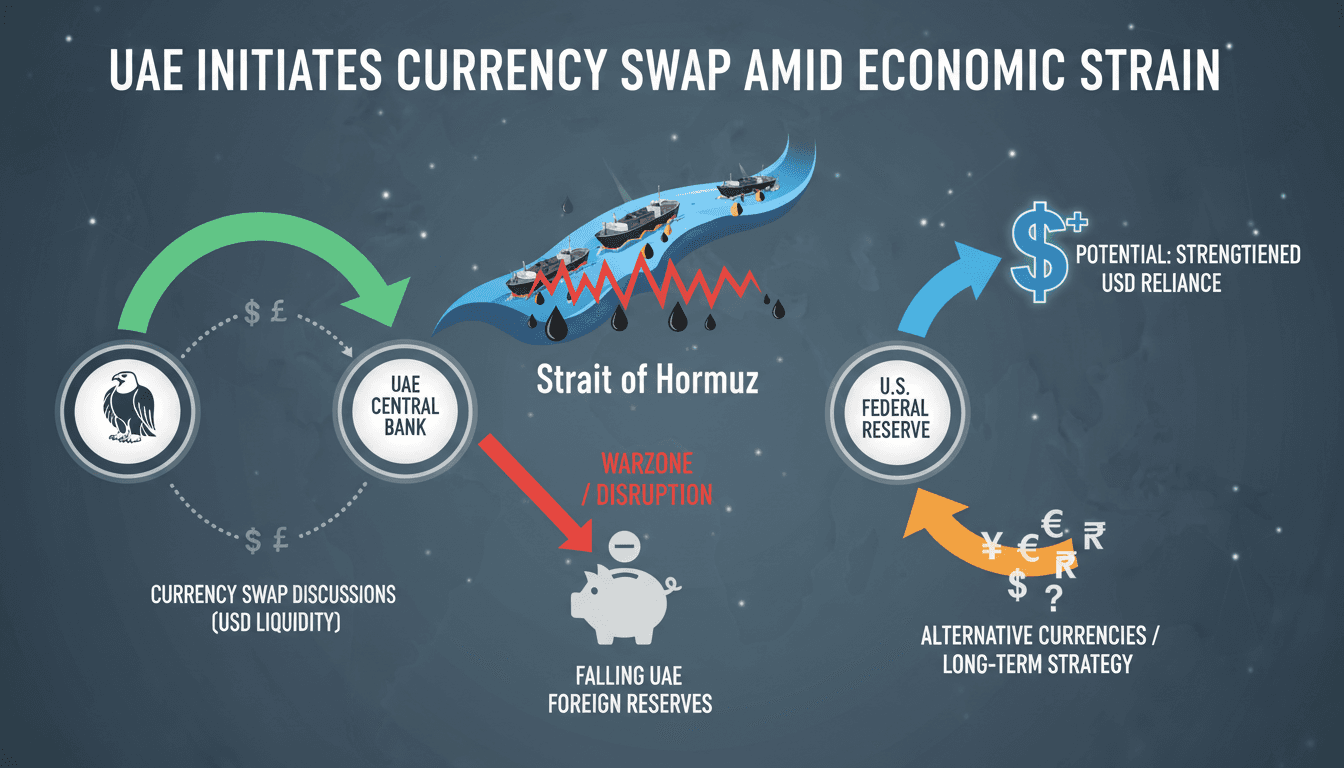
The discussions between the UAE and U.S. officials regarding a currency swap line are rooted in the urgent need for financial stability amid the ongoing Iran war. The conflict, which began with U.S. and Israeli airstrikes on February 28, 2026, has led to Iranian retaliation that has severely damaged UAE oil and gas infrastructure. This disruption has resulted in the closure of the Strait of Hormuz, a critical chokepoint for global oil exports, leading to an unprecedented oil supply shock.
As a result, the UAE's foreign reserves, which are essential for maintaining the dirham's peg to the dollar, have come under significant pressure. The UAE's $270 billion in foreign reserves is now at risk due to the depletion of dollar inflows caused by halted oil exports. The potential currency swap line with the U.S. is a strategic move to bolster dollar liquidity, ensuring that the UAE can meet its financial obligations and stabilize its economy.
The UAE has already taken several precautionary measures, including raising $4 billion in private debt and establishing a $5 billion swap line with Bahrain. These actions indicate a proactive approach to managing liquidity risks and maintaining economic stability. However, the discussions with the U.S. are particularly critical, as they could provide a more substantial financial lifeline during this tumultuous period.
The implications of these discussions extend beyond the UAE. If the currency swap line is established, it could signal to global markets that the UAE is taking decisive steps to mitigate the economic fallout from the Iran war. This could help restore investor confidence and stabilize the region's financial markets. Conversely, if the situation deteriorates further, the UAE may face a shift towards alternative currencies, such as the Chinese yuan, for oil sales, which would have far-reaching consequences for global trade dynamics.
Who feels it first (and how)
- Investors: Those holding UAE stocks or bonds may experience immediate impacts from market volatility and liquidity concerns.
- Energy sector: Companies reliant on Gulf oil exports will face disruptions and potential price fluctuations.
- Tourism and logistics: The tourism sector, contributing 13% to UAE GDP, is already experiencing severe disruptions due to flight cancellations and regional instability.
What to watch next
- U.S. Federal Reserve response: Monitor how the Fed reacts to the UAE's request, as this could set a precedent for future currency swap lines in the region.
- Oil market fluctuations: Keep an eye on global oil prices, as any further disruptions in the Gulf could lead to significant price volatility.
- Regional economic stability: Watch for signs of economic recovery or further decline in the UAE and surrounding Gulf states, which could influence investment strategies.
The UAE is actively seeking financial support to stabilize its economy amid the Iran war.
The discussions with the U.S. could lead to a currency swap line, enhancing dollar liquidity for the UAE.
The long-term impacts on global oil markets and the UAE's economic recovery remain uncertain.
Frequently Asked Questions
- Why it matters?
- This move reflects broader economic vulnerabilities in the Gulf region, which could influence global oil prices and financial stability.
- What happened (in 30 seconds)?
- April 12-18, 2026: UAE Central Bank Governor Khaled Mohamed Balama discussed a currency swap line with U.S. officials to enhance dollar liquidity. February 28, 2026: The Iran war began with U.S.-Israeli strikes, leading to severe disruptions in Gulf oil exports and significant economic strain on the UAE. April 19, 2026: Reports emerged of these discussions, highlighting the UAE's urgent need for financial support amid ongoing market volatility.
- What's really happening?
- The discussions between the UAE and U.S. officials regarding a currency swap line are rooted in the urgent need for financial stability amid the ongoing Iran war. The conflict, which began with U.S. and Israeli airstrikes on February 28, 2026, has led to Iranian retaliation that has severely damaged UAE oil and gas infrastructure. This disruption has resulted in the closure of the Strait of Hormuz, a critical chokepoint for global oil exports, leading to an unprecedented oil supply shock. As a
- Who feels it first (and how)?
- Investors: Those holding UAE stocks or bonds may experience immediate impacts from market volatility and liquidity concerns. Energy sector: Companies reliant on Gulf oil exports will face disruptions and potential price fluctuations. Tourism and logistics: The tourism sector, contributing 13% to UAE GDP, is already experiencing severe disruptions due to flight cancellations and regional instability.
- What to watch next?
- U.S. Federal Reserve response: Monitor how the Fed reacts to the UAE's request, as this could set a precedent for future currency swap lines in the region. Oil market fluctuations: Keep an eye on global oil prices, as any further disruptions in the Gulf could lead to significant price volatility. Regional economic stability: Watch for signs of economic recovery or further decline in the UAE and surrounding Gulf states, which could influence investment strategies.
Regional coverage and analysis focused on politics, diplomacy, and business across the Middle East.
"Al-Monitor is known for analytical reporting on Middle East politics and policy developments."
— A47 Editor
Could UAE tap US currency swap line as Iran war strains Gulf economies?
The United Arab Emirates (UAE) is reportedly seeking assurances from Washington regarding a potential currency swap line as the ongoing war in Iran threatens to severely impact its economy. This request comes amid rising tensions and economic disrupt...
Global markets, investing, and macroeconomics from a premier financial newsroom.
"Bloomberg is respected for in-depth financial reporting and data-driven analysis."
— A47 Editor
UAE, US Discuss a Potential Financial Lifeline: WSJ
The United Arab Emirates (UAE) has initiated discussions with the United States regarding a potential financial backstop amid escalating concerns over the ongoing conflict in Iran, as reported by the Wall Street Journal. This move reflects the UAE's ...
Market-moving headlines impacting equities, bonds, and related risk assets.
"Real-time catalysts and volatility drivers across indices and sectors."
— A47 Editor
UAE seeks US financial backstop amid Iran war concerns- WSJ
The United Arab Emirates (UAE) is seeking financial backing from the United States amid ongoing concerns regarding the conflict in Iran, which has heightened geopolitical tensions in the region. This request reflects the UAE's need for stability as t...