
US Producer Price Index Rises 4 Percent Year-Over-Year Due to Iran War Energy Price Surge
Here's what it means for you.
If you’re in the U.S. or connected to global supply chains, expect rising costs and potential disruptions in your industry.
Why it matters
The surge in the Producer Price Index signals escalating inflationary pressures that could impact consumer prices and economic stability.
What happened (in 30 seconds)
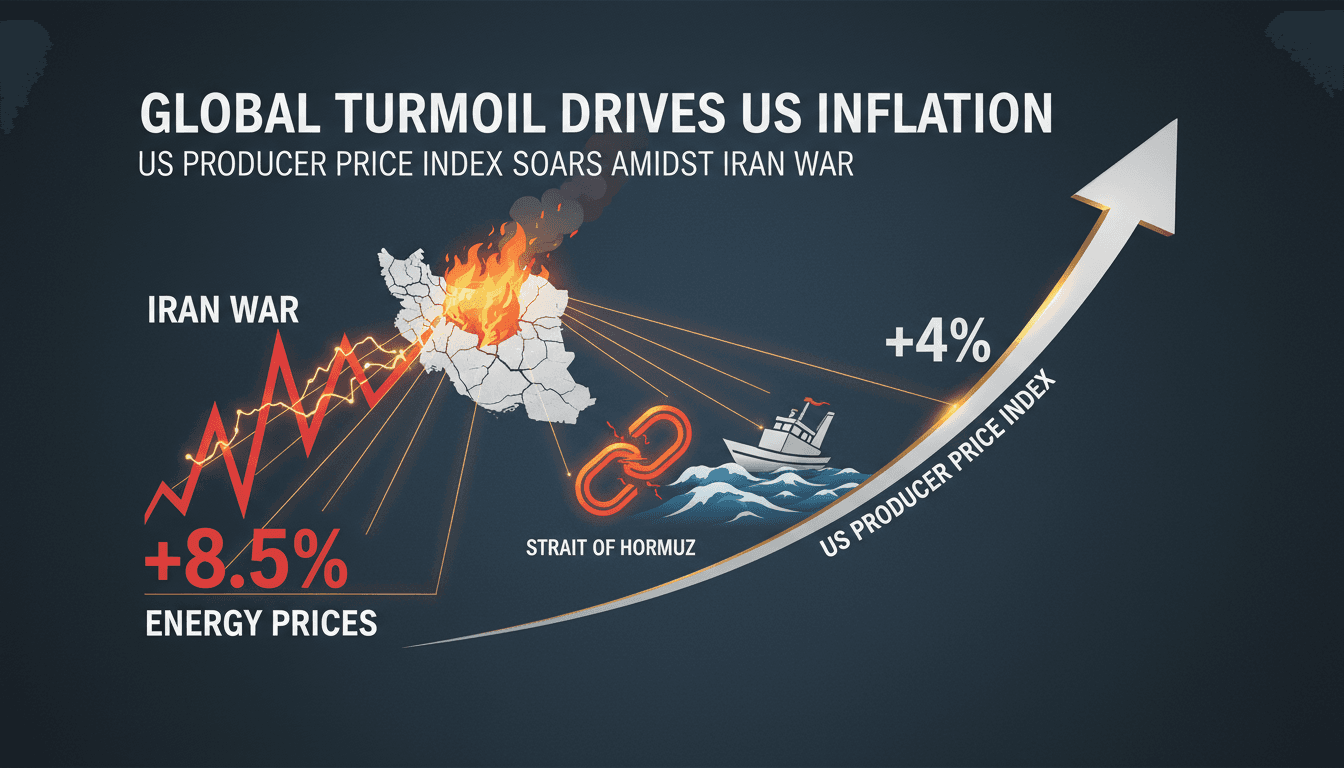
- Producer Price Index (PPI) rose 4 percent year-over-year in March 2026, driven by energy price spikes.
- Energy prices surged 8.5 percent in March due to the Iran war, which disrupted oil supply routes.
- Ongoing conflict in Iran continues to create uncertainty in global markets, affecting inflation management.
The context you actually need
- Iran war escalation began on February 28, 2026, with U.S. and Israeli airstrikes, leading to significant geopolitical tensions.
- Strait of Hormuz closure on March 4 halted 20 percent of global oil transit, causing Brent crude prices to exceed $120 per barrel.
- Wholesale inflation pressures are compounded by ongoing attacks on energy infrastructure, affecting supply chains worldwide.
What's really happening
The recent increase in the U.S. Producer Price Index (PPI) reflects a complex interplay of geopolitical events and market dynamics. The conflict in Iran, which escalated with U.S. and Israeli military actions, has led to significant disruptions in global oil supply. The closure of the Strait of Hormuz, a critical chokepoint for oil transit, has resulted in a dramatic spike in energy prices, which are a key component of the PPI.
As energy prices surged by 8.5 percent in March alone, this increase has a cascading effect on the costs of goods and services across various sectors. Higher energy costs translate into increased transportation and production expenses, which businesses inevitably pass on to consumers. This inflationary pressure is particularly concerning as it comes at a time when the Federal Reserve is already grappling with inflation management amidst economic uncertainty.
The Federal Reserve's Beige Book highlighted the challenges businesses face due to the war, indicating that uncertainty could complicate efforts to stabilize inflation. Treasury Secretary Scott Bessent's comments suggest that while the conflict may eventually lead to declining prices, the immediate impact is a sustained rise in costs, particularly for energy and related sectors. With gasoline prices averaging above $4 per gallon—up 30 percent year-over-year—consumers are already feeling the pinch at the pump.
Moreover, the ongoing volatility in oil markets is likely to affect not just energy prices but also broader economic indicators, including consumer spending and investment. As businesses adjust to these new cost structures, the potential for reduced consumer demand looms, which could further complicate the economic landscape.
In regions like Dubai, where petrol prices have already surged over 30 percent month-on-month, the ripple effects of the Iran war are evident. The UAE's economy, heavily reliant on oil, faces challenges such as slowed tourism and equity market declines, illustrating how interconnected global markets are in the face of geopolitical strife.
Who feels it first (and how)
- Consumers: Higher prices at the pump and for goods due to increased transportation costs.
- Businesses: Increased operational costs, particularly in manufacturing and logistics sectors.
- Investors: Volatility in equity markets as companies adjust to inflationary pressures.
- Tourism sector: Slowed growth in regions like Dubai, where rising costs deter travel.
What to watch next
- Energy price trends: Continued monitoring of Brent crude prices will indicate the ongoing impact of the Iran conflict on global markets.
- Inflation indicators: Watch for changes in consumer price index (CPI) data, which will reflect how PPI increases are affecting consumer costs.
- Geopolitical developments: Diplomatic efforts and cease-fire negotiations will be crucial in determining the future stability of oil supply routes.
The PPI has increased by 4 percent year-over-year, primarily due to energy price surges.
Continued inflationary pressures as businesses adjust to higher costs and supply chain disruptions.
The duration and resolution of the Iran conflict and its long-term effects on global energy markets.
Frequently Asked Questions
- Why it matters?
- The surge in the Producer Price Index signals escalating inflationary pressures that could impact consumer prices and economic stability.
- What happened (in 30 seconds)?
- Producer Price Index (PPI) rose 4 percent year-over-year in March 2026, driven by energy price spikes. Energy prices surged 8.5 percent in March due to the Iran war, which disrupted oil supply routes. Ongoing conflict in Iran continues to create uncertainty in global markets, affecting inflation management.
- What's really happening?
- The recent increase in the U.S. Producer Price Index (PPI) reflects a complex interplay of geopolitical events and market dynamics. The conflict in Iran, which escalated with U.S. and Israeli military actions, has led to significant disruptions in global oil supply. The closure of the Strait of Hormuz, a critical chokepoint for oil transit, has resulted in a dramatic spike in energy prices, which are a key component of the PPI. As energy prices surged by 8.5 percent in March alone, this increas
- Who feels it first (and how)?
- Consumers: Higher prices at the pump and for goods due to increased transportation costs. Businesses: Increased operational costs, particularly in manufacturing and logistics sectors. Investors: Volatility in equity markets as companies adjust to inflationary pressures. Tourism sector: Slowed growth in regions like Dubai, where rising costs deter travel.
- What to watch next?
- Energy price trends: Continued monitoring of Brent crude prices will indicate the ongoing impact of the Iran conflict on global markets. Inflation indicators: Watch for changes in consumer price index (CPI) data, which will reflect how PPI increases are affecting consumer costs. Geopolitical developments: Diplomatic efforts and cease-fire negotiations will be crucial in determining the future stability of oil supply routes.
Coverage of national news and events from across the United States.
"HuffPost is known for its progressive editorial stance, offering opinionated yet comprehensive coverage on social, political, and cultural topics."
— A47 Editor
U.S. Wholesale Prices Surged 4% Last Month After The War In Iran Sent Energy Prices Soaring
U.S. wholesale prices surged by 4% last month, driven by soaring energy costs linked to the ongoing conflict in Iran. This increase complicates the Federal Reserve's efforts to manage inflation, especially amid external pressures to lower interest ra...
Global coverage of politics, crises, and international affairs.
"HuffPost provides progressive-oriented reporting on international developments, often focusing on humanitarian and social justice issues."
— A47 Editor
U.S. Wholesale Prices Surged 4% Last Month After The War In Iran Sent Energy Prices Soaring
U.S. wholesale prices surged by 4% last month, primarily driven by a significant increase in energy prices following the escalation of conflict in Iran. This surge complicates the Federal Reserve's efforts to manage inflation amid ongoing pressure fr...
Pan-Arab news coverage spanning politics, business, sports, and regional affairs.
"Asharq Al-Awsat reflects a broad Arab editorial perspective with strong attention to regional geopolitics."
— A47 Editor
تضخم المنتجين الأميركيين يقفز 4 % في أكبر زيادة سنوية منذ 3 سنوات
Producer price inflation in the United States surged by 4% last month, marking the largest annual increase in three years, driven primarily by rising energy costs linked to developments in the conflict with Iran.
Social/economic commentary and analysis relevant to business and markets.
"WSJ blends data-driven economic insight with commentary on policy and society."
— A47 Editor
Producer-Price Index Climbed in March
The Producer-Price Index rose significantly in March, marking the highest annual wholesale inflation rate in three years, as reported by the Labor Department. This increase is primarily attributed to the oil shock stemming from the ongoing conflict i...