
Gold Prices Drop as Trump Sets Deadline for Iran to Reopen Strait of Hormuz
Here's what it means for you.
If you're involved in global trade or investments, the fluctuating gold prices and geopolitical tensions could significantly impact your financial strategies.
Why it matters
The ongoing U.S.-Iran conflict is creating instability in global commodity markets, particularly affecting gold prices and inflation expectations.
What happened (in 30 seconds)
- Gold prices dropped approximately 0.5% to around $4,628 per ounce on April 7, 2026, as investors reacted to geopolitical tensions.
- U.S. President Donald Trump set a new deadline for Iran to reopen the Strait of Hormuz, escalating the situation further.
- Inflation fears are rising due to oil prices exceeding $110 per barrel, complicating the economic landscape.
The context you actually need
- The U.S.-Iran war began on February 28, 2026, following U.S. and Israeli airstrikes on Iranian military targets, leading to an initial surge in gold prices.
- Gold prices have since declined by 11% since the start of the conflict, reflecting shifting investor sentiment and inflationary pressures.
- The Strait of Hormuz is a critical chokepoint for global oil supplies, and any disruptions can have widespread economic implications, particularly for oil-dependent regions like the UAE.
What's really happening
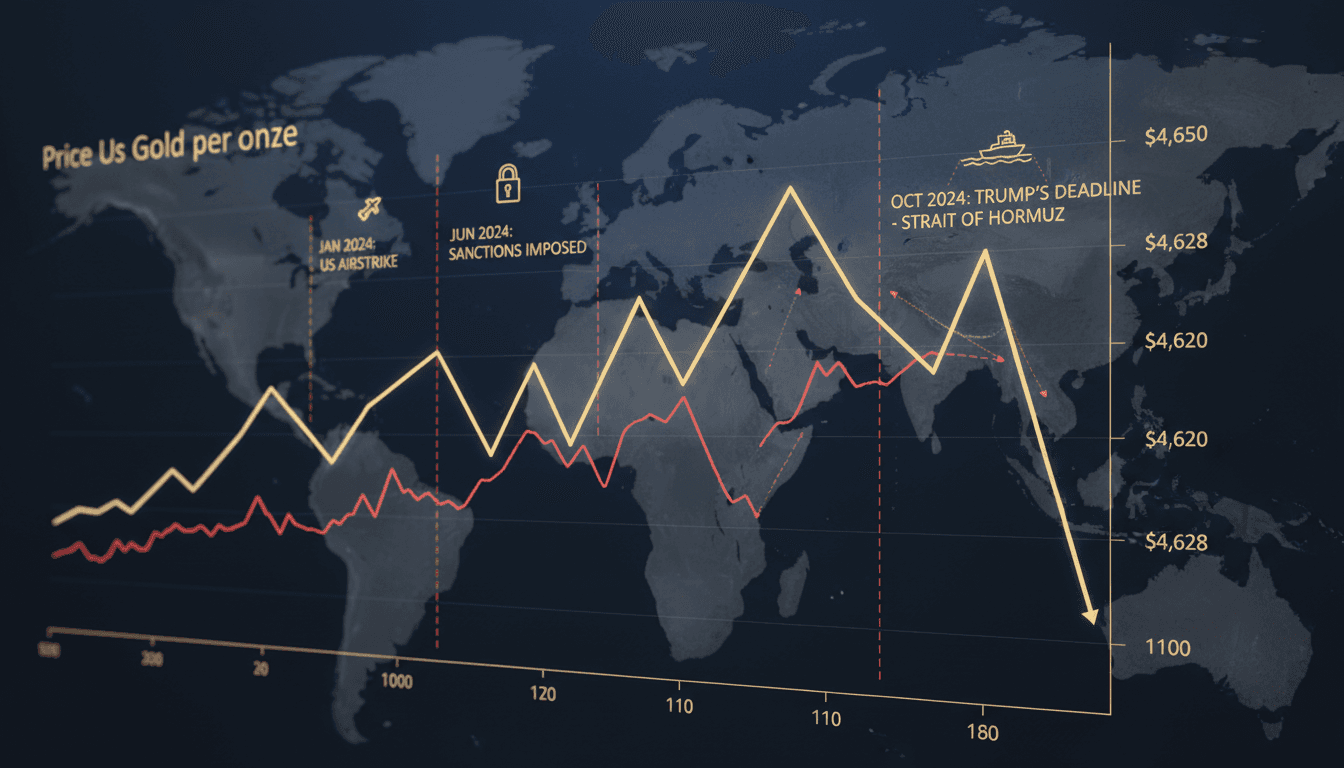
The recent decline in gold prices is a direct response to escalating geopolitical tensions between the U.S. and Iran, particularly surrounding the critical Strait of Hormuz. As of April 7, 2026, gold is trading at approximately $4,628 per ounce, reflecting a 0.5% drop amid investor caution. This decline follows a significant surge in gold prices earlier in the conflict, which saw prices exceed $5,600 per ounce due to heightened safe-haven demand.
The catalyst for the current market volatility is President Trump's ultimatum to Iran, demanding the reopening of the Strait of Hormuz by April 8, 2026. This deadline has been extended multiple times since March 21, indicating a complex negotiation landscape. The ongoing conflict has led to fears of further military escalation, which could disrupt oil supplies and exacerbate inflationary pressures. With oil prices now exceeding $110 per barrel, the economic implications are far-reaching, particularly for countries reliant on oil imports.
Investors are increasingly concerned about inflation, as higher oil prices typically lead to increased costs across various sectors, from transportation to manufacturing. The Federal Reserve's reduced expectations for rate cuts further complicate the situation, as higher interest rates can dampen economic growth and consumer spending. As a result, market participants are closely monitoring developments in the U.S.-Iran conflict, as any escalation could lead to significant shifts in commodity prices and broader market conditions.
The situation is compounded by Iran's rejection of a recent U.S.-backed ceasefire proposal, which has raised tensions even further. As negotiations continue, the potential for military action remains a significant risk, with U.S. officials describing talks as ongoing despite the heated rhetoric. The U.N. Secretary-General has warned that attacks on infrastructure could constitute war crimes, highlighting the serious implications of the conflict.
In summary, the decline in gold prices is not merely a reflection of market dynamics but is deeply intertwined with geopolitical developments that could have lasting effects on global economic stability.
Who feels it first (and how)
- Commodity investors: Directly impacted by fluctuations in gold prices and inflation expectations.
- Oil-dependent economies: Countries like the UAE face increased costs and potential disruptions in trade.
- Global trade sectors: Businesses reliant on stable oil prices may experience increased operational costs and supply chain disruptions.
What to watch next
- Iran's response to the deadline: How Iran reacts could significantly impact oil supply and prices, affecting global markets.
- Federal Reserve announcements: Any changes in rate cut expectations could influence investor sentiment and commodity prices.
- U.S. inflation data: Upcoming reports will provide insights into inflation trends, which could further affect gold and oil prices.
Gold prices have declined by 11% since the start of the U.S.-Iran war.
Continued volatility in commodity markets as geopolitical tensions evolve.
The long-term implications of the U.S.-Iran conflict on global economic stability.
Frequently Asked Questions
- Why it matters?
- The ongoing U.S.-Iran conflict is creating instability in global commodity markets, particularly affecting gold prices and inflation expectations.
- What happened (in 30 seconds)?
- Gold prices dropped approximately 0.5% to around $4,628 per ounce on April 7, 2026, as investors reacted to geopolitical tensions. U.S. President Donald Trump set a new deadline for Iran to reopen the Strait of Hormuz, escalating the situation further. Inflation fears are rising due to oil prices exceeding $110 per barrel, complicating the economic landscape.
- What's really happening?
- The recent decline in gold prices is a direct response to escalating geopolitical tensions between the U.S. and Iran, particularly surrounding the critical Strait of Hormuz. As of April 7, 2026, gold is trading at approximately $4,628 per ounce, reflecting a 0.5% drop amid investor caution. This decline follows a significant surge in gold prices earlier in the conflict, which saw prices exceed $5,600 per ounce due to heightened safe-haven demand. The catalyst for the current market volatility
- Who feels it first (and how)?
- Commodity investors: Directly impacted by fluctuations in gold prices and inflation expectations. Oil-dependent economies: Countries like the UAE face increased costs and potential disruptions in trade. Global trade sectors: Businesses reliant on stable oil prices may experience increased operational costs and supply chain disruptions.
- What to watch next?
- Iran's response to the deadline: How Iran reacts could significantly impact oil supply and prices, affecting global markets. Federal Reserve announcements: Any changes in rate cut expectations could influence investor sentiment and commodity prices. U.S. inflation data: Upcoming reports will provide insights into inflation trends, which could further affect gold and oil prices.
Markets desk coverage, trading insights, and investor updates.
"WSJ’s markets reporting provides in-depth analysis and context for investors."
— A47 Editor
Comex Gold Settles 0.01% Higher at $4657.10
Gold prices settled 0.01% higher at $4657.10, marking a second consecutive session of gains, while silver experienced a decline of 1.1%, falling for three straight sessions. This slight increase in gold reflects ongoing market dynamics influenced by ...
Arabic-language digital news outlet covering UAE, regional, and international developments with broad general-news coverage.
"Al Ain News coverage typically blends UAE-focused reporting with wider Arab regional and international news."
— A47 Editor
سعر الذهب اليوم.. ينخفض وسط ترقب حذر قبيل انتهاء مهلة ترامب لإيران
Gold prices experienced a slight decline on Tuesday as investors maintained a cautious stance ahead of the deadline set by U.S. President Donald Trump for Iran to reopen the Strait of Hormuz. This situation reflects ongoing geopolitical tensions that...