
IMF Chief Warns of Economic Challenges Due to Ongoing Middle East Conflict and High Oil Prices
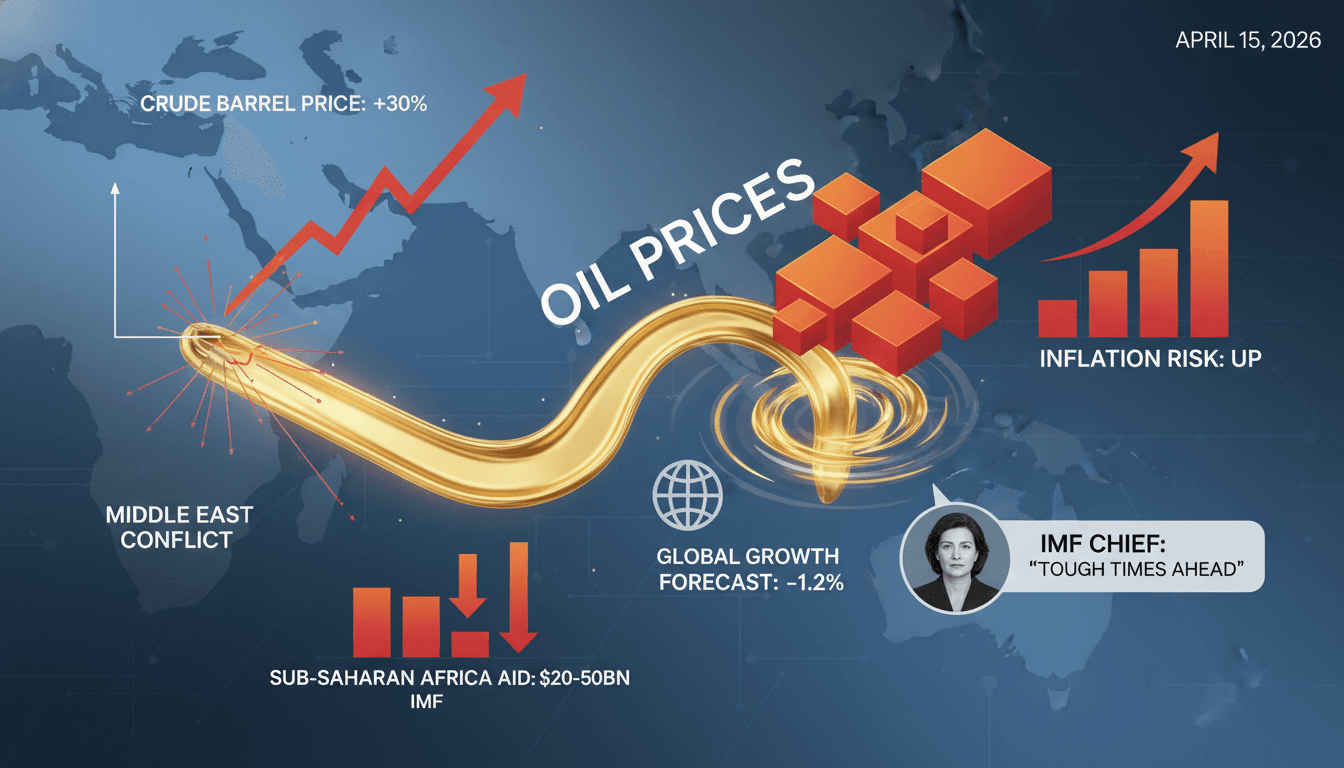
Here's what it means for you.
Rising oil prices and geopolitical tensions could impact your cost of living and business operations globally.
Why it matters
Persistent high oil prices and conflict in the Middle East threaten global economic stability and inflation rates.
What happened (in 30 seconds)
- IMF Managing Director Kristalina Georgieva warned of "tough times ahead" for the global economy due to ongoing Middle East conflict and elevated oil prices.
- Global growth forecast was downgraded to 3.1% for 2026, with adverse scenarios projecting as low as 2% growth if oil prices remain high.
- Demand for IMF financing could reach $20-50 billion across various programs, particularly affecting low-income countries.
The context you actually need
- Geopolitical tensions escalated after U.S.-Israeli strikes on Iran on February 28, 2026, leading to Iranian retaliation and the closure of the Strait of Hormuz.
- Energy prices surged as the Strait of Hormuz, a critical conduit for 20% of global oil, was disrupted, causing supply chain issues and infrastructure damage in the region.
- Inflation risks are heightened, particularly for food prices, as low-income countries allocate a significant portion of their consumption to food.
What's really happening
The current economic landscape is shaped by a complex interplay of geopolitical tensions and energy market dynamics. The conflict in the Middle East, particularly the U.S.-Israeli strikes on Iran, has led to significant disruptions in oil supply, particularly through the Strait of Hormuz. This strait is vital for global oil transport, and its near closure has resulted in immediate spikes in oil prices, with Brent crude hovering around $95-97 per barrel as of mid-April 2026.
The International Monetary Fund (IMF) has responded to these developments by revising its global growth forecast down to 3.1% for 2026, a decrease from 3.4% the previous year. In more severe scenarios, growth could plummet to as low as 2% if oil prices remain elevated around $100 per barrel. This situation is compounded by the fact that many countries, especially those in sub-Saharan Africa, are already grappling with high inflation rates, which are exacerbated by rising energy costs.
Georgieva's warning highlights the asymmetric impacts of these developments, particularly on energy-importing nations. Countries that rely heavily on imported oil are likely to face increased costs, which can lead to inflationary pressures spilling over into food prices. For instance, in Africa, the price of fertilizers like urea has doubled, further straining food supply chains and increasing costs for consumers.
The IMF has indicated that there may be a demand for $20-50 billion in financing to support countries affected by these crises. This funding would primarily target low-income nations that are already vulnerable due to their high allocation of household budgets to food—up to 36% in some cases. The IMF's recommendations for central banks include adopting a 'wait-and-see' approach regarding interest rates, allowing for targeted fiscal measures to protect the most vulnerable populations.
As the situation evolves, the potential for further escalation in the Middle East could lead to even more significant economic repercussions globally. Policymakers are urged to avoid export controls and untargeted subsidies, which could worsen the situation. The IMF, alongside the World Bank and the International Energy Agency (IEA), is advocating for a cessation of energy hoarding and export bans to stabilize the market.
Who feels it first (and how)
- Low-income countries: High dependency on food imports and energy costs will strain household budgets.
- Energy-importing nations: Increased costs of oil will lead to inflation and economic instability.
- Consumers in Dubai: Recent fuel price hikes reflect global oil trends, impacting daily expenses.
- Agricultural sectors: Rising fertilizer prices will affect food production costs and availability.
- Investors and markets: Equity indices have already declined, reflecting caution in response to geopolitical risks.
What to watch next
- Oil price fluctuations: Continued monitoring of Brent crude prices will indicate the severity of the economic impact.
- IMF financing requests: The number and scale of requests for IMF support will reveal the extent of economic distress in vulnerable regions.
- Central bank policies: Changes in interest rates or fiscal measures in response to inflation will signal how governments are managing the crisis.
The IMF has downgraded global growth forecasts due to rising oil prices.
Inflation will continue to rise, particularly in food prices, affecting low-income populations.
The duration and escalation of the Middle East conflict and its long-term economic implications.
Frequently Asked Questions
- Why it matters?
- Persistent high oil prices and conflict in the Middle East threaten global economic stability and inflation rates.
- What happened (in 30 seconds)?
- IMF Managing Director Kristalina Georgieva warned of "tough times ahead" for the global economy due to ongoing Middle East conflict and elevated oil prices. Global growth forecast was downgraded to 3.1% for 2026, with adverse scenarios projecting as low as 2% growth if oil prices remain high. Demand for IMF financing could reach $20-50 billion across various programs, particularly affecting low-income countries.
- What's really happening?
- The current economic landscape is shaped by a complex interplay of geopolitical tensions and energy market dynamics. The conflict in the Middle East, particularly the U.S.-Israeli strikes on Iran, has led to significant disruptions in oil supply, particularly through the Strait of Hormuz. This strait is vital for global oil transport, and its near closure has resulted in immediate spikes in oil prices, with Brent crude hovering around $95-97 per barrel as of mid-April 2026. The International Mo
- Who feels it first (and how)?
- Low-income countries: High dependency on food imports and energy costs will strain household budgets. Energy-importing nations: Increased costs of oil will lead to inflation and economic instability. Consumers in Dubai: Recent fuel price hikes reflect global oil trends, impacting daily expenses. Agricultural sectors: Rising fertilizer prices will affect food production costs and availability. Investors and markets: Equity indices have already declined, reflecting caution in response to g
- What to watch next?
- Oil price fluctuations: Continued monitoring of Brent crude prices will indicate the severity of the economic impact. IMF financing requests: The number and scale of requests for IMF support will reveal the extent of economic distress in vulnerable regions. Central bank policies: Changes in interest rates or fiscal measures in response to inflation will signal how governments are managing the crisis.
Regional coverage and analysis focused on politics, diplomacy, and business across the Middle East.
"Al-Monitor is known for analytical reporting on Middle East politics and policy developments."
— A47 Editor
IMF chief warns of 'tough times' if oil prices stay high
Kristalina Georgieva, the head of the International Monetary Fund (IMF), has issued a stark warning about the potential for tough economic times ahead if the ongoing conflict in the Middle East remains unresolved and oil prices continue to rise. Duri...
Sports reporting with a focus on Saudi and regional competitions.
"Okaz sports coverage is broad and audience-friendly, with strong attention to Saudi teams and leagues."
— A47 Editor
«النقد الدولي» يحذّر: رفع أسعار الفائدة يضر بالناتج الاقتصادي
Kristalina Georgieva, the Managing Director of the International Monetary Fund (IMF), warned that central banks should refrain from raising interest rates in response to the ongoing conflict in the Middle East, as it could negatively impact economic ...
Pan-Arab news coverage spanning politics, business, sports, and regional affairs.
"Asharq Al-Awsat reflects a broad Arab editorial perspective with strong attention to regional geopolitics."
— A47 Editor
غورغييفا تحذر من «أوقات عصيبة» في حال استمرار ارتفاع أسعار النفط
Kristalina Georgieva, the Managing Director of the International Monetary Fund, warned on Wednesday of difficult times ahead for the global economy if the conflict in the Middle East remains unresolved. She highlighted the potential impact of rising ...
Global markets, investing, and macroeconomics from a premier financial newsroom.
"Bloomberg is respected for in-depth financial reporting and data-driven analysis."
— A47 Editor
IMF Chief Warns Hasty Central-Bank Action Could Suffocate Growth
Kristalina Georgieva, Managing Director of the International Monetary Fund (IMF), cautioned that central banks should avoid rapid interest rate hikes in response to the ongoing crisis in the Middle East, as such actions could stifle economic growth. ...
UK and international business news, economics, and corporate coverage.
"The Guardian’s business section covers finance and markets with a progressive editorial tone."
— A47 Editor
IMF calls for countries to economise on energy supplies, and hails UK’s budget deficit improvement – business live
The International Monetary Fund (IMF) managing director Kristalina Georgieva emphasized the need for countries to economize on energy supplies during a press conference in Washington, DC, while also noting the UK's improvement in budget deficit. This...
Arabic-language UAE newspaper coverage focused on domestic affairs, public institutions, business, society, and regional developments.
"Al Khaleej coverage generally reflects a mainstream UAE editorial lens with strong attention to public affairs, institutions, and regional developments."
— A47 Editor
جورجيفا تحذّر البنوك المركزية من التسرّع في التشديد النقدي
Kristalina Georgieva, the Managing Director of the International Monetary Fund, has warned central banks against prematurely tightening monetary policies, stating that such actions could hinder economic growth. This warning came during her remarks fo...