
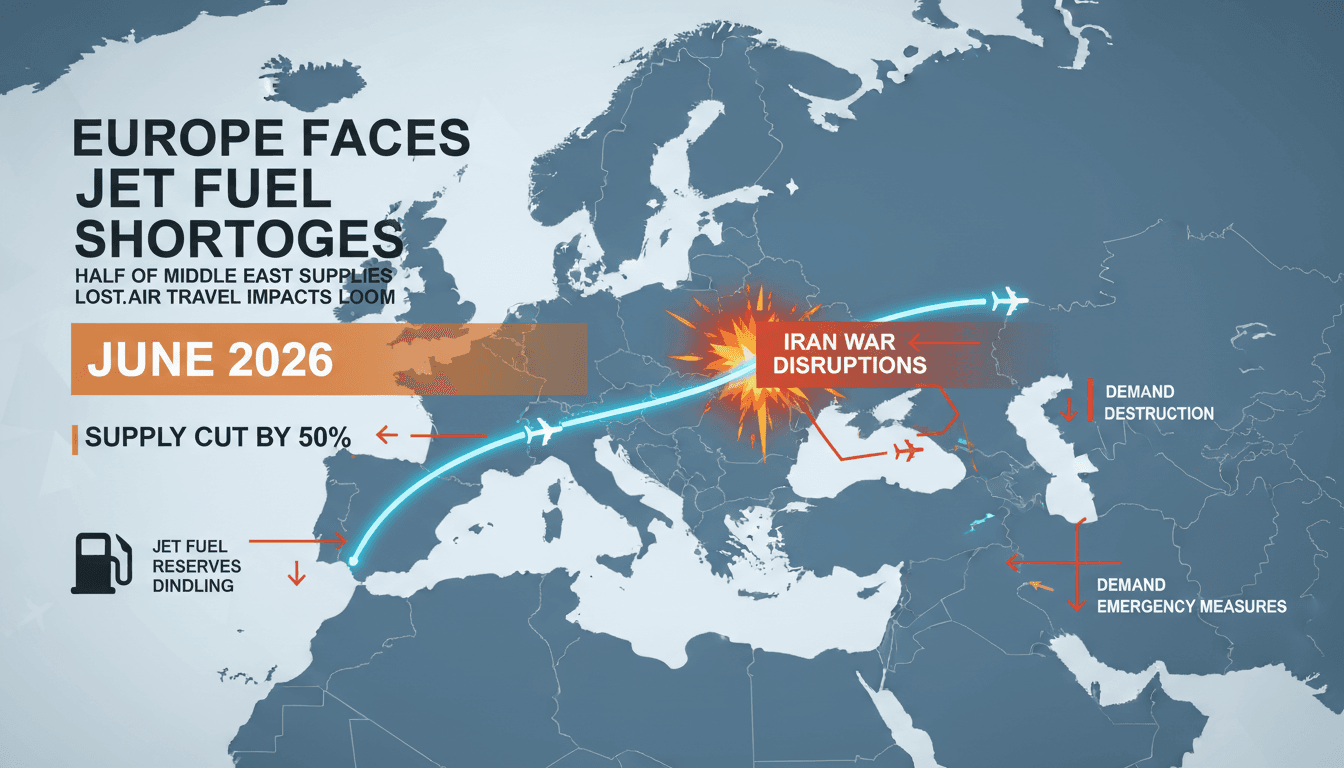
Europe Faces Jet Fuel Shortages by June 2026 Due to Iran War Disruptions
Here's what it means for you.
If you travel frequently to Europe, prepare for potential flight disruptions and rising airfares as jet fuel supplies dwindle.
Why it matters
The looming jet fuel shortages could severely impact air travel across Europe, affecting both airlines and passengers.
What happened (in 30 seconds)
- Europe's jet fuel supply is at risk: The International Energy Agency (IEA) warns of potential shortages by June 2026 due to disruptions from the Iran war.
- Dependence on Middle East imports: Europe relies on the Middle East for 75% of its jet fuel, equating to 375,000 barrels per day.
- Stock levels are critical: Current projections indicate that jet fuel stocks could fall below the essential 23-day demand cover threshold.
The context you actually need
- Iran war escalates supply issues: The conflict, which began in late February 2026, has drastically reduced oil tanker movements through the Strait of Hormuz, impacting global supply.
- Post-COVID refinery closures: European refinery shutdowns and sanctions on Russian oil have heightened reliance on Middle Eastern imports, making the region's instability particularly concerning.
- Summer demand peaks: The timing of these shortages coincides with the summer travel season, when jet fuel demand typically surges.
What's really happening
The ongoing Iran war has created a significant disruption in global oil supply chains, particularly affecting jet fuel availability in Europe. The conflict, which escalated in late February 2026, has led to a U.S. blockade of Iranian ports and severely restricted tanker movements through the Strait of Hormuz. This vital shipping lane, which previously facilitated over 20 million barrels per day (bpd) of oil, has seen flows plummet to just 3.8 million bpd, resulting in a staggering month-on-month drop of 15.8 million bpd in Gulf exports during March.
As a consequence, European jet fuel stocks have reached five-year lows, with the Airports Council International Europe (ACI Europe) warning that systemic shortages could emerge within weeks if the situation does not improve. The IEA's April 2026 Oil Market Report models scenarios indicating that if Europe can only replace half of its normal jet fuel imports from the Middle East, stocks could fall below the critical 23-day demand cover threshold by June. This would lead to demand destruction at select airports, where airlines may have to cut flights or increase fares to manage limited fuel supplies.
The situation is exacerbated by Europe's post-COVID refinery closures and the impact of Russian sanctions, which have diminished domestic production capabilities. With 75% of Europe's net jet fuel imports now sourced from the Middle East, the region's instability poses a direct threat to air travel across the continent. The A4E (Airlines for Europe) has urged the European Commission to implement emergency measures, including joint kerosene procurement and suspension of CO2 pricing, to mitigate the impending crisis.
As jet fuel prices surge—spot prices have already exceeded $200 per barrel, doubling pre-war levels—airlines are feeling the pressure. The A4E has called for immediate action to address the fuel supply vulnerabilities, while the European Commission has acknowledged the situation as a primary concern, advancing plans to boost refinery output. However, the risk of airport rationing looms large, with isolated flight cuts already emerging as carriers attempt to conserve fuel.
Who feels it first (and how)
- Airlines: Facing increased operational costs and potential flight cancellations.
- Travelers: Likely to experience higher airfares and reduced flight availability.
- Airports: May implement fuel rationing, impacting operations and passenger services.
- European governments: Need to respond with policy measures to stabilize fuel supplies.
What to watch next
- Fuel price trends: Monitor jet fuel prices as they could indicate the severity of the supply crisis and its impact on airfares.
- Government interventions: Watch for emergency measures from the European Commission and national governments aimed at stabilizing fuel supplies.
- Airline responses: Keep an eye on airline announcements regarding flight schedules and potential cuts as the situation evolves.
Europe relies heavily on Middle Eastern jet fuel imports, with 75% of its needs met from this region.
Jet fuel shortages will lead to increased airfares and potential flight cancellations across Europe.
The duration and extent of the Iran war's impact on global oil supply chains remain uncertain.
Frequently Asked Questions
- Why it matters?
- The looming jet fuel shortages could severely impact air travel across Europe, affecting both airlines and passengers.
- What happened (in 30 seconds)?
- Europe's jet fuel supply is at risk: The International Energy Agency (IEA) warns of potential shortages by June 2026 due to disruptions from the Iran war. Dependence on Middle East imports: Europe relies on the Middle East for 75% of its jet fuel, equating to 375,000 barrels per day. Stock levels are critical: Current projections indicate that jet fuel stocks could fall below the essential 23-day demand cover threshold.
- What's really happening?
- The ongoing Iran war has created a significant disruption in global oil supply chains, particularly affecting jet fuel availability in Europe. The conflict, which escalated in late February 2026, has led to a U.S. blockade of Iranian ports and severely restricted tanker movements through the Strait of Hormuz. This vital shipping lane, which previously facilitated over 20 million barrels per day (bpd) of oil, has seen flows plummet to just 3.8 million bpd, resulting in a staggering month-on-month
- Who feels it first (and how)?
- Airlines: Facing increased operational costs and potential flight cancellations. Travelers: Likely to experience higher airfares and reduced flight availability. Airports: May implement fuel rationing, impacting operations and passenger services. European governments: Need to respond with policy measures to stabilize fuel supplies.
- What to watch next?
- Fuel price trends: Monitor jet fuel prices as they could indicate the severity of the supply crisis and its impact on airfares. Government interventions: Watch for emergency measures from the European Commission and national governments aimed at stabilizing fuel supplies. Airline responses: Keep an eye on airline announcements regarding flight schedules and potential cuts as the situation evolves.
Oil, metals, and agriculture: supply/demand headlines, OPEC chatter, inventories, and price action.
"Solid tape for energy and metals traders tracking macro and micro catalysts."
— A47 Editor
Europe could see jet fuel shortage by June, EIA says
The U.S. Energy Information Administration (EIA) has warned that Europe could face a significant jet fuel shortage by June 2026, primarily due to ongoing geopolitical tensions and supply chain disruptions. This situation is compounded by the conflict...
24/7 international news from a French perspective in multiple languages.
"France 24 is viewed as a globally focused outlet with balanced coverage and a European perspective."
— A47 Editor
Will Europe's airports run out of jet fuel?
The head of the French energy group Total has warned of a potential jet fuel shortage at European airports in the coming weeks or months, contingent on the situation in the Strait of Hormuz. This warning highlights the vulnerability of fuel supplies ...
Arabic-language digital news outlet covering UAE, regional, and international developments with broad general-news coverage.
"Al Ain News coverage typically blends UAE-focused reporting with wider Arab regional and international news."
— A47 Editor
خطر حقيقي.. نقص حاد في وقود الطائرات يضرب مطارات أوروبا خلال 3 أسابيع
The aviation sector has issued a warning that European airports are facing a 'systematic' shortage of aircraft fuel if the Strait of Hormuz is not fully reopened within three weeks. This situation poses a significant risk to air travel and logistics ...