
Iran War Causes Fuel Crisis and Protests Across Europe
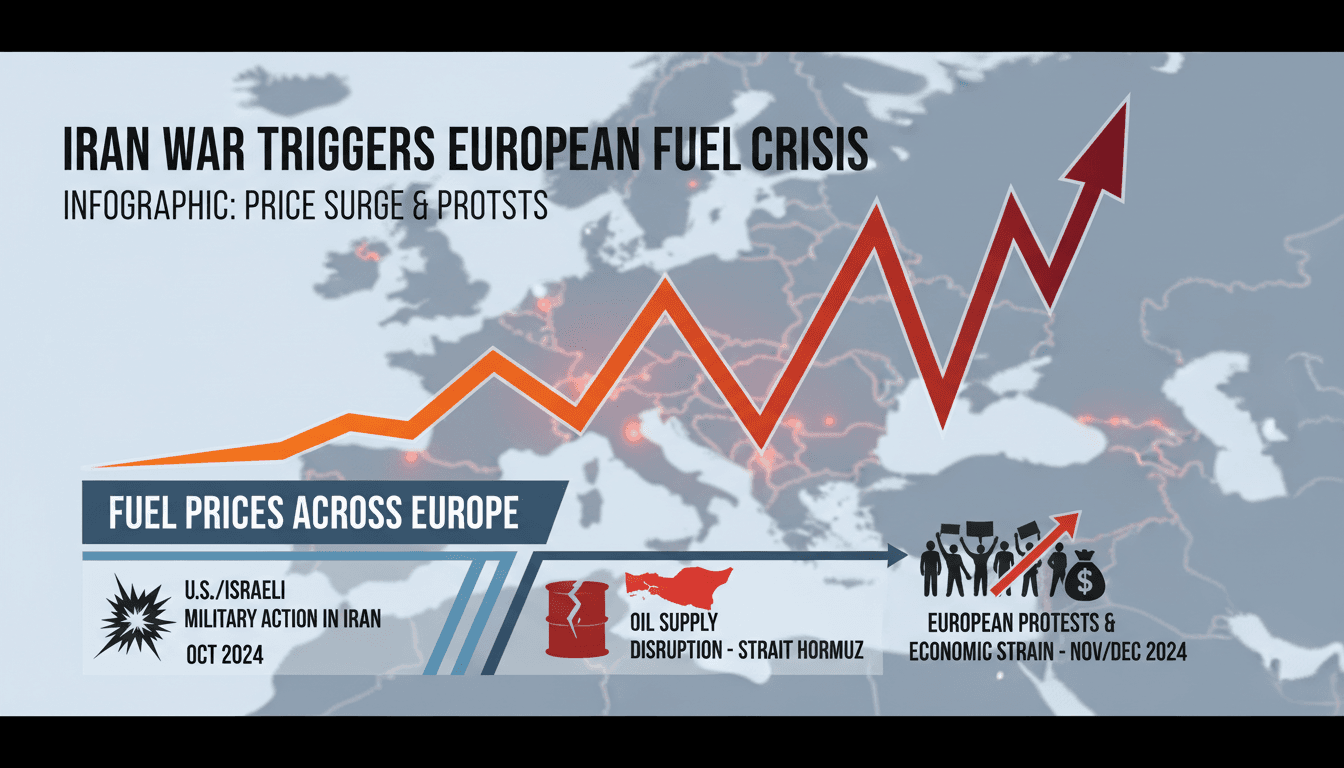
Here's what it means for you.
Rising fuel prices in Europe could impact your cost of living and travel expenses significantly.
Why it matters
The ongoing fuel crisis in Europe threatens economic stability and could lead to widespread social unrest.
What happened (in 30 seconds)
- Fuel prices surged across Europe following the Iran war, with gasoline and diesel costs rising sharply.
- Protests erupted in Ireland and other countries as households faced increased financial strain.
- Governments intervened with tax relief measures to mitigate the impact on consumers.
The context you actually need
- The Iran war began on February 28, 2026, with U.S. and Israeli strikes aimed at curbing Iran's nuclear ambitions.
- The Strait of Hormuz, a critical chokepoint for global oil supplies, was closed by Iran, disrupting 20% of the world's oil flow.
- European gas prices doubled to over €60/MWh by mid-March, exacerbating an already fragile energy situation post-winter.
What's really happening
The Iran war, ignited by U.S. and Israeli military action, has led to significant geopolitical and economic repercussions, particularly in Europe. The conflict's immediate impact was felt when Iran retaliated by closing the Strait of Hormuz, a vital passage for oil and liquefied natural gas (LNG) shipments. This closure disrupted approximately 20% of global oil supplies, triggering a sharp increase in Brent crude prices, which surged by 10-13% to around $80-82 per barrel shortly after the closure.
As the situation escalated, Qatar, a key LNG supplier to Europe, declared force majeure on March 3, further compounding the crisis. The Iranian attack on Qatar's Ras Laffan LNG facility on March 18 reduced production capacity by 17%, leading to a significant drop in available gas supplies. With Europe already grappling with low gas storage levels following a harsh winter, the sudden supply shock resulted in gas prices doubling to over €60/MWh by mid-March.
The economic fallout was swift. By early April, protests erupted in Ireland as citizens reacted to soaring fuel prices, which were exacerbated by the ongoing conflict. The Irish government responded with over $500 million in motor fuel tax cuts, while Germany implemented a billion-dollar relief package to alleviate the financial burden on consumers. Despite a ceasefire announced on April 8, fuel prices continued to rise, indicating persistent volatility in the market.
The crisis has broader implications beyond immediate fuel costs. Airlines, including British Airways and Ryanair, warned of fare increases due to a staggering 94% rise in jet fuel prices. The International Monetary Fund (IMF) has also flagged potential global recession risks, with UK households projected to face an additional $500 in annual costs due to rising fuel prices. This situation underscores the interconnectedness of global energy markets and the fragility of supply chains in times of geopolitical strife.
Who feels it first (and how)
- Households in the UK: Anticipating an additional $500 in annual costs due to rising fuel prices.
- Transport sectors: Airlines facing increased operational costs, leading to higher ticket prices.
- Governments: Under pressure to implement tax relief measures amid public protests and economic strain.
What to watch next
- Fuel price trends: Monitor fluctuations in oil and gas prices as they will directly affect consumer costs and economic stability.
- Government responses: Watch for further tax relief measures or subsidies from European governments to mitigate public unrest.
- Geopolitical developments: Keep an eye on any escalations in the Iran conflict that could further disrupt energy supplies.
Fuel prices have surged significantly across Europe due to the Iran war.
Continued government interventions will be necessary to manage public discontent and economic fallout.
The long-term impact on global energy markets and potential for a recession remains uncertain.
Frequently Asked Questions
- Why it matters?
- The ongoing fuel crisis in Europe threatens economic stability and could lead to widespread social unrest.
- What happened (in 30 seconds)?
- Fuel prices surged across Europe following the Iran war, with gasoline and diesel costs rising sharply. Protests erupted in Ireland and other countries as households faced increased financial strain. Governments intervened with tax relief measures to mitigate the impact on consumers.
- What's really happening?
- The Iran war, ignited by U.S. and Israeli military action, has led to significant geopolitical and economic repercussions, particularly in Europe. The conflict's immediate impact was felt when Iran retaliated by closing the Strait of Hormuz, a vital passage for oil and liquefied natural gas (LNG) shipments. This closure disrupted approximately 20% of global oil supplies, triggering a sharp increase in Brent crude prices, which surged by 10-13% to around $80-82 per barrel shortly after the closur
- Who feels it first (and how)?
- Households in the UK: Anticipating an additional $500 in annual costs due to rising fuel prices. Transport sectors: Airlines facing increased operational costs, leading to higher ticket prices. Governments: Under pressure to implement tax relief measures amid public protests and economic strain.
- What to watch next?
- Fuel price trends: Monitor fluctuations in oil and gas prices as they will directly affect consumer costs and economic stability. Government responses: Watch for further tax relief measures or subsidies from European governments to mitigate public unrest. Geopolitical developments: Keep an eye on any escalations in the Iran conflict that could further disrupt energy supplies.
International stories from NPR’s global desk.
"NPR is an American public media organization known for thoughtful reporting and a slightly left-leaning editorial tone."
— A47 Editor
As fuel prices continue to rise, Iran war drives Europe toward new crisis
As fuel prices continue to rise, protests in Ireland have brought the country to a standstill, while UK leaders criticize the price hikes attributed to the ongoing war in Iran. This situation marks another crisis for Europe, which is still recovering...
Global business headlines with AI angles.
"General business outlet that frequently covers AI."
— A47 Editor
Jet Fuel Shock From Iran War Sends Airline Costs Soaring, Triggers Global Travel Crunch
The ongoing conflict in Iran has led to a significant surge in jet fuel prices, causing airlines across Europe, Asia, and Australia to face heightened financial pressures and operational challenges. This situation is expected to persist as the war co...
Regional coverage and analysis focused on politics, diplomacy, and business across the Middle East.
"Al-Monitor is known for analytical reporting on Middle East politics and policy developments."
— A47 Editor
War spurs EU plan for electricity tax cuts, faster shift from fossil fuels, draft shows
The European Union has proposed a plan to reduce electricity taxes and accelerate the transition to clean energy technologies in response to the rising oil and gas prices exacerbated by the ongoing conflict in Iran. This initiative aims to mitigate t...
UAE-based English-language newspaper covering regional politics, economics, and global affairs.
"The National reflects Emirati policy perspectives while maintaining international editorial standards."
— A47 Editor
The Iran war fuel crisis is shaking up politics as far afield as Ireland
The ongoing fuel crisis in Iran, exacerbated by a recent U.S. blockade of Iranian ports, is significantly impacting global oil supply and prices, leading to political ramifications as far away as Ireland. The blockade, initiated on April 13, 2026, fo...
Editor-curated FT homepage stories spanning markets, business, world, and opinion.
"The Financial Times is a globally respected business publication with a centrist/center-left tone and strong markets focus."
— A47 Editor
Why time is on Iran’s side
The ongoing conflict in Iran is exacerbating a global energy crisis, with rising oil prices and disruptions in supply chains affecting various industries. Political instability is anticipated to escalate as the situation unfolds, leading to increased...
24/7 international news from a French perspective in multiple languages.
"France 24 is viewed as a globally focused outlet with balanced coverage and a European perspective."
— A47 Editor
Iran war prompts European rethink on energy security: How can the EU become more independent?
The ongoing war in Iran has significantly impacted Europe's energy security, revealing the continent's continued dependence on external energy sources, particularly as disruptions to liquefied natural gas (LNG) shipments through the Strait of Hormuz ...
Corporate news, economic trends, and markets with UK and global scope.
"BBC News is widely regarded as reputable and impartial, with a public service mandate."
— A47 Editor
How the Iran war affects your money and bills
The ongoing conflict in Iran has significantly impacted global markets, leading to increased costs for petrol, household energy bills, and food prices. The Food and Agriculture Organization (FAO) reported a 2.4% rise in global food prices in March, a...
United Kingdom-focused news including local politics, business, and social issues.
"BBC News is widely regarded as a reputable international news organization, known for its impartial tone and public service mandate."
— A47 Editor
How the Iran war may affect your money and bills
The ongoing war in Iran is expected to significantly impact global economies, leading to increased costs for petrol, household energy bills, and food prices. The conflict has already resulted in substantial military expenditures and casualties, with ...