
NASA's Artemis II Mission Faces Heat Shield Risks During Re-entry
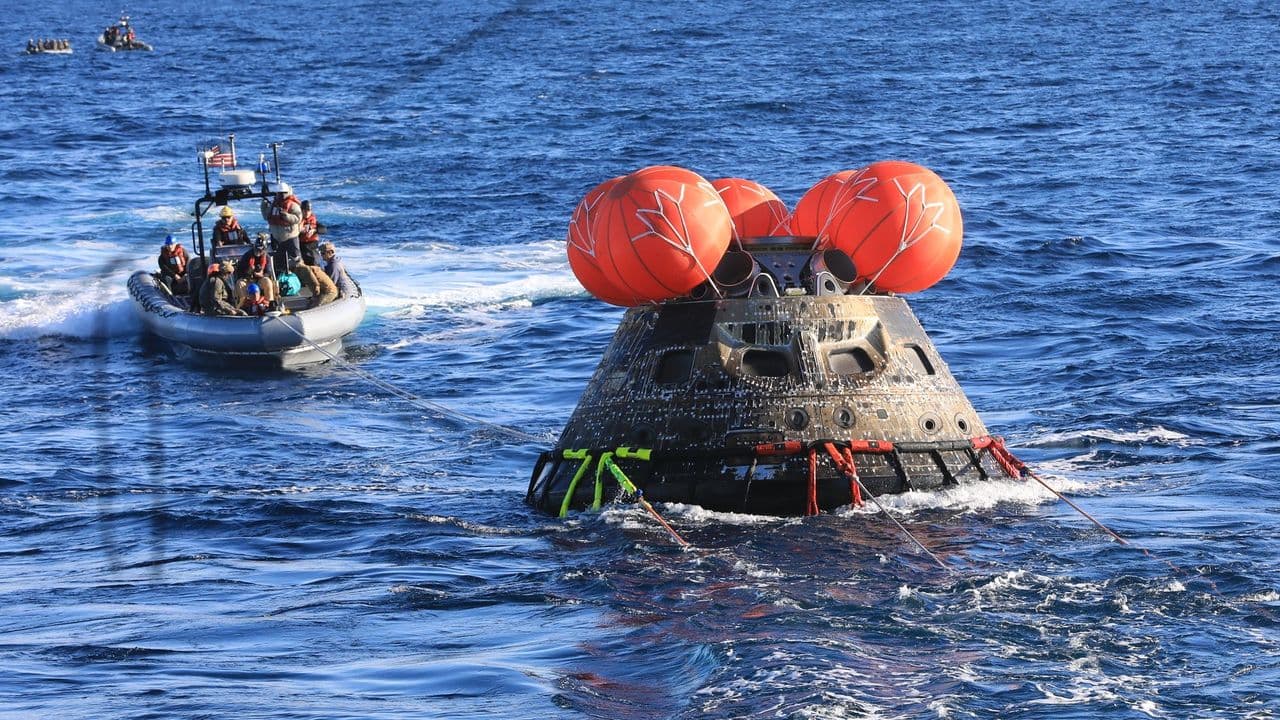
Here's what it means for you.
The Artemis II mission's success or failure could reshape the future of human space exploration, impacting international partnerships and technological advancements.
Why it matters
The Artemis program is pivotal for establishing a sustainable human presence on the Moon and preparing for future Mars missions, influencing global space policy and industry.
What happened (in 30 seconds)
- Artemis II launched on April 1, 2026, marking the first crewed lunar flyby since Apollo 17.
- The mission faced critical re-entry risks due to documented flaws in the Orion heat shield from the previous Artemis I mission.
- NASA modified the re-entry profile to mitigate exposure to extreme temperatures, with splashdown scheduled for April 10, 2026.
The context you actually need
- The Artemis program aims to reestablish human presence on the Moon and prepare for Mars exploration, following the uncrewed Artemis I mission in November 2022.
- Heat shield anomalies from Artemis I, including char loss and cracking, prompted NASA to adjust the re-entry strategy for Artemis II, opting for a steeper trajectory.
- International partnerships, including contributions from the Canadian Space Agency, are integral to the Artemis program's success, reflecting a collaborative approach to space exploration.
What's really happening
The Artemis II mission represents a significant milestone in human spaceflight, as it is the first time astronauts will orbit the Moon since the Apollo program. Launched from Kennedy Space Center, the mission's trajectory involved a close lunar flyby, which was successfully executed on April 6, 2026. However, the mission is not without its challenges. The Orion spacecraft's heat shield, which protects the crew during re-entry, has shown vulnerabilities that could jeopardize the mission's success.
NASA's decision to modify the re-entry profile stems from the lessons learned during the Artemis I mission. Investigations revealed that the heat shield experienced char loss and cracking due to gas entrapment during re-entry, raising concerns about its ability to withstand the extreme conditions of atmospheric re-entry, where temperatures can exceed 5,000°F. To address these issues, NASA opted for a steeper re-entry trajectory, avoiding a full 'skip' profile that would have subjected the heat shield to even greater thermal stress. This decision reflects a balancing act between immediate mission safety and long-term program goals, as redesigning the heat shield would delay future missions.
Despite these risks, NASA officials have expressed high confidence in the modified re-entry plan. They emphasize that the trajectory has been meticulously calculated and executed, with mission control closely monitoring the spacecraft's systems. However, external voices, including former astronaut Charlie Camarda, have raised alarms, drawing parallels to past failures in space missions. The stakes are high, as the success of Artemis II is crucial for the timeline of subsequent missions, including Artemis III, which aims to land astronauts on the lunar surface.
The mission's implications extend beyond the immediate technical challenges. Successful re-entry and splashdown could bolster public and governmental support for NASA's Artemis program, reinforcing the United States' leadership in space exploration. Conversely, any failure could lead to increased scrutiny of NASA's processes and funding, impacting future missions and international collaborations.
Who feels it first (and how)
- NASA officials: Directly involved in mission planning and execution, facing pressure to ensure success.
- Space industry analysts: Monitoring the mission's outcomes to assess impacts on future Artemis missions and funding.
- International partners: Countries involved in the Artemis program, like Canada, will be affected by the mission's success or failure in terms of collaboration opportunities.
- Investors in space technology: Companies developing technologies for Artemis missions will be impacted by the mission's results, influencing investment decisions.
What to watch next
- Re-entry performance: The success of the modified re-entry profile will be critical in determining the viability of future missions.
- Post-mission assessments: NASA's evaluation of the Orion heat shield's performance will influence the design and safety protocols for Artemis III.
- International collaboration developments: Watch for announcements regarding partnerships and contributions from other countries in response to Artemis II's outcomes.
Artemis II successfully launched and conducted a lunar flyby.
NASA will continue to refine the heat shield design based on Artemis II's performance.
The long-term impact of Artemis II's success or failure on future missions and international partnerships.
Frequently Asked Questions
- Why it matters?
- The Artemis program is pivotal for establishing a sustainable human presence on the Moon and preparing for future Mars missions, influencing global space policy and industry.
- What happened (in 30 seconds)?
- Artemis II launched on April 1, 2026, marking the first crewed lunar flyby since Apollo 17. The mission faced critical re-entry risks due to documented flaws in the Orion heat shield from the previous Artemis I mission. NASA modified the re-entry profile to mitigate exposure to extreme temperatures, with splashdown scheduled for April 10, 2026.
- What's really happening?
- The Artemis II mission represents a significant milestone in human spaceflight, as it is the first time astronauts will orbit the Moon since the Apollo program. Launched from Kennedy Space Center, the mission's trajectory involved a close lunar flyby, which was successfully executed on April 6, 2026. However, the mission is not without its challenges. The Orion spacecraft's heat shield, which protects the crew during re-entry, has shown vulnerabilities that could jeopardize the mission's success
- Who feels it first (and how)?
- NASA officials: Directly involved in mission planning and execution, facing pressure to ensure success. Space industry analysts: Monitoring the mission's outcomes to assess impacts on future Artemis missions and funding. International partners: Countries involved in the Artemis program, like Canada, will be affected by the mission's success or failure in terms of collaboration opportunities. Investors in space technology: Companies developing technologies for Artemis missions will be impacted by
- What to watch next?
- Re-entry performance: The success of the modified re-entry profile will be critical in determining the viability of future missions. Post-mission assessments: NASA's evaluation of the Orion heat shield's performance will influence the design and safety protocols for Artemis III. International collaboration developments: Watch for announcements regarding partnerships and contributions from other countries in response to Artemis II's outcomes.
Scientific discoveries, health, technology, and natural phenomena.
"Live Science reports on scientific discoveries, health, technology, and natural phenomena with a popular science tone."
— A47 Editor
There are 'reasons to be confident' about faulty Artemis II heat shield ahead of 25,000 mph reentry, space expert Ed Macaulay says
NASA's Artemis II mission is nearing its conclusion as the Orion crew prepares for reentry into Earth's atmosphere, with the heat shield facing a critical test at speeds of 25,000 mph. Space expert Ed Macaulay expressed confidence in the heat shield'...
In-depth reporting on tech, policy, and science including AI.
"Respected analysis for technically savvy readers, including AI topics."
— A47 Editor
Orion helium leak no threat to Artemis II reentry but will require redesign
NASA's Orion spacecraft is facing a helium leak issue that, while not posing a threat to the Artemis II mission's reentry, necessitates a redesign of its valves. This follows similar leaks encountered during the Artemis I mission, highlighting ongoin...
In-depth coverage of hardware, software, science, and policy.
"Ars Technica provides expert technology news, hardware reviews, and analysis for a technically savvy audience."
— A47 Editor
Orion helium leak no threat to Artemis II reentry but will require redesign
NASA's Orion spacecraft is facing a helium leak issue that, while not posing a threat to the Artemis II mission's reentry, necessitates a redesign of its valves. This follows similar leaks encountered during the Artemis I mission, highlighting ongoin...
National headlines across the United States including breaking stories and societal issues.
"NBC News is a mainstream media outlet known for comprehensive national and international news coverage with a centrist to slightly left-leaning editorial tone."
— A47 Editor
Design flaw increases risk for Artemis II crew as they plunge back to Earth
NASA's Artemis II mission is set to return to Earth after a historic lunar flyby, but the crew faces significant risks during re-entry due to known design flaws in the Orion spacecraft. The mission, which began on April 1, 2026, marks the first crewe...