
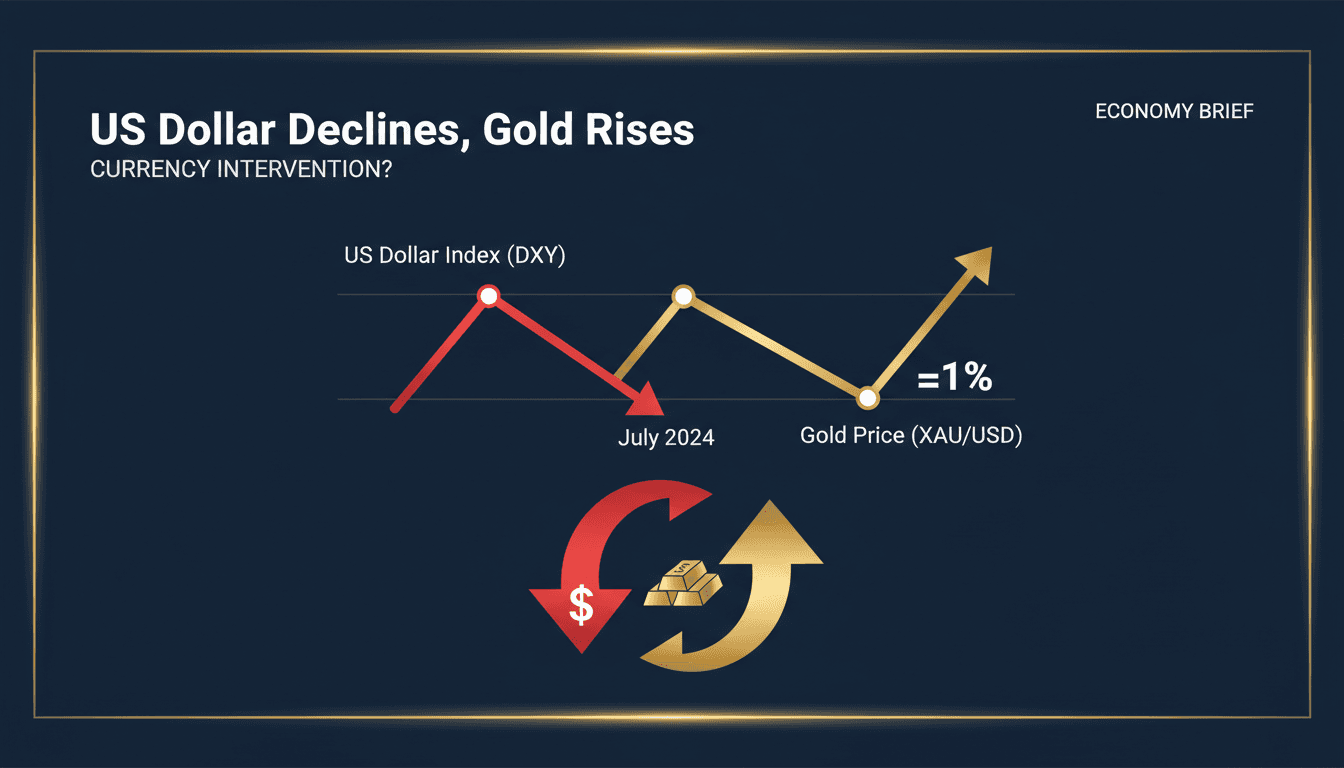
US dollar declines over 1% amid speculation of Japanese currency intervention
Here's what it means for you.
The recent decline of the US dollar, particularly against the yen, signals potential shifts in currency markets that could impact global trade and investment strategies. Investors and policymakers alike will need to monitor the evolving situation closely, as the interplay between US economic data and Japanese intervention efforts could lead to increased volatility. This scenario highlights the importance of central bank communications in shaping market expectations and reactions.
What happened
In July, the US dollar experienced a notable decline, falling over 1% as mixed economic data and uncertain signals from the Federal Reserve raised concerns about inflation. The dollar weakened significantly against the yen, dropping 2.3%, amid speculation regarding potential currency intervention by Japan. Although no official confirmation of such intervention has been made, market participants are keenly aware of the implications.
The decline in the dollar coincided with rising gold prices, which gained traction as the dollar weakened. This relationship underscores the interconnectedness of currency values and commodity prices in the current economic landscape. As traders assess the situation, the focus remains on the potential for official comments from Japanese officials regarding currency intervention.
The Context
The dollar's decline reflects a complex interplay of economic indicators and central bank actions, particularly concerning Japan's potential intervention in currency markets. The Federal Reserve's unclear signals regarding inflation have contributed to uncertainty, prompting market participants to reassess their strategies. As the dollar fell, gold prices held their gains, indicating a flight to safety among investors.
The timing of this decline is critical, as it coincides with ongoing discussions about monetary policy and economic stability in both the US and Japan. Stakeholders, including traders and policymakers, are closely monitoring developments, as any official stance from Japan could significantly influence market dynamics. The situation emphasizes the need for clarity in central bank communications to mitigate volatility.
Takeaway
Looking ahead, market participants will be vigilant for any official confirmation of Japanese currency intervention, which could further impact the dollar's trajectory. Additionally, upcoming economic data releases from the US will be crucial in shaping inflation expectations and influencing market sentiment. The interplay between these factors will be essential for understanding future currency movements.
As traders navigate this uncertain landscape, the focus will remain on how central banks respond to evolving economic conditions. The potential for increased volatility in currency markets underscores the importance of staying informed about both domestic and international economic developments.
Currency market headlines, FX rates, central-bank chatter, and macro drivers moving major pairs.
"Investing.com’s forex stream is useful for fast updates across USD, EUR, JPY, GBP and emerging-market FX."
— A47 Editor
Dollar falls over 1% for July as U.S. data, Fed paint a muddy picture on inflation
The U.S. dollar fell over 1% in July, influenced by mixed economic data and the Federal Reserve's recent decisions regarding interest rates, which have created uncertainty around inflation. This decline marks a significant shift in the dollar's perfo...
Global markets, investing, and macroeconomics from a premier financial newsroom.
"Bloomberg is respected for in-depth financial reporting and data-driven analysis."
— A47 Editor
Gold Holds Gain as Japan Currency Intervention Weighs on Dollar
Gold prices have maintained a two-day gain, buoyed by a significant drop in the US dollar following Japan's intervention to support the yen. This move comes as the yen has faced considerable weakness, prompting concerns about rising import costs and ...
Markets desk coverage, trading insights, and investor updates.
"WSJ’s markets reporting provides in-depth analysis and context for investors."
— A47 Editor
Dollar Weakens Against Yen But Intervention Isn’t Confirmed
The U.S. dollar has weakened significantly, experiencing a 2.3% drop against the Japanese yen. This decline comes amid speculation regarding potential intervention by the Bank of Japan (BOJ), although no official confirmation has been made. Insight I...