
Federal Reserve dissent grows over interest rate policy amid inflation concerns
Here's what it means for you.
The Federal Reserve's internal dissent over interest rate policy signals a critical moment for economic management. With inflation remaining a significant concern, the differing opinions among Fed members could lead to shifts in monetary policy that impact markets and consumers alike. Stakeholders should closely monitor these developments as they may influence future economic conditions and financial strategies.
What happened
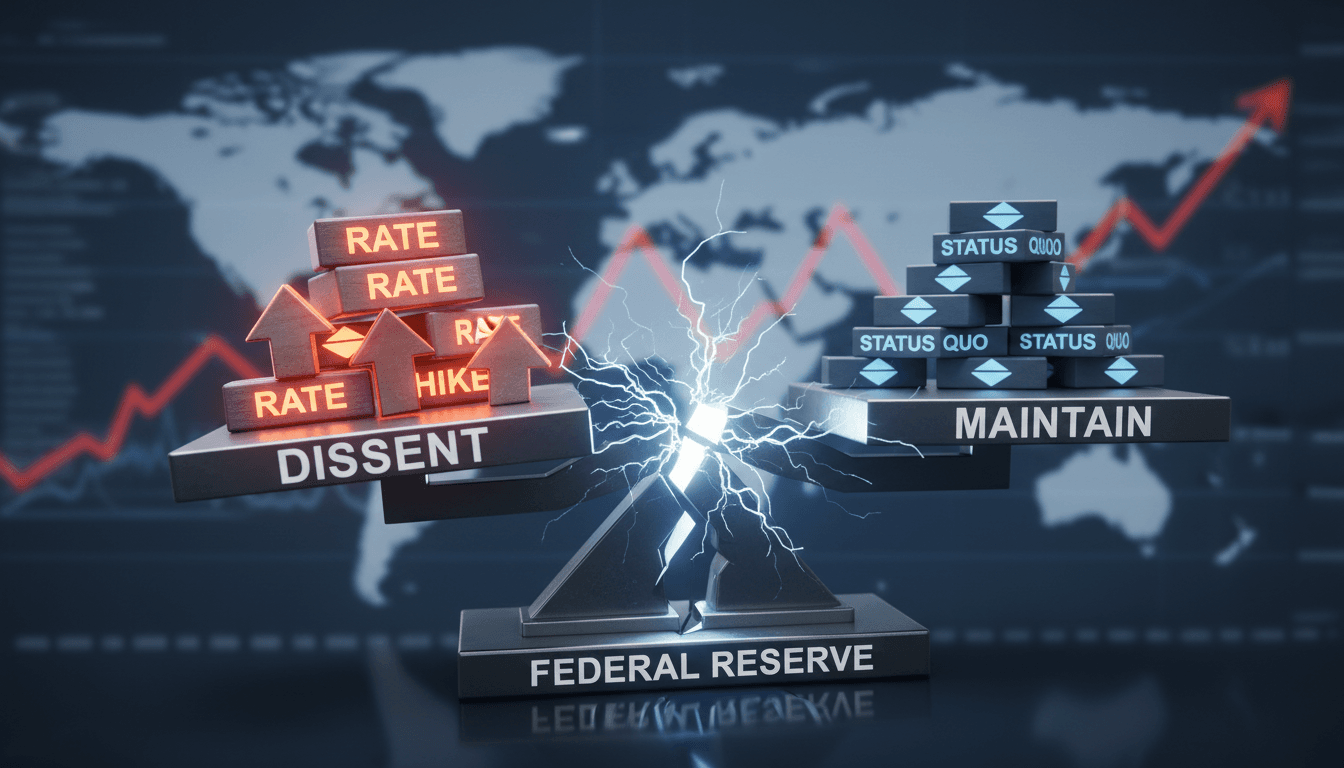
Three members of the Federal Reserve publicly opposed the decision to maintain current interest rates, advocating for a hike to combat persistent inflation. Their dissent highlights a growing divide within the Fed regarding the effectiveness of its monetary policy. The majority of the Federal Open Market Committee opted to keep rates steady, but the dissenting voices argue that this approach could allow inflation to become entrenched.
The dissenting members believe that a rate increase is necessary to prevent further inflationary pressures in the economy. This internal disagreement reflects the challenges the Fed faces in balancing economic growth with the need to control inflation.
The Context
The Federal Reserve's decision to hold interest rates steady comes amid ongoing inflation concerns that have been troubling policymakers. The differing views among Fed members underscore the complexities of managing monetary policy in a fluctuating economic landscape. As inflation continues to be a pressing issue, the Fed's approach to interest rates is under scrutiny.
The dissenting voices represent a faction within the Fed that is increasingly worried about the long-term implications of maintaining low rates. Their stance may influence future discussions and decisions as the Fed navigates the delicate balance between fostering economic growth and curbing inflation.
Takeaway
The ongoing debate within the Federal Reserve may lead to future adjustments in monetary policy as inflation remains a critical issue. Observers should watch for potential shifts in Fed policy based on upcoming inflation data and market reactions to any changes in interest rates. The internal dissent could signal a more aggressive approach to managing inflation in the near future.
As the economic landscape evolves, the Fed's decisions will be pivotal in shaping financial markets and consumer confidence. Stakeholders should remain vigilant as the situation develops, as it may have far-reaching implications for the economy.
Macro commentary, policy analysis, growth/inflation themes, and global outlooks.
"Contextual macro coverage that complements day-to-day market headlines."
— A47 Editor
Fed dissenters sketch the case for a rate hike
The Federal Reserve recently maintained interest rates during a meeting, resulting in a 9-3 vote, with three dissenting policymakers advocating for a rate hike due to ongoing inflation concerns. This decision highlights the internal divisions within ...
Pan-Arab news coverage spanning politics, business, sports, and regional affairs.
"Asharq Al-Awsat reflects a broad Arab editorial perspective with strong attention to regional geopolitics."
— A47 Editor
معارضو قرار «الفيدرالي» يدعون إلى رفع الفائدة لمنع ترسخ التضخم
Three policymakers from the Federal Reserve who opposed the decision to keep interest rates unchanged have stated that raising interest rates has become necessary to prevent entrenched inflation. This dissent highlights a growing concern among some o...
Editor-curated FT homepage stories spanning markets, business, world, and opinion.
"The Financial Times is a globally respected business publication with a centrist/center-left tone and strong markets focus."
— A47 Editor
Fed dissenters warn of challenges in taming inflation
The Federal Reserve recently decided to maintain interest rates during a meeting, resulting in a 9-3 vote, with three dissenting policymakers advocating for a rate hike due to ongoing inflation concerns. This dissent highlights significant divisions ...