
Gold prices stabilize above $4,400 as investors await U.S. inflation data
Here's what it means for you.
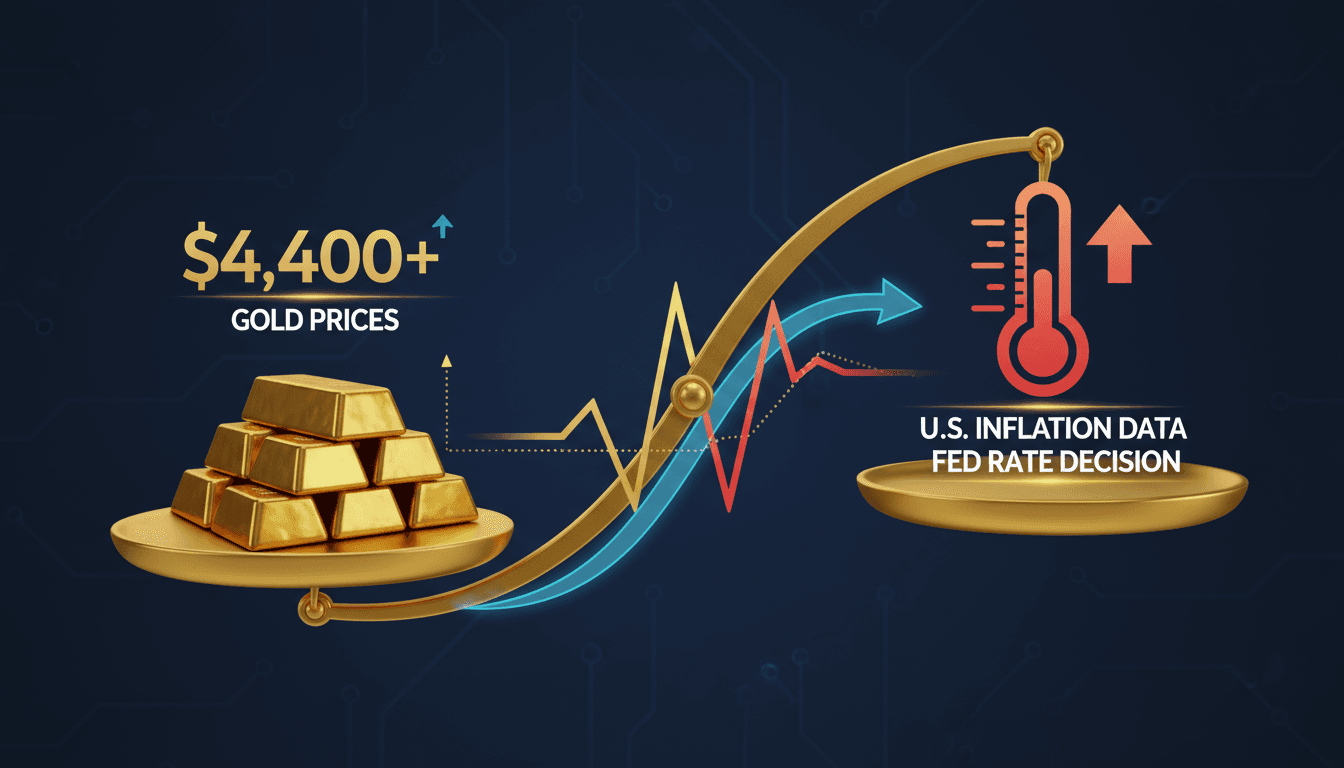
Gold prices have recently stabilized above $4,400 per ounce, reflecting a strong market performance amid ongoing economic uncertainty. Investors are closely monitoring upcoming U.S. inflation data, which could significantly influence Federal Reserve interest rate decisions. The interplay between inflation indicators and gold prices will be crucial for market strategies in the near term. As inflation data is released, market participants may adjust their positions, leading to potential volatility in gold prices. This situation underscores the importance of economic indicators in shaping investor sentiment and market dynamics.
What happened
Gold prices have eased from a seven-week high as investors engaged in profit-taking ahead of critical U.S. inflation data. Currently, gold is holding above $4,400 per ounce, following a strong weekly performance. The recent fluctuations are indicative of market reactions to economic signals and investor strategies.
The price of gold reached a peak of $4,390.60 per ounce after weaker-than-expected U.S. employment data. However, as the market anticipates upcoming inflation reports, there has been a slight decline in prices, with spot gold falling 0.3% to $4,330.46 per ounce.
The Context
The current situation in the gold market is influenced by several factors, including geopolitical tensions and economic indicators. The upcoming Consumer Price Index (CPI) and Producer Price Index (PPI) releases are particularly significant, as they could impact Federal Reserve policy regarding interest rates.
Additionally, ongoing tensions in the Middle East, especially concerning shipping lanes through the Strait of Hormuz, continue to affect commodity markets. These dynamics create a complex environment for investors, who must navigate both economic and geopolitical uncertainties.
Takeaway
As the market awaits the release of key inflation data this week, all eyes will be on the potential implications for gold prices and Federal Reserve interest rate decisions. The CPI is set to be released on Wednesday, followed by the PPI on Thursday, both of which are expected to shape market sentiment.
Investors should prepare for possible volatility in gold prices as these economic indicators are unveiled. The outcomes could lead to significant adjustments in market strategies, particularly in relation to interest rates and inflation expectations.
Markets desk coverage, trading insights, and investor updates.
"WSJ’s markets reporting provides in-depth analysis and context for investors."
— A47 Editor
Gold Holds Above $4,400 Ahead of U.S. Inflation Data
Gold futures have maintained a price above $4,400 per troy ounce, following a notable weekly performance that marks the best results since January. This stability comes as traders anticipate upcoming U.S. inflation data, which could influence market ...
Regional and international reporting focused on Middle Eastern politics, diplomacy, and economics.
"Asharq Al-Awsat is a Saudi-owned international newspaper reflecting mainstream Gulf political perspectives."
— A47 Editor
Gold Drifts Lower from Seven-Week Peak, US Inflation Data Looms
Gold prices have drifted lower from a seven-week peak, currently reflecting market volatility as investors await U.S. inflation data that could influence future Federal Reserve interest rate decisions. The recent fluctuation in gold prices follows a ...
Business, markets, economy, and corporate news with strong UAE and regional relevance.
"Emirates 24|7 business coverage tends to center UAE markets, property, regulation, and regional economic developments."
— A47 Editor
Gold eases from seven-week high as investors await key US inflation data
Gold prices have decreased slightly after reaching a seven-week high, as investors took profits ahead of key US inflation data that could impact the Federal Reserve's interest rate decisions. Spot gold fell 0.3% to $4,330.46 per ounce, while US gold ...