
Gold prices retreat from two-month high amid profit-taking and soft inflation data
Here's what it means for you.
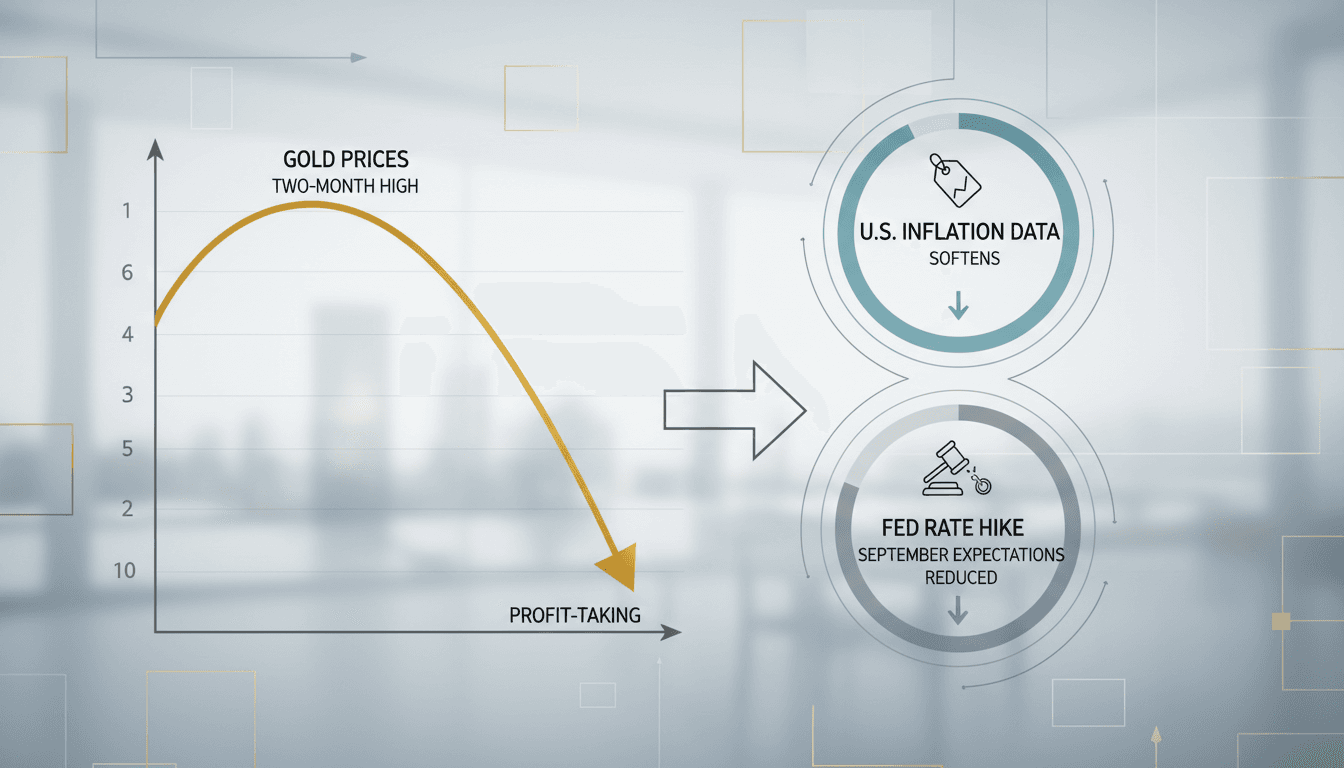
The recent decline in gold prices signals a shift in market sentiment as investors capitalize on previous gains. With softer inflation data from the U.S. and diminished expectations for a Federal Reserve rate hike, traders are recalibrating their strategies. This volatility may impact both short-term trading decisions and long-term investment strategies in precious metals. As the market reacts to these economic indicators, stakeholders should remain vigilant. The upcoming Federal Open Market Committee meeting could further influence gold prices, making it essential for investors to stay informed.
What happened
Gold prices have fallen after reaching a two-month peak, as investors booked profits. Spot gold was priced at $4,351.45 per ounce, down from a high of $4,407.70. This decline follows a 1.3% drop in the previous session, reflecting a broader market reaction to recent economic data.
Traders are now pricing a 31% chance of a Federal Reserve rate hike in September, a decrease from 44%. This shift in expectations is contributing to the current volatility in the gold market, as traders adjust their positions in response to changing economic signals.
The Context
The gold market has experienced a pullback after a significant rally driven by favorable inflation data and expectations of lower interest rates. The widening physical gold discounts in India indicate reduced consumption, which adds another layer of complexity to the market dynamics.
As traders take profits, the focus shifts to upcoming economic indicators that could influence future price movements. The timing of these indicators is crucial, as they coincide with the Federal Open Market Committee meeting, which could further impact market sentiment.
Takeaway
The upcoming Federal Open Market Committee meeting may introduce further volatility in gold prices. Investors should monitor the meeting minutes closely for potential market impacts. Additionally, changes in global oil prices could also affect gold demand, making it essential to keep an eye on these developments.
As the gold market remains sensitive to economic data and Federal Reserve signals, traders are likely to continue adjusting their positions in the face of new information. This ongoing volatility presents both challenges and opportunities for market participants.
Business, markets, economy, and corporate news with strong UAE and regional relevance.
"Emirates 24|7 business coverage tends to center UAE markets, property, regulation, and regional economic developments."
— A47 Editor
Gold steadies from two-month peak as inflation rally loses steam
Gold prices stabilized on Friday after retreating from a two-month high, as investors took profits following a rally driven by softer U.S. inflation data and diminishing expectations for a Federal Reserve rate hike in September. Spot gold remained st...
Oil, metals, and agriculture: supply/demand headlines, OPEC chatter, inventories, and price action.
"Solid tape for energy and metals traders tracking macro and micro catalysts."
— A47 Editor
Gold rally loses steam as traders take profits
Gold prices have recently lost momentum as traders take profits following a rally, which had seen prices rise significantly in the preceding weeks. This decline comes after a period of increased demand for gold, driven by shifting market sentiments r...
Regional and international reporting focused on Middle Eastern politics, diplomacy, and economics.
"Asharq Al-Awsat is a Saudi-owned international newspaper reflecting mainstream Gulf political perspectives."
— A47 Editor
Gold Heads for Weekly Loss as Investors Unwind Inflation-fueled Rally
Gold prices are heading for a weekly loss as investors unwind a rally fueled by inflation concerns, reflecting a shift in market sentiment. The recent decline follows a period of volatility influenced by geopolitical tensions and economic uncertainti...