
Iranian Rial Hits Record Low Amid US Sanctions and Blockade
Here's what it means for you.
If you engage in trade or investment in the Gulf region, the Iranian rial's collapse could significantly impact your operations and costs.
Why it matters
The Iranian rial's record low signals a deepening economic crisis that could ripple through regional markets and affect global oil prices.
What happened (in 30 seconds)
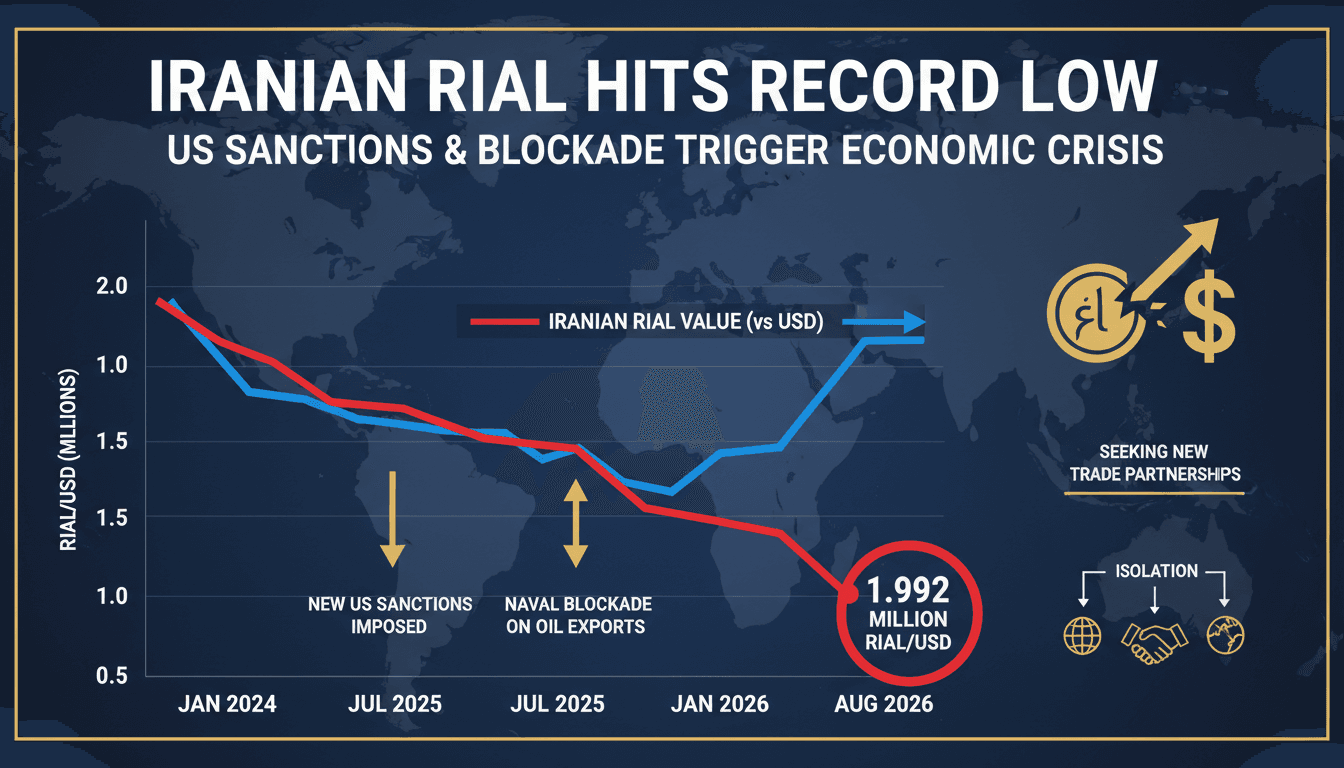
- The rial fell to 1.992 million per USD on August 24, 2026, marking a 4.5% decline in just one week.
- US sanctions intensified, including a naval blockade that effectively halted Iranian oil exports, a key revenue source.
- The UAE suspended all trade and financial transactions with Iran, further isolating the Iranian economy.
The context you actually need
- US-Iran tensions have escalated over months, with sanctions aimed at crippling Iran's economy and oil exports.
- Iran's Central Bank Governor Abdolnaser Hemmati confirmed that oil exports had effectively stopped, exacerbating the currency crisis.
- China's response indicates a potential shift in alliances, as Iranian officials seek alternative trade partnerships through groups like SCO and BRICS.
What's really happening
The Iranian rial's dramatic fall to nearly 2 million rials per USD is a direct consequence of intensified US economic measures, including new sanctions and a naval blockade targeting Iran's oil exports. This blockade has effectively severed Iran's primary source of foreign currency, leading to a sharp decline in the rial's value. The US Treasury Department, under Secretary Scott Bessent, has framed these measures as a decisive economic operation aimed at crippling Iran's financial lifelines.
The UAE's suspension of all trade and financial transactions with Iran has compounded the crisis, disrupting what was once a vital conduit for Iranian commerce. This move not only isolates Iran further but also impacts Dubai's role as a regional hub for trade and finance, increasing costs and compliance burdens for businesses engaged in Iran-related activities. The UAE's actions reflect a broader regional alignment against Iran, driven by concerns over its nuclear ambitions and regional influence.
Iranian officials have responded to the crisis by signaling a pivot towards alternative trade blocs, seeking partnerships with countries like China and members of the Shanghai Cooperation Organization (SCO) and BRICS. However, these efforts may not provide immediate relief, as the economic pressures from the US sanctions are expected to persist. The Iranian media has linked the rial's decline to reduced oil exports and rising import demands, indicating a potential for heightened inflation and economic instability.
As the rial continues to plummet, the Iranian economy faces a precarious situation, with rising import costs and a shrinking foreign currency reserve. The situation is further complicated by the geopolitical landscape, where regional partners like China advocate for diplomatic resolutions, while the US maintains its hardline stance. The combination of these factors creates a volatile environment that could have far-reaching implications for both the Iranian populace and the broader Gulf region.
Who feels it first (and how)
- Iranian consumers: Facing skyrocketing prices for imported goods and essential commodities.
- Businesses in Dubai: Increased costs and compliance burdens for those dealing with Iranian trade.
- Regional oil markets: Potential fluctuations in oil prices due to reduced Iranian exports and geopolitical tensions.
What to watch next
- Further US sanctions: Any additional measures could deepen the economic crisis in Iran and affect regional stability.
- Iran's alternative trade partnerships: Watch for developments in Iran's efforts to engage with SCO and BRICS nations, which could reshape trade dynamics.
- Inflation rates in Iran: Rising inflation could lead to social unrest and further economic challenges, impacting regional markets.
The rial has reached a record low of 1.992 million per USD.
Continued economic pressures from US sanctions will exacerbate Iran's economic crisis.
The effectiveness of Iran's pivot to alternative trade blocs in mitigating the impact of sanctions.
Frequently Asked Questions
- Why it matters?
- The Iranian rial's record low signals a deepening economic crisis that could ripple through regional markets and affect global oil prices.
- What happened (in 30 seconds)?
- The rial fell to 1.992 million per USD on August 24, 2026, marking a 4.5% decline in just one week. US sanctions intensified, including a naval blockade that effectively halted Iranian oil exports, a key revenue source. The UAE suspended all trade and financial transactions with Iran, further isolating the Iranian economy.
- What's really happening?
- The Iranian rial's dramatic fall to nearly 2 million rials per USD is a direct consequence of intensified US economic measures, including new sanctions and a naval blockade targeting Iran's oil exports. This blockade has effectively severed Iran's primary source of foreign currency, leading to a sharp decline in the rial's value. The US Treasury Department, under Secretary Scott Bessent, has framed these measures as a decisive economic operation aimed at crippling Iran's financial lifelines. Th
- Who feels it first (and how)?
- Iranian consumers: Facing skyrocketing prices for imported goods and essential commodities. Businesses in Dubai: Increased costs and compliance burdens for those dealing with Iranian trade. Regional oil markets: Potential fluctuations in oil prices due to reduced Iranian exports and geopolitical tensions.
- What to watch next?
- Further US sanctions: Any additional measures could deepen the economic crisis in Iran and affect regional stability. Iran's alternative trade partnerships: Watch for developments in Iran's efforts to engage with SCO and BRICS nations, which could reshape trade dynamics. Inflation rates in Iran: Rising inflation could lead to social unrest and further economic challenges, impacting regional markets.
Jordanian news and regional updates.
"Roya News is a Jordanian outlet focused on breaking news and local affairs."
— A47 Editor
العملة الإيرانية تهوي لمستوى قياسي أمام الدولار مع تصعيد الضغوط الاقتصادية الأمريكية
The Iranian currency has plummeted to a record low against the dollar, marking a critical decline amid escalating American economic pressures. This significant drop reflects ongoing challenges faced by the Iranian economy, exacerbated by external san...
Currency market headlines, FX rates, central-bank chatter, and macro drivers moving major pairs.
"Investing.com’s forex stream is useful for fast updates across USD, EUR, JPY, GBP and emerging-market FX."
— A47 Editor
Dollar drifts near 3-month lows on trade retaliation and Iran sanctions threat
The U.S. dollar is currently drifting near three-month lows, influenced by trade retaliation and the threat of sanctions against Iran. This decline reflects ongoing market volatility and concerns regarding inflation and interest rate expectations.
Global business headlines with AI angles.
"General business outlet that frequently covers AI."
— A47 Editor
The U.S. Is Doubling Down On Economic Economic Pressure Against Iran. Its Currency Just Hit a New Low.
The U.S. has intensified its economic pressure on Iran, with the value of the U.S. dollar surpassing 2 million rials, marking a new low for the Iranian currency. This escalation in economic sanctions aligns with President Trump's declaration of an 'E...