
European Central Banks Shift Gold Reserves to London Amid Geopolitical Tensions
Here's what it means for you.
If you're involved in finance or investment, this shift in gold reserves could influence market stability and asset liquidity.
Why it matters
This relocation reflects a strategic pivot by central banks to enhance crisis preparedness amid rising geopolitical tensions.
What happened (in 30 seconds)
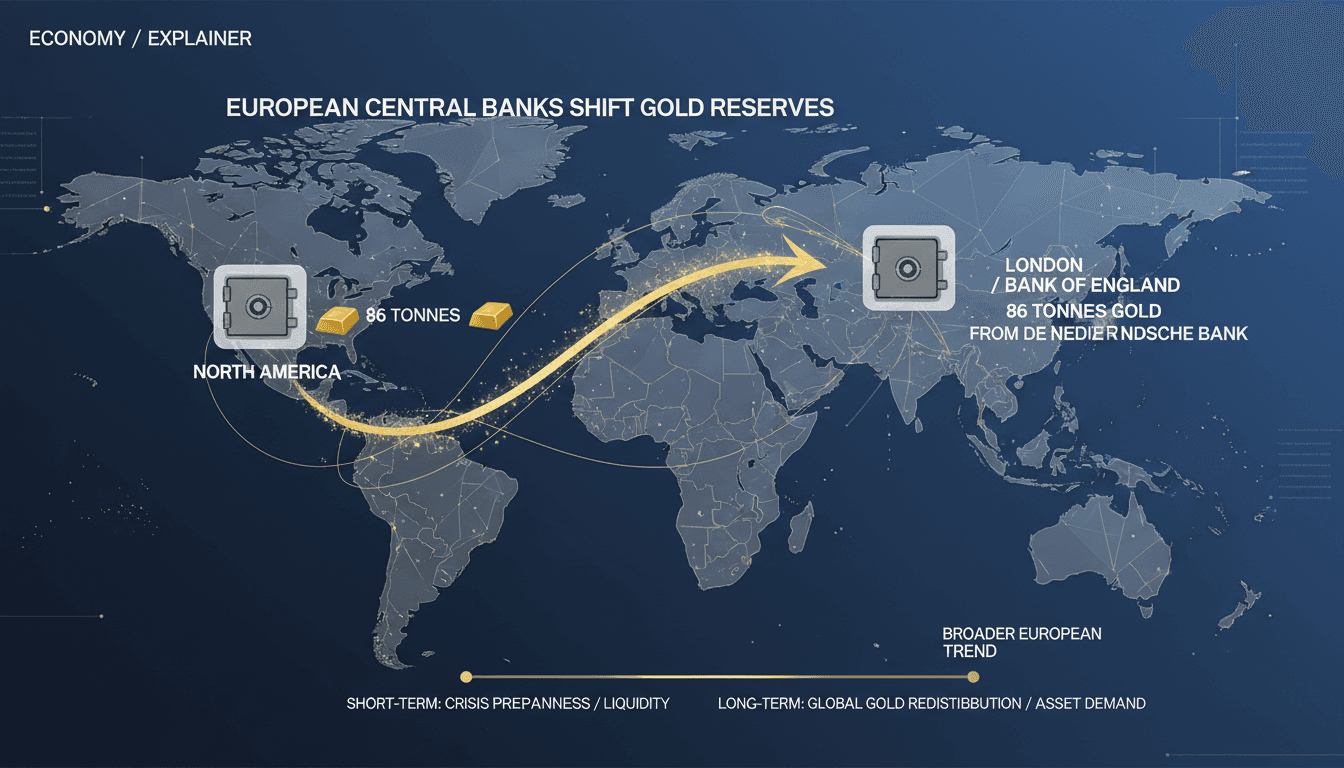
- On September 3, 2026, De Nederlandsche Bank announced the relocation of 86 tonnes of gold reserves from North America to London.
- This move is part of a broader trend, with France also relocating gold earlier in 2026, indicating a collective shift among European nations.
- Central banks cite geopolitical unrest and the need for rapid tradability during crises as key reasons for this strategic adjustment.
The context you actually need
- Historical patterns show that central banks have periodically adjusted gold storage locations during global instability, such as during the Cold War.
- Post-2008 financial crisis, central banks have increased gold purchases significantly, averaging 1,000 tonnes annually, reflecting a focus on physical control and liquidity.
- Geopolitical factors like trade disputes and military conflicts are driving nations to prioritize risk diversification and reduce counterparty risk by relocating gold closer to home.
What's really happening
The recent relocation of gold reserves by European central banks, particularly the Netherlands and France, underscores a significant shift in how nations manage their financial assets amid a backdrop of increasing global instability. The Dutch central bank's decision to move approximately 86 tonnes of gold from North America to the Bank of England is not an isolated incident; it is part of a broader trend among European nations to enhance their crisis preparedness.
Historically, central banks have adjusted their gold storage locations during periods of geopolitical tension. For instance, during the Cold War, many nations shifted their gold reserves to New York for perceived safety. However, the post-2008 financial crisis has seen a marked increase in gold purchases, with central banks acquiring an average of 1,000 tonnes annually in recent years, compared to 500 tonnes previously. This shift reflects a growing emphasis on physical control over assets, liquidity, and minimizing counterparty risk.
The motivations behind these relocations are multifaceted. Central banks are increasingly concerned about geopolitical unrest, which includes trade disputes and military conflicts that could disrupt financial markets. By relocating gold reserves closer to home, these institutions aim to ensure rapid tradability during crises, allowing for swift transactions that could stabilize markets in times of uncertainty. The choice of London as a storage location is particularly strategic, given its status as a premier gold trading center, facilitating quick access to liquidity when needed.
Moreover, the recent actions of the Dutch and French central banks highlight a collective approach among European nations to bolster their financial security. The French central bank's earlier decision to eliminate its remaining gold holdings in New York by selling 129 tonnes and acquiring European-standard gold further emphasizes this trend. The overarching narrative is one of risk diversification, where nations are not necessarily anticipating an imminent catastrophe but are instead proactively managing their assets to mitigate potential future risks.
As analysts from Goldman Sachs and the World Gold Council have noted, this heightened focus on reserve asset management does not indicate expectations of systemic collapse. Instead, it reflects a strategic adjustment to enhance financial resilience. Gold prices have remained historically elevated, with forecasts suggesting further increases, indicating that the market is responding to these shifts in reserve management.
Who feels it first (and how)
- Investors: Increased demand for gold may lead to price fluctuations, impacting investment strategies.
- Financial institutions: Banks and trading firms may experience changes in liquidity and asset management practices.
- Geopolitical analysts: Those monitoring global stability will need to reassess risk factors associated with gold reserves and national security.
What to watch next
- Gold price trends: Monitor fluctuations in gold prices as central banks adjust their reserves, which could signal market reactions to geopolitical events.
- Central bank announcements: Keep an eye on further announcements from other European nations regarding gold reserves, as this could indicate a wider trend.
- Geopolitical developments: Watch for changes in international relations that may prompt additional relocations or adjustments in reserve management strategies.
Central banks are relocating gold reserves to enhance crisis preparedness.
Other European nations may follow suit in relocating their gold reserves.
The long-term impact on gold prices and market stability remains uncertain.
Frequently Asked Questions
- Why it matters?
- This relocation reflects a strategic pivot by central banks to enhance crisis preparedness amid rising geopolitical tensions.
- What happened (in 30 seconds)?
- On September 3, 2026, De Nederlandsche Bank announced the relocation of 86 tonnes of gold reserves from North America to London. This move is part of a broader trend, with France also relocating gold earlier in 2026, indicating a collective shift among European nations. Central banks cite geopolitical unrest and the need for rapid tradability during crises as key reasons for this strategic adjustment.
- What's really happening?
- The recent relocation of gold reserves by European central banks, particularly the Netherlands and France, underscores a significant shift in how nations manage their financial assets amid a backdrop of increasing global instability. The Dutch central bank's decision to move approximately 86 tonnes of gold from North America to the Bank of England is not an isolated incident; it is part of a broader trend among European nations to enhance their crisis preparedness. Historically, central banks
- Who feels it first (and how)?
- Investors: Increased demand for gold may lead to price fluctuations, impacting investment strategies. Financial institutions: Banks and trading firms may experience changes in liquidity and asset management practices. Geopolitical analysts: Those monitoring global stability will need to reassess risk factors associated with gold reserves and national security.
- What to watch next?
- Gold price trends: Monitor fluctuations in gold prices as central banks adjust their reserves, which could signal market reactions to geopolitical events. Central bank announcements: Keep an eye on further announcements from other European nations regarding gold reserves, as this could indicate a wider trend. Geopolitical developments: Watch for changes in international relations that may prompt additional relocations or adjustments in reserve management strategies.
Arabic-language reporting on global and regional news.
"BBC Arabic is part of the BBC, generally regarded for editorial standards and broad international coverage."
— A47 Editor
لماذا تنقل الدول الأوربية ذهبها من أمريكا الشمالية؟
The Netherlands has transferred 86 tons of gold from North America, raising questions about the motivations behind this significant move. This action reflects a broader trend among European countries reassessing their gold reserves and storage locati...
International coverage of politics, culture, and current affairs.
"BBC News is widely regarded as a reputable international news organization, known for its impartial tone and public service mandate."
— A47 Editor
Why are European countries moving their gold out of North America?
The Netherlands has relocated 86 tonnes of gold from North America, a significant move that reflects changing dynamics in global gold storage and security. This action raises questions about the motivations behind such transfers and the implications ...
Global business headlines with AI angles.
"General business outlet that frequently covers AI."
— A47 Editor
Dutch Central Bank Moves Gold Out of North America. Geopolitical Unrest Drives The 'Crisis Preparedness' Shift.
De Nederlandsche Bank (DNB) has transferred just over a quarter of its gold reserves previously stored in New York and Ottawa to London between March and August. This move is part of a broader strategy to enhance crisis preparedness amid ongoing geop...
RT is a Russian state-funded network covering global events from a Russian perspective.
"RT is widely criticized for promoting pro-Kremlin narratives and is considered by many to be a state propaganda outlet."
— A47 Editor
Another European country transfers gold out of US
The Dutch central bank has announced the transfer of 86 tons of gold from New York and Ottawa to London. This move reflects a strategic decision by the bank to relocate its gold reserves, which may indicate a shift in its asset management strategy.
Social/economic commentary and analysis relevant to business and markets.
"WSJ blends data-driven economic insight with commentary on policy and society."
— A47 Editor
The Dutch central bank said it moved around 86 metric tons of gold from New York and Ottawa to London as a result of “increasing geopolitical unrest”
The Dutch central bank has relocated approximately 86 metric tons of gold, valued at around $11 billion, from New York and Ottawa to London, citing increasing geopolitical unrest as the primary motivation for this strategic move.
English-language reporting on Saudi politics, policy, and society.
"Saudi Gazette reflects mainstream Saudi institutional perspectives."
— A47 Editor
Netherlands moves billions in gold to London amid growing geopolitical unrest
The Dutch central bank, De Nederlandsche Bank (DNB), has confirmed the transfer of 86 tons of gold reserves from North America to London, citing increasing geopolitical unrest as the primary reason. This operation, which took place between March and ...