
Iran Faces Economic Crisis as Defense Spending Rises Amid Oil Export Decline
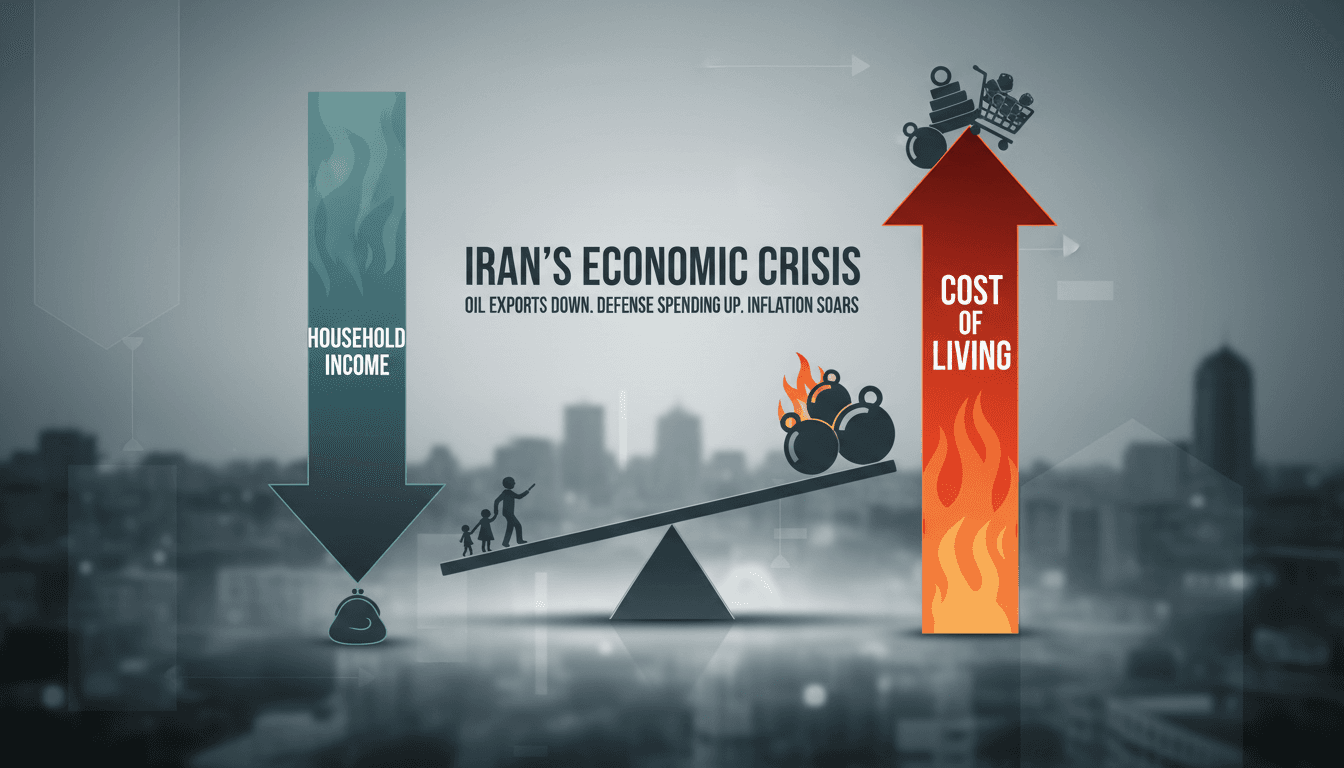
Here's what it means for you.
If you’re involved in trade or finance in the Middle East, Iran's economic turmoil could ripple through regional markets.
Why it matters
The Iranian fiscal crisis is reshaping economic stability in the region, affecting trade dynamics and energy markets.
What happened (in 30 seconds)
- Oil exports plummeted from 1.7 million barrels per day to approximately 260,000 due to tightening US sanctions.
- Inflation skyrocketed to 84.4% year-on-year for urban consumer prices, severely impacting household purchasing power.
- Government debates over defence versus social welfare spending are intensifying as household incomes struggle to meet basic needs.
The context you actually need
- Sanctions and reconstruction: US sanctions have drastically reduced Iran's oil revenues, which are crucial for foreign currency and economic stability.
- Currency crisis: The rial has depreciated beyond 2 million to the US dollar, exacerbating inflation and making imports more expensive.
- Social unrest potential: Rising prices and stagnant wages are creating a precarious situation for many households, increasing the risk of civil unrest.
What's really happening
Iran is facing a severe fiscal squeeze as it attempts to balance military reconstruction needs with the dire economic realities of its citizens. The government's focus on rebuilding military capabilities following recent conflicts has led to increased defence expenditures, which are now prioritized over social welfare programs. This shift comes at a time when the country is grappling with a significant drop in oil exports, which have fallen from 1.7 million barrels per day to around 260,000 due to stringent US sanctions.
The economic landscape is further complicated by a staggering inflation rate of 84.4% for urban consumer prices as of August 2026, with food and beverage inflation reaching 128.1% in July. This inflation surge is largely driven by the rial's depreciation, which has exceeded 2 million to the dollar, making essential goods increasingly unaffordable for the average Iranian household. Reports indicate that many workers are earning as little as $82 per month, while the cost of a family consumption basket exceeds $450, highlighting a severe income-expenditure gap.
The Iranian government has attempted to reassure citizens of its economic functionality, with the central bank intervening in currency markets to stabilize the rial. However, hardline lawmakers are pushing for sustained or increased military allocations, which could further strain household budgets. The ongoing debates within the parliament reflect a growing concern over the potential for unrest if subsidies are adjusted or prices continue to rise.
As the government grapples with these challenges, market shifts are evident. Households are cutting back on non-essential consumption, and there are indications that the 2026-2027 budget cycle may see broader fiscal adjustments. The central bank has reported supplying over $18 billion for imports since March 21, with the capacity for additional injections, but the effectiveness of these measures remains uncertain.
Who feels it first (and how)
- Low-income households: Struggling to afford basic necessities due to rising prices and stagnant wages.
- Workers in affected sectors: Job losses, particularly in provinces like Hormozgan, are exacerbating economic hardships.
- Small businesses: Facing reduced consumer spending and increased costs for imported goods.
What to watch next
- Inflation trends: Continued monitoring of inflation rates will be crucial, as further increases could lead to widespread unrest.
- Government policy shifts: Watch for any changes in subsidy policies or budget allocations that could impact household welfare.
- Currency stability: The rial's performance in currency markets will be a key indicator of economic health and potential recovery.
Inflation is at 84.4%, significantly impacting household purchasing power.
Increased debates over budget allocations between defence and social welfare will continue.
The long-term effects of government interventions on economic stability and household welfare remain uncertain.
Frequently Asked Questions
- Why it matters?
- The Iranian fiscal crisis is reshaping economic stability in the region, affecting trade dynamics and energy markets.
- What happened (in 30 seconds)?
- Oil exports plummeted from 1.7 million barrels per day to approximately 260,000 due to tightening US sanctions. Inflation skyrocketed to 84.4% year-on-year for urban consumer prices, severely impacting household purchasing power. Government debates over defence versus social welfare spending are intensifying as household incomes struggle to meet basic needs.
- What's really happening?
- Iran is facing a severe fiscal squeeze as it attempts to balance military reconstruction needs with the dire economic realities of its citizens. The government's focus on rebuilding military capabilities following recent conflicts has led to increased defence expenditures, which are now prioritized over social welfare programs. This shift comes at a time when the country is grappling with a significant drop in oil exports, which have fallen from 1.7 million barrels per day to around 260,000 due
- Who feels it first (and how)?
- Low-income households: Struggling to afford basic necessities due to rising prices and stagnant wages. Workers in affected sectors: Job losses, particularly in provinces like Hormozgan, are exacerbating economic hardships. Small businesses: Facing reduced consumer spending and increased costs for imported goods.
- What to watch next?
- Inflation trends: Continued monitoring of inflation rates will be crucial, as further increases could lead to widespread unrest. Government policy shifts: Watch for any changes in subsidy policies or budget allocations that could impact household welfare. Currency stability: The rial's performance in currency markets will be a key indicator of economic health and potential recovery.
English-language digital publication covering business, politics, technology, and current affairs.
"The Arabian Post mixes original and syndicated-style coverage with a broad regional and global business-news orientation."
— A47 Editor
Iran fiscal squeeze strains households as defence demands rise
Iran is experiencing a significant fiscal squeeze as collapsing oil revenues, a record-low currency, and rising prices challenge the government's ability to maintain essential services while meeting military demands. Crude oil exports have plummeted ...
Regional and international reporting focused on Middle Eastern politics, diplomacy, and economics.
"Asharq Al-Awsat is a Saudi-owned international newspaper reflecting mainstream Gulf political perspectives."
— A47 Editor
US Pressure on Iran Starting to Tell, as Sanctions and Blockade Bite
The United States has intensified its sanctions and blockade against Iran, leading to significant economic strain on the Iranian economy, with reports indicating a nearly 35% decline in trade activity. This pressure is seen as a tactic to compel Iran...
UAE-based English-language newspaper covering regional politics, economics, and global affairs.
"The National reflects Emirati policy perspectives while maintaining international editorial standards."
— A47 Editor
Guns or groceries? Iran regime spending crunch hits daily life
The Iranian regime is facing a significant spending crunch that is impacting daily life, as citizens grapple with rising costs and shortages of essential goods. The ongoing economic strain is exacerbated by the U.S. blockade and intensified sanctions...