
US Diesel Prices Hit Record High of $6.51 Amid Geopolitical Tensions
Why it matters
The spike in diesel prices signals broader inflationary trends that could affect consumer goods and economic stability.
What happened (in 30 seconds)
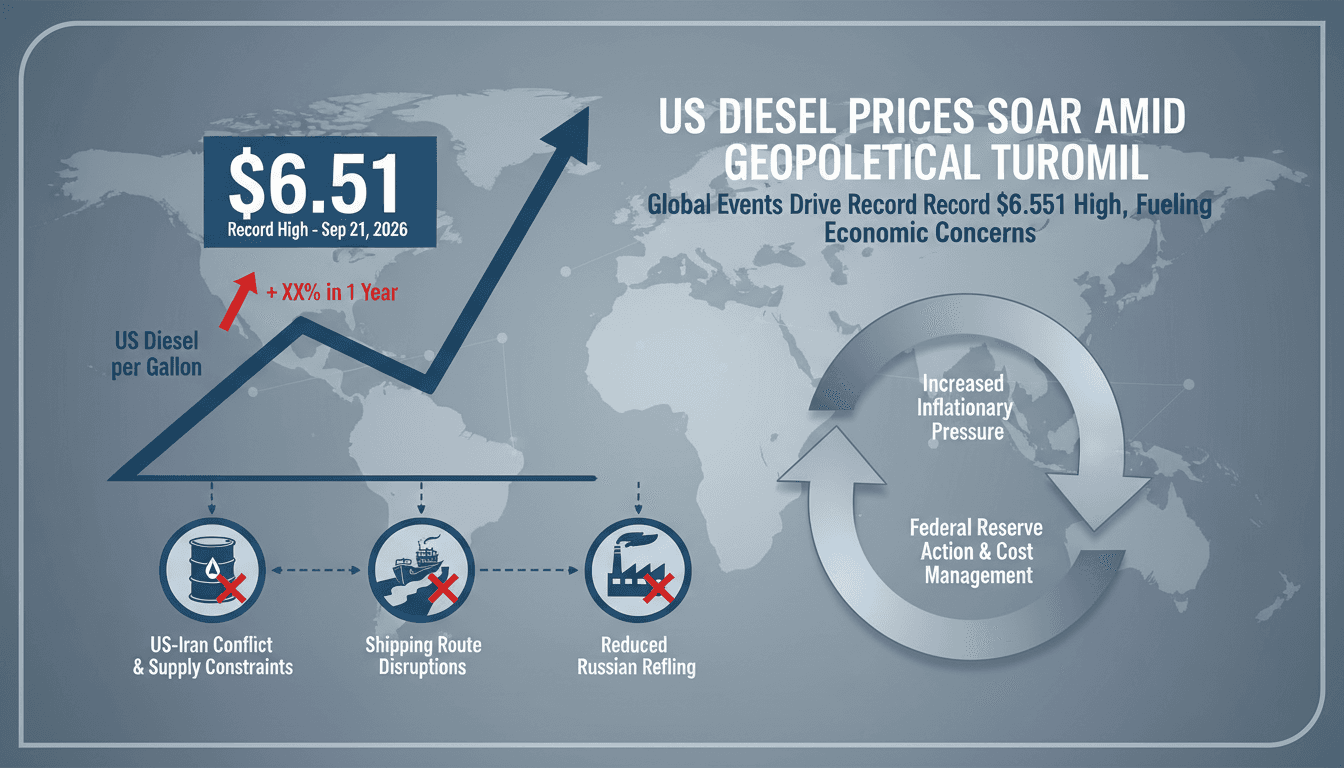
- Record high: US diesel prices hit $6.5107 per gallon on September 21, 2026, marking a 76% increase year-over-year.
- Geopolitical tensions: The surge is driven by supply disruptions linked to the US-Iran conflict and reduced Russian refining capacity.
- Federal response: The Federal Reserve raised interest rates to combat inflation, which is exacerbated by rising energy costs.
The context you actually need
- Supply chain vulnerabilities: The US-Iran conflict has curtailed energy flows through critical shipping routes, impacting global diesel availability.
- Energy sanctions: US sanctions on Russian energy exports have further strained supply, contributing to price volatility.
- Inflationary environment: With Brent crude prices near $100 per barrel, the cost of diesel is likely to remain high, affecting various sectors.
What's really happening
On September 21, 2026, the American Automobile Association (AAA) reported a national average diesel price of $6.5107 per gallon, surpassing previous records set in 2022. This represents a significant jump from $6.23 the week prior and $5.58 just a month earlier. The surge is primarily attributed to geopolitical tensions, particularly the ongoing US-Iran conflict that began escalating in late February 2026. This conflict has led to disruptions in energy flows through the Strait of Hormuz, a vital shipping route for oil and gas.
Additionally, actions by Houthi forces in Yemen have affected the Bab el-Mandeb Strait, further complicating shipping logistics. The situation is compounded by the ongoing Russia-Ukraine conflict, which has diminished Russian refining capacity due to strikes and tightened US sanctions. As a result, global distillate inventories have tightened, creating an environment ripe for fuel price volatility.
The Federal Reserve's recent decision to raise interest rates by 25 basis points to a range of 3.75%-4% reflects the central bank's concern over persistent inflation linked to these rising energy costs. Analysts predict that diesel prices may continue to climb, especially with winter demand approaching. This could lead to increased freight costs, impacting agriculture and consumer goods prices.
The interconnectedness of these factors illustrates how geopolitical events can ripple through the economy, affecting everything from transportation costs to the price of groceries. As diesel powers critical sectors like freight, agriculture, and construction, the implications of these price hikes are far-reaching, potentially leading to a cycle of inflation that could affect consumers directly.
Who feels it first (and how)
- Freight companies: Higher diesel prices increase operational costs, which may be passed on to consumers.
- Farmers and agricultural sectors: Increased transportation costs can lead to higher prices for food and other goods.
- Construction industry: Rising fuel costs can inflate project budgets, delaying timelines and increasing expenses.
- Consumers: Everyday goods may see price increases as companies adjust to higher shipping and operational costs.
What to watch next
- Winter demand: Monitor diesel consumption trends as winter approaches, which could further strain supply and drive prices higher.
- Federal Reserve actions: Keep an eye on future interest rate adjustments, as they will influence inflation and economic stability.
- Geopolitical developments: Watch for changes in US-Iran relations and the Russia-Ukraine conflict, as these could significantly impact energy supply chains.
Diesel prices are at a record high due to geopolitical tensions and supply chain disruptions.
Further price increases are expected as winter demand rises and geopolitical tensions persist.
The long-term impact on consumer goods prices and overall economic stability remains uncertain.
Frequently Asked Questions
- Why it matters?
- The spike in diesel prices signals broader inflationary trends that could affect consumer goods and economic stability.
- What happened (in 30 seconds)?
- Record high: US diesel prices hit $6.5107 per gallon on September 21, 2026, marking a 76% increase year-over-year. Geopolitical tensions: The surge is driven by supply disruptions linked to the US-Iran conflict and reduced Russian refining capacity. Federal response: The Federal Reserve raised interest rates to combat inflation, which is exacerbated by rising energy costs.
- What's really happening?
- On September 21, 2026, the American Automobile Association (AAA) reported a national average diesel price of $6.5107 per gallon, surpassing previous records set in 2022. This represents a significant jump from $6.23 the week prior and $5.58 just a month earlier. The surge is primarily attributed to geopolitical tensions, particularly the ongoing US-Iran conflict that began escalating in late February 2026. This conflict has led to disruptions in energy flows through the Strait of Hormuz, a vital
- Who feels it first (and how)?
- Freight companies: Higher diesel prices increase operational costs, which may be passed on to consumers. Farmers and agricultural sectors: Increased transportation costs can lead to higher prices for food and other goods. Construction industry: Rising fuel costs can inflate project budgets, delaying timelines and increasing expenses. Consumers: Everyday goods may see price increases as companies adjust to higher shipping and operational costs.
- What to watch next?
- Winter demand: Monitor diesel consumption trends as winter approaches, which could further strain supply and drive prices higher. Federal Reserve actions: Keep an eye on future interest rate adjustments, as they will influence inflation and economic stability. Geopolitical developments: Watch for changes in US-Iran relations and the Russia-Ukraine conflict, as these could significantly impact energy supply chains.
Economic trends, financial markets, corporate news, and policy from a Russian perspective.
"RT is widely criticized for promoting pro-Kremlin narratives and is considered by many to be a state propaganda outlet."
— A47 Editor
US diesel prices hit record high
US diesel prices have surged to a record high, exceeding $6.50 per gallon, driven by ongoing geopolitical tensions and disruptions in the Middle East, particularly the conflict in Iran. This unprecedented increase reflects a significant tightening of...
Public radio coverage of American news and issues.
"NPR is an American public media organization known for thoughtful reporting and a slightly left-leaning editorial tone."
— A47 Editor
Diesel -- the fuel the U.S. economy runs on -- hits record high
Diesel prices in the U.S. have reached a record high, surpassing $6.50 per gallon, raising concerns about the economic impact on various sectors. This surge in fuel costs is particularly alarming as it affects transportation and logistics, which are ...
Global markets, investing, and macroeconomics from a premier financial newsroom.
"Bloomberg is respected for in-depth financial reporting and data-driven analysis."
— A47 Editor
US Diesel Tops $6.50 a Gallon as Wars Worsen Global Fuels Crunch
US retail diesel prices have surpassed $6.50 a gallon for the first time, driven by escalating geopolitical tensions, particularly the ongoing conflict in Iran, which has exacerbated a global fuel crunch. This surge reflects a significant increase in...