
U.S. President Initiates Negotiations for Belarusian Potash Imports
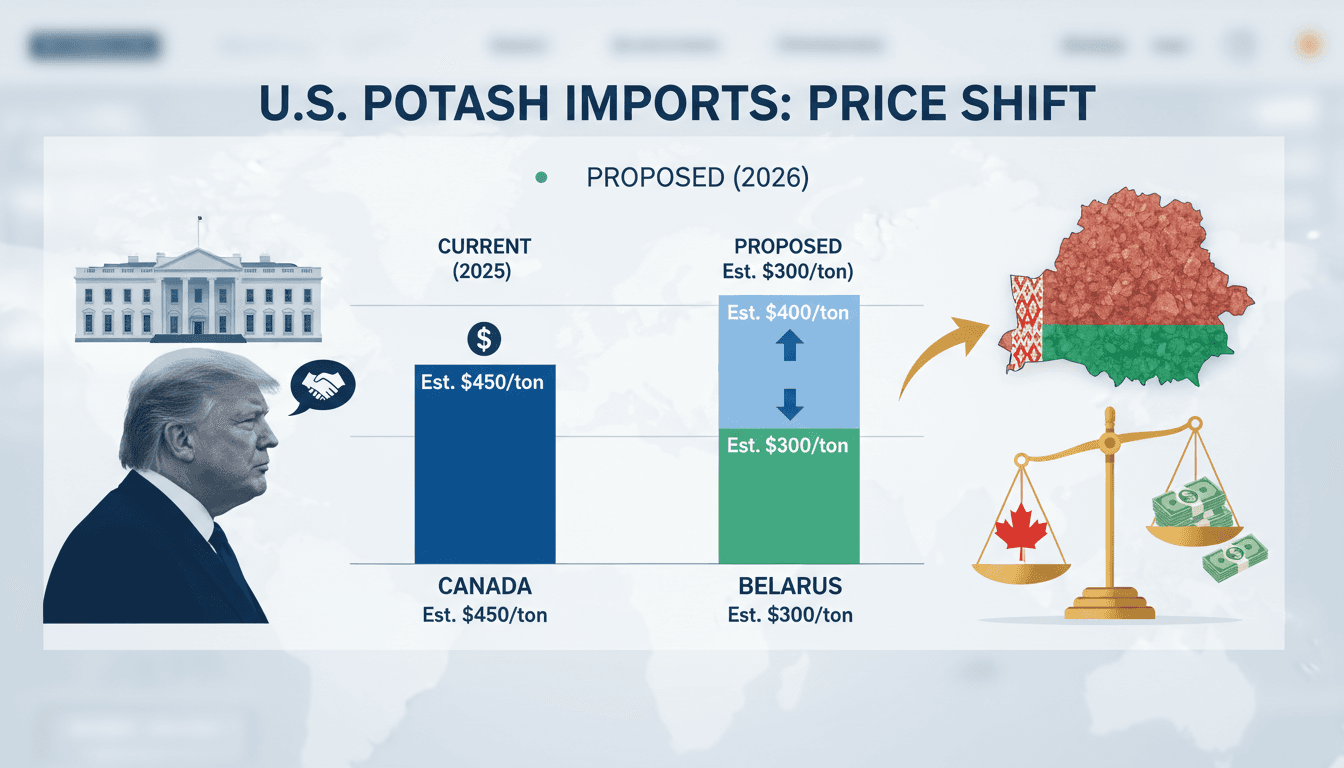
Why it matters
This move reflects a strategic pivot in U.S. agricultural policy amid ongoing trade tensions, potentially reshaping fertilizer markets.
What happened (in 30 seconds)
- On September 21, 2026, President Trump announced negotiations for lower-cost potash imports from Belarus.
- Belarus, a major potash producer, resumed limited sales after U.S. sanctions were lifted earlier in the year.
- Canadian officials criticized the move, labeling Belarusian potash as ethically compromised due to its ties with Russia.
The context you actually need
- U.S. potash imports are predominantly sourced from Canada, which supplies approximately 80% of the total.
- Trade tensions between the U.S. and Canada have escalated, prompting the U.S. to seek alternative suppliers.
- Belarusian President Alexander Lukashenko indicated that while sales to the U.S. have resumed, existing contracts limit available production volumes.
What's really happening
The announcement of negotiations for Belarusian potash imports is a significant pivot in U.S. agricultural policy, driven by a combination of geopolitical factors and domestic agricultural needs. The U.S. has historically relied on Canada for its potash supply, but escalating trade tensions have prompted a search for alternative sources. The lifting of sanctions on Belarus earlier in 2026, following the release of political prisoners, has opened the door for renewed trade relations, particularly in the fertilizer sector.
Potash is a critical component of fertilizers, essential for crop production. With U.S. farmers facing rising costs and supply chain disruptions, the prospect of lower-cost imports from Belarus could be appealing. However, the reality is more complex. Analysts have expressed skepticism about the feasibility of significant price reductions or supply increases. The Belarusian potash industry is reportedly constrained by existing contracts, primarily with Asian markets, which limits the volume available for U.S. imports.
Moreover, the ethical implications of sourcing potash from Belarus, given its alignment with Russia, have raised concerns among Canadian officials and industry representatives. They have labeled Belarusian potash as "blood potash," linking it to support for Russian actions. This ethical dimension complicates the narrative around the negotiations, as U.S. farmers may face backlash for sourcing from a country with such geopolitical ties.
The negotiations also highlight the broader implications of U.S. agricultural policy in a global context. As the U.S. seeks to diversify its supply chains, it must navigate the complexities of international relations and ethical sourcing. The potential for lower-cost potash imports could provide short-term relief for U.S. farmers, but the long-term sustainability of such a strategy remains uncertain.
Who feels it first (and how)
- U.S. Farmers: Potentially lower fertilizer costs could impact crop yields and profitability.
- Canadian Potash Producers: Increased competition from Belarus may affect market share and pricing strategies.
- Agricultural Supply Chains: Changes in sourcing could disrupt existing logistics and contracts.
What to watch next
- Negotiation Outcomes: Watch for announcements regarding the volume and terms of the potash deal, as they will directly affect market dynamics.
- Market Reactions: Monitor how Canadian producers respond to the potential shift in supply sources and any price adjustments in the fertilizer market.
- Geopolitical Developments: Keep an eye on U.S.-Canada relations and Belarus's political landscape, as these factors could influence trade agreements.
The U.S. is negotiating for potash imports from Belarus.
The negotiations will face challenges due to existing contracts and ethical concerns.
The actual impact on U.S. fertilizer prices and availability remains uncertain.
Frequently Asked Questions
- Why it matters?
- This move reflects a strategic pivot in U.S. agricultural policy amid ongoing trade tensions, potentially reshaping fertilizer markets.
- What happened (in 30 seconds)?
- On September 21, 2026, President Trump announced negotiations for lower-cost potash imports from Belarus. Belarus, a major potash producer, resumed limited sales after U.S. sanctions were lifted earlier in the year. Canadian officials criticized the move, labeling Belarusian potash as ethically compromised due to its ties with Russia.
- What's really happening?
- The announcement of negotiations for Belarusian potash imports is a significant pivot in U.S. agricultural policy, driven by a combination of geopolitical factors and domestic agricultural needs. The U.S. has historically relied on Canada for its potash supply, but escalating trade tensions have prompted a search for alternative sources. The lifting of sanctions on Belarus earlier in 2026, following the release of political prisoners, has opened the door for renewed trade relations, particularly
- Who feels it first (and how)?
- U.S. Farmers: Potentially lower fertilizer costs could impact crop yields and profitability. Canadian Potash Producers: Increased competition from Belarus may affect market share and pricing strategies. Agricultural Supply Chains: Changes in sourcing could disrupt existing logistics and contracts.
- What to watch next?
- Negotiation Outcomes: Watch for announcements regarding the volume and terms of the potash deal, as they will directly affect market dynamics. Market Reactions: Monitor how Canadian producers respond to the potential shift in supply sources and any price adjustments in the fertilizer market. Geopolitical Developments: Keep an eye on U.S.-Canada relations and Belarus's political landscape, as these factors could influence trade agreements.
Oil, metals, and agriculture: supply/demand headlines, OPEC chatter, inventories, and price action.
"Solid tape for energy and metals traders tracking macro and micro catalysts."
— A47 Editor
Trump says US is working on deal to purchase potash from Belarus
Former President Donald Trump announced that the United States is negotiating a deal to purchase potash from Belarus, a country aligned with Russia, which he claims will offer a more cost-effective alternative to Canadian sources. This development co...
Business, investment, entrepreneurship, leadership, and innovation.
"Forbes is known for its coverage of business leaders, market trends, and entrepreneurial ventures with a pro-business editorial stance."
— A47 Editor
Trump Says U.S. Is Working On ‘Massive’ Fertilizer Deal With Russian Ally Belarus
Former President Donald Trump announced that the United States is negotiating a significant fertilizer deal with Belarus, a Russian ally, which he claims will provide potash at a lower cost than that sourced from Canada. This move is positioned as a ...
Social/economic commentary and analysis relevant to business and markets.
"WSJ blends data-driven economic insight with commentary on policy and society."
— A47 Editor
Trump Looks to Sideline Canadian Potash With Belarusian Supply Deal
President Trump is negotiating a deal to purchase potash from Belarus, which is expected to be offered at a lower price than Canadian sources, potentially sidelining Canadian exporters in the market. This agreement is seen as a strategic move to enha...
Canadian and international political developments and policy debates.
"Global News is a mainstream Canadian outlet with a centrist editorial stance, focusing on factual reporting."
— A47 Editor
Trump says he wants potash from Belarus for ‘substantially less’ than Canada
Donald Trump has expressed interest in acquiring potash from Belarus at a significantly lower price than that offered by Canada, a move criticized by Saskatchewan Premier Scott Moe as 'blood potash' due to sanctions against Belarus for its support of...
Right-of-center views on political news.
"The Washington Times is a conservative-leaning newspaper known for its political coverage and advocacy of right-of-center viewpoints."
— A47 Editor
Trump strikes back at Canada with potential Belarus fertilizer deal
President Trump announced that the U.S. is pursuing a deal to purchase potash from Belarus, a strategic move in his ongoing trade conflict with Canada, the leading global fertilizer producer. This announcement comes as tensions escalate between the t...