
Oil Prices Surge Over 4% as Brent Crude Exceeds $108 per Barrel Amid US-Iran Tensions
Why it matters
The surge in oil prices signals increased geopolitical risks that could disrupt global energy markets.
What happened (in 30 seconds)
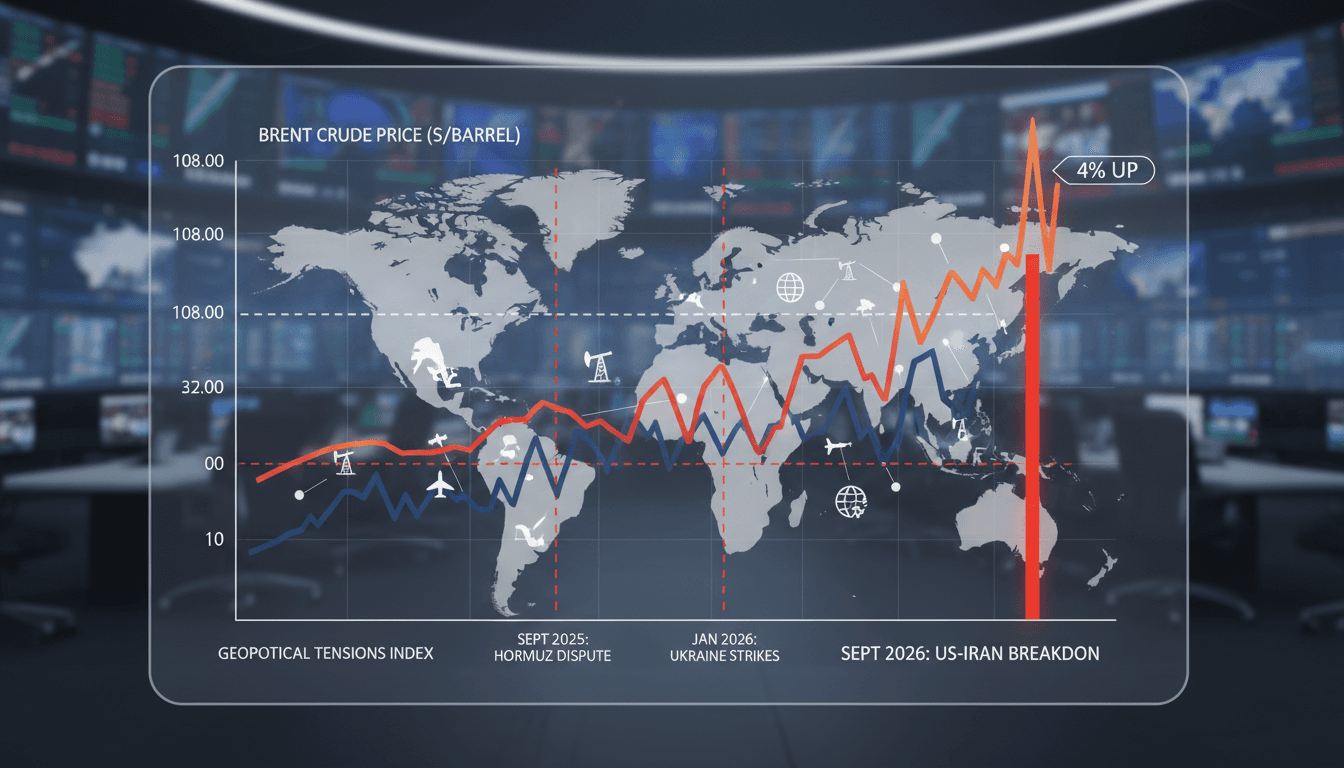
- Oil prices surged: On 28 September 2026, Brent crude exceeded $108 per barrel, rising over 4%.
- Geopolitical tensions escalated: This spike followed US President Trump's rejection of an Iranian proposal to end hostilities and reopen the Strait of Hormuz.
- Ukrainian strikes impacted supply: Concurrently, Ukrainian forces targeted Russian energy infrastructure, further heightening supply concerns.
The context you actually need
- Strait of Hormuz significance: Approximately 20% of the world's oil passes through this critical shipping lane, making it a focal point for global energy security.
- Ongoing US-Iran conflict: The tensions have persisted since February 2026, with failed diplomatic efforts exacerbating the situation.
- Market volatility: Oil prices are sensitive to geopolitical developments, and traders are closely monitoring the situation for further fluctuations.
What's really happening
The recent surge in oil prices is a direct response to escalating geopolitical tensions, particularly between the US and Iran. The rejection of Iran's proposal by President Trump not only signals a continuation of hostilities but also raises fears about the stability of the Strait of Hormuz, a vital artery for global oil transport. This rejection came at a time when the region was already on edge due to ongoing military actions and diplomatic failures.
The situation is compounded by Ukraine's military operations targeting Russian energy infrastructure, which adds another layer of complexity to the global oil supply chain. With both the US and Iran unwilling to back down, the likelihood of further military engagements increases, which could lead to more significant disruptions in oil supply. Traders are reacting to these developments by adjusting their positions, leading to immediate price increases in oil futures.
The implications of these price hikes extend beyond just the oil markets. Higher oil prices can lead to increased transportation costs, which can ripple through various sectors, affecting everything from consumer goods to airline tickets. For countries heavily reliant on oil imports, like those in the Gulf region, sustained high prices can strain budgets and lead to inflationary pressures.
Moreover, the uncertainty surrounding diplomatic negotiations means that market participants are bracing for continued volatility. As the situation evolves, the potential for further price increases remains, especially if military actions escalate or if new sanctions are imposed on Iranian oil exports. This creates a precarious environment for businesses and consumers alike, as they navigate the implications of fluctuating fuel costs.
In summary, the current surge in oil prices is not just a market anomaly; it reflects deeper geopolitical tensions that have significant implications for global energy security and economic stability. As the situation unfolds, stakeholders across various sectors must remain vigilant and adaptable to the changing landscape.
Who feels it first (and how)
- Consumers: Higher fuel prices will directly impact transportation and commuting costs.
- Transport sector: Airlines and logistics companies will face increased operational costs, potentially leading to higher prices for goods and services.
- Energy-dependent industries: Sectors like manufacturing and agriculture may see rising costs, affecting profitability and pricing strategies.
- Middle Eastern economies: Countries reliant on oil exports may experience fluctuations in revenue, impacting public spending and economic stability.
What to watch next
- US-Iran negotiations: Monitor any developments in diplomatic talks, as breakthroughs could stabilize prices.
- Ukrainian military actions: Continued strikes on Russian infrastructure may further disrupt supply chains and influence market sentiment.
- Global oil demand trends: Watch for shifts in demand, particularly from major consumers like China and India, which could affect price trajectories.
Oil prices are currently elevated, with Brent crude above $108 per barrel.
Continued volatility in oil prices as geopolitical tensions persist and market participants react to developments.
The timeline for resolution in US-Iran negotiations and its impact on oil supply and prices remains uncertain.
Frequently Asked Questions
- Why it matters?
- The surge in oil prices signals increased geopolitical risks that could disrupt global energy markets.
- What happened (in 30 seconds)?
- Oil prices surged: On 28 September 2026, Brent crude exceeded $108 per barrel, rising over 4%. Geopolitical tensions escalated: This spike followed US President Trump's rejection of an Iranian proposal to end hostilities and reopen the Strait of Hormuz. Ukrainian strikes impacted supply: Concurrently, Ukrainian forces targeted Russian energy infrastructure, further heightening supply concerns.
- What's really happening?
- The recent surge in oil prices is a direct response to escalating geopolitical tensions, particularly between the US and Iran. The rejection of Iran's proposal by President Trump not only signals a continuation of hostilities but also raises fears about the stability of the Strait of Hormuz, a vital artery for global oil transport. This rejection came at a time when the region was already on edge due to ongoing military actions and diplomatic failures. The situation is compounded by Ukraine's m
- Who feels it first (and how)?
- Consumers: Higher fuel prices will directly impact transportation and commuting costs. Transport sector: Airlines and logistics companies will face increased operational costs, potentially leading to higher prices for goods and services. Energy-dependent industries: Sectors like manufacturing and agriculture may see rising costs, affecting profitability and pricing strategies. Middle Eastern economies: Countries reliant on oil exports may experience fluctuations in revenue, impacting public spen
- What to watch next?
- US-Iran negotiations: Monitor any developments in diplomatic talks, as breakthroughs could stabilize prices. Ukrainian military actions: Continued strikes on Russian infrastructure may further disrupt supply chains and influence market sentiment. Global oil demand trends: Watch for shifts in demand, particularly from major consumers like China and India, which could affect price trajectories.
Sports reporting with a focus on Saudi and regional competitions.
"Okaz sports coverage is broad and audience-friendly, with strong attention to Saudi teams and leagues."
— A47 Editor
النفط يقفز 4%.. و«برنت» يتجاوز 108 دولارات
Oil prices surged by over 4% during trading on Monday, with Brent crude surpassing $108 per barrel amid escalating geopolitical tensions following U.S. President Donald Trump's rejection of an Iranian proposal to end the war and reopen the Strait of ...
Egyptian politics, economy, and society coverage.
"Al Masry Al Youm is a major Egyptian newspaper with broad national coverage."
— A47 Editor
ارتفاع جديد فى أسعار النفط العالمية وسط تعثر محادثات السلام بين أمريكا وإيران
Global oil prices have risen by more than 1% during trading on Monday, amid stalled peace negotiations between the United States and Iran, following President Donald Trump's rejection of a proposed agreement.
Arabic-language coverage of international news and geopolitics.
"RT Arabic is a Russian state-funded outlet often criticized for promoting Kremlin-aligned narratives."
— A47 Editor
سعر النفط يرتفع أكثر من 1% بعد رفض ترامب خطة إيرانية لإعادة فتح مضيق هرمز
Oil prices increased by more than 1% at the start of trading on Monday following U.S. President Donald Trump's rejection of an Iranian peace plan aimed at resolving tensions between the two countries and reopening the Strait of Hormuz.