
IMF Warns of Increased Vulnerability in Western Economies to Energy Price Volatility
Why it matters
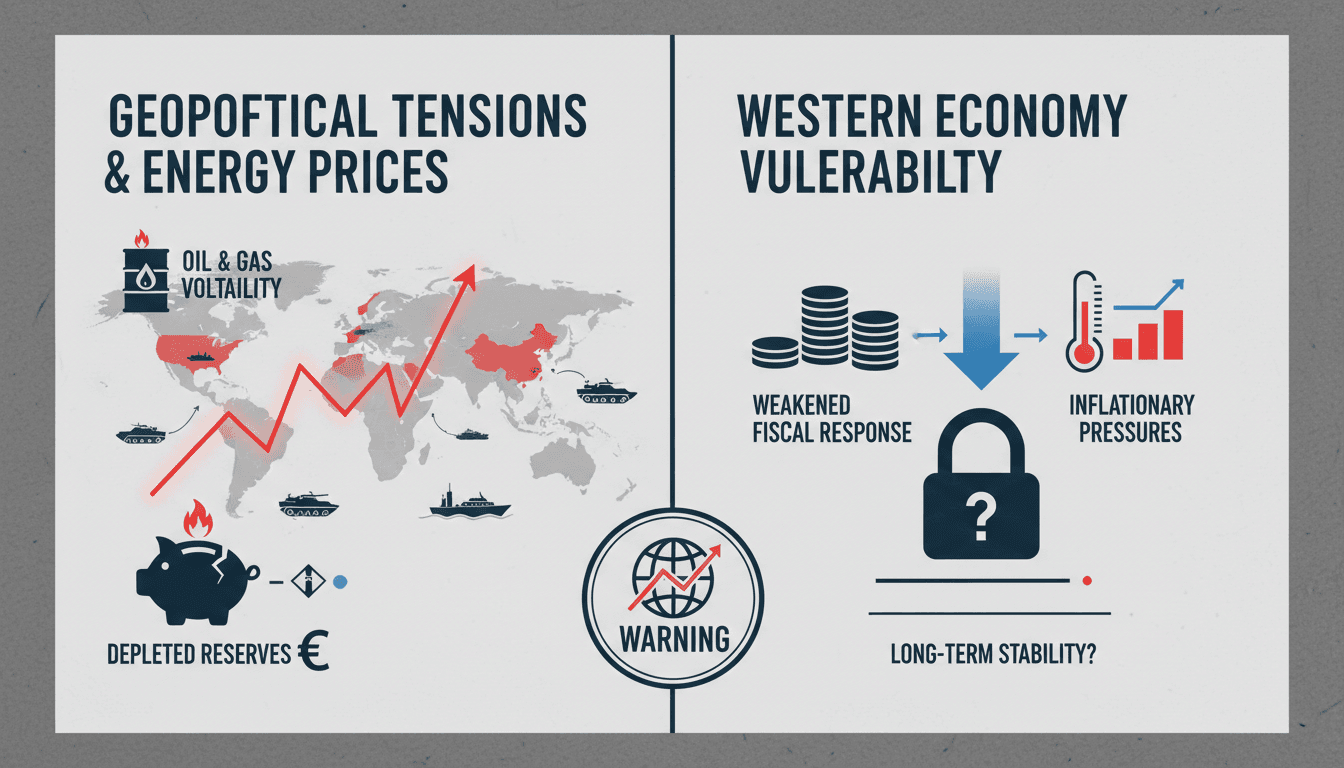
Western economies are increasingly vulnerable to energy shocks, which can lead to inflation and economic instability.
What happened (in 30 seconds)
- IMF Warning: On October 13, 2026, the International Monetary Fund issued a report highlighting the vulnerability of Western economies to energy price volatility.
- Depleted Inventories: European gas stocks are at 15-year lows, with global oil inventories depleting at a rate of 2.7 million barrels per day.
- Geopolitical Pressures: Ongoing conflicts in the Middle East and Ukraine are disrupting energy supplies, leading to elevated prices for refined petroleum products.
The context you actually need
- Supply Chain Disruptions: The US-Iran war and Ukrainian strikes on Russian energy infrastructure are key factors affecting energy supply.
- High Prices: Refined petroleum products are currently 70-95% more expensive than pre-conflict levels, impacting consumer prices.
- Debt Constraints: High public debt levels in Western economies limit the ability of governments to cushion the impact of rising energy costs.
What's really happening
The IMF's recent World Economic Outlook report underscores a critical juncture for Western economies, particularly in Europe, as they face increasing exposure to energy price volatility. The report highlights that dwindling oil and gas inventories are enabling rapid transmission of geopolitical shocks through prices and supply disruptions. With European gas stocks nearing 15-year lows ahead of winter, the potential for energy shortages looms large.
The ongoing conflicts in the Middle East, particularly the US-Iran war, have severely disrupted shipping routes through the Strait of Hormuz, a vital corridor for global oil and LNG shipments. This disruption is compounded by Ukrainian attacks on Russian oil facilities, which have further strained supply chains. As a result, refined petroleum products are now priced significantly higher than they were before these conflicts escalated, with increases ranging from 70% to 95%.
Moreover, the IMF's projections indicate that while global growth is expected to be around 3.1% in 2026, the Eurozone is projected to grow at a mere 1.1%. This disparity highlights the economic strain that elevated energy prices are placing on European economies. Inflation is also a concern, with a global rate of 4.7% anticipated, driven largely by these energy costs.
The situation is exacerbated by high public debt levels in Western economies, which limit fiscal responses to these energy shocks. Governments are finding it increasingly difficult to provide subsidies or other forms of financial relief to consumers and businesses facing soaring energy costs. This creates a precarious balance where the need for immediate action clashes with the constraints of existing debt obligations.
In summary, the interplay of geopolitical tensions, dwindling inventories, and high public debt is creating a perfect storm for Western economies, making them more susceptible to energy price volatility. As these factors converge, the implications for consumers and businesses alike are profound, with potential for increased costs and economic instability.
Who feels it first (and how)
- Consumers: Higher energy prices will directly affect household budgets, increasing costs for heating, transportation, and goods.
- Businesses: Companies reliant on energy-intensive processes may face rising operational costs, impacting profitability and pricing strategies.
- Governments: High public debt limits the ability to provide financial relief, leading to potential unrest or dissatisfaction among citizens.
- Developing Countries: These nations may face the sharpest trade-offs, often requiring spending cuts or debt restructuring due to increased energy costs.
What to watch next
- Energy Prices: Monitor fluctuations in global oil and gas prices, as they will directly impact inflation and consumer costs.
- Geopolitical Developments: Keep an eye on the Middle East and Ukraine for any escalations that could further disrupt energy supplies.
- Government Responses: Watch for policy changes or fiscal measures from Western governments aimed at mitigating the impact of rising energy costs.
Energy prices are currently elevated due to geopolitical tensions and depleted inventories.
Western economies will continue to face economic strain from high energy costs and limited fiscal responses.
The long-term effects on global growth and stability remain uncertain as geopolitical dynamics evolve.
Frequently Asked Questions
- Why it matters?
- Western economies are increasingly vulnerable to energy shocks, which can lead to inflation and economic instability.
- What happened (in 30 seconds)?
- IMF Warning: On October 13, 2026, the International Monetary Fund issued a report highlighting the vulnerability of Western economies to energy price volatility. Depleted Inventories: European gas stocks are at 15-year lows, with global oil inventories depleting at a rate of 2.7 million barrels per day. Geopolitical Pressures: Ongoing conflicts in the Middle East and Ukraine are disrupting energy supplies, leading to elevated prices for refined petroleum products.
- What's really happening?
- The IMF's recent World Economic Outlook report underscores a critical juncture for Western economies, particularly in Europe, as they face increasing exposure to energy price volatility. The report highlights that dwindling oil and gas inventories are enabling rapid transmission of geopolitical shocks through prices and supply disruptions. With European gas stocks nearing 15-year lows ahead of winter, the potential for energy shortages looms large. The ongoing conflicts in the Middle East, part
- Who feels it first (and how)?
- Consumers: Higher energy prices will directly affect household budgets, increasing costs for heating, transportation, and goods. Businesses: Companies reliant on energy-intensive processes may face rising operational costs, impacting profitability and pricing strategies. Governments: High public debt limits the ability to provide financial relief, leading to potential unrest or dissatisfaction among citizens. Developing Countries: These nations may face the sharpest trade-offs, often requiring s
- What to watch next?
- Energy Prices: Monitor fluctuations in global oil and gas prices, as they will directly impact inflation and consumer costs. Geopolitical Developments: Keep an eye on the Middle East and Ukraine for any escalations that could further disrupt energy supplies. Government Responses: Watch for policy changes or fiscal measures from Western governments aimed at mitigating the impact of rising energy costs.
Economic trends, financial markets, corporate news, and policy from a Russian perspective.
"RT is widely criticized for promoting pro-Kremlin narratives and is considered by many to be a state propaganda outlet."
— A47 Editor
West increasingly vulnerable to energy shocks – IMF
The International Monetary Fund (IMF) has issued a warning indicating that Western governments are increasingly vulnerable to energy shocks due to energy disruptions and rising debt levels. This situation undermines their ability to protect their eco...
UAE-based English-language newspaper covering regional politics, economics, and global affairs.
"The National reflects Emirati policy perspectives while maintaining international editorial standards."
— A47 Editor
IMF warns UK of risk of inflation ahead of government’s first budget
The International Monetary Fund (IMF) has issued a warning to the UK regarding potential inflation risks ahead of the government's first budget under Prime Minister Andy Burnham. This caution comes amid rising economic uncertainties and unresolved ta...
Business, markets, economy, and corporate news with strong UAE and regional relevance.
"Emirates 24|7 business coverage tends to center UAE markets, property, regulation, and regional economic developments."
— A47 Editor
IMF upgrades global growth outlook as AI boom offsets energy shock
The International Monetary Fund (IMF) has upgraded its global growth outlook for 2026 to 3.1%, slightly higher than the previous forecast of 3.0%. This adjustment comes amidst a significant rise in oil prices, projected to average $96 a barrel, and a...
Global business, markets, and technology policy/industry coverage.
"France 24 provides balanced international coverage with a European perspective."
— A47 Editor
IMF global economic forecast shows 'resilience under strain'
The International Monetary Fund (IMF) has projected a slowdown in global economic output to 3.1% for the year, citing geopolitical disruptions and persistent inflation as significant challenges. Despite these strains, the IMF indicates a degree of re...
News and features on AI from The Guardian.
"Progressive-leaning international outlet with critical AI coverage."
— A47 Editor
IMF warns global economy ‘could soon test the limits of resilience’
The International Monetary Fund (IMF) has issued a warning that the global economy may soon reach its limits of resilience, citing low emergency oil stocks and overstretched government budgets. This caution comes in the context of a revised growth fo...
International coverage from The Guardian's global desks.
"The Guardian is known for its progressive editorial stance and in-depth analysis."
— A47 Editor
IMF warns global economy ‘could soon test the limits of resilience’
The International Monetary Fund (IMF) has issued a warning that the global economy may soon reach its limits of resilience, citing low emergency oil stocks and overstretched government budgets. This caution comes in the context of a revised growth fo...