
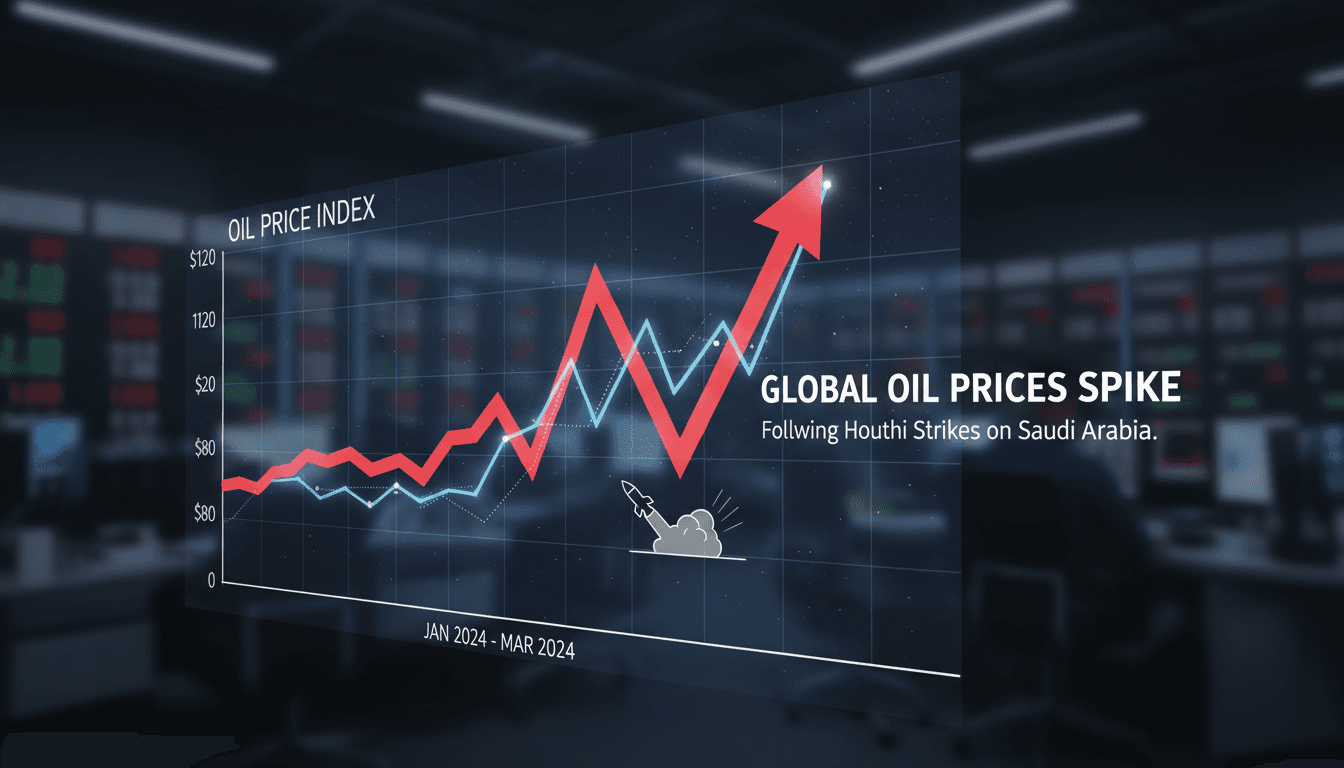
Houthi missile strikes on Saudi Arabia cause surge in global oil prices
Why it matters
The escalation of conflict in the Middle East directly impacts global oil prices, affecting everything from transportation costs to consumer goods.
What happened (in 30 seconds)
- Houthi missile attacks on Saudi Arabia on October 12, 2026, targeted Riyadh's international airport and Aramco facilities, leading to immediate supply concerns.
- Oil prices surged, with West Texas Intermediate crude reaching approximately $94.66 per barrel and Brent exceeding $106 amid fears of supply disruptions.
- U.S. military involvement is under consideration, raising the stakes in an already volatile region.
The context you actually need
- Renewed conflict in Yemen has intensified, with Saudi Arabia backing government forces against the Iran-backed Houthis, leading to increased military actions.
- Previous tensions included strikes on oil infrastructure and shipping routes, particularly around the strategic Strait of Hormuz, a critical chokepoint for global oil transport.
- Market volatility is compounded by ongoing discussions regarding U.S.-Russia diesel supplies and the broader implications of the Russia-Ukraine energy ceasefire.
What's really happening
The recent missile strikes by the Houthis mark a significant escalation in the ongoing conflict in Yemen, which has seen renewed hostilities since early October 2026. The Houthis, supported by Iran, have targeted key Saudi infrastructure, including Riyadh's international airport and vital Aramco facilities. This offensive is a direct response to Saudi Arabia's military support for Yemeni government forces, which has intensified the civil war's dynamics.
The immediate market reaction was a sharp increase in oil prices, with West Texas Intermediate crude rising to $94.66 per barrel and Brent crude exceeding $106. This spike reflects heightened fears of supply disruptions in a region that is already fraught with geopolitical tensions. Analysts have noted that geopolitical risk premiums have added over $20 per barrel to oil prices, indicating that traders are pricing in the potential for further escalations.
The U.S. response, under President Trump, includes considerations for military action alongside Saudi Arabia, which could further destabilize the region and exacerbate supply chain issues. The closure of Riyadh's international airport for at least a week adds to logistical challenges, impacting not only air travel but also the movement of goods and services.
Moreover, the ongoing strikes near the Strait of Hormuz and other shipping routes have raised alarms about the security of maritime transport, which is crucial for global oil supplies. The situation is further complicated by the recent discussions regarding U.S. diesel supplies and the ceasefire claims between Russia and Ukraine, which have provided temporary relief but are overshadowed by the escalating conflict in the Middle East.
As the situation develops, the implications for global oil markets are significant. With supply uncertainty persisting, prices are likely to remain elevated, affecting consumers and businesses worldwide. The interconnectedness of global energy markets means that disruptions in one region can have ripple effects across the globe, influencing everything from fuel prices to inflation rates.
Who feels it first (and how)
- Energy sector professionals: Increased operational costs and potential supply chain disruptions.
- Consumers: Higher fuel prices impacting transportation and goods.
- Logistics companies: Challenges in shipping routes and increased costs.
- Investors: Volatility in oil markets affecting stock portfolios.
- Governments: Pressure to manage inflation and energy security concerns.
What to watch next
- U.S. military decisions: Any escalation in military involvement could further destabilize the region and impact oil prices.
- OPEC responses: Changes in production levels or forecasts could influence market dynamics and pricing.
- Shipping disruptions: Continued attacks on maritime routes could lead to significant delays and increased costs in global supply chains.
Oil prices are elevated due to geopolitical tensions.
Continued volatility in oil markets as the situation evolves.
The long-term impact of U.S. military involvement on regional stability and oil supply.
Frequently Asked Questions
- Why it matters?
- The escalation of conflict in the Middle East directly impacts global oil prices, affecting everything from transportation costs to consumer goods.
- What happened (in 30 seconds)?
- Houthi missile attacks on Saudi Arabia on October 12, 2026, targeted Riyadh's international airport and Aramco facilities, leading to immediate supply concerns. Oil prices surged, with West Texas Intermediate crude reaching approximately $94.66 per barrel and Brent exceeding $106 amid fears of supply disruptions. U.S. military involvement is under consideration, raising the stakes in an already volatile region.
- What's really happening?
- The recent missile strikes by the Houthis mark a significant escalation in the ongoing conflict in Yemen, which has seen renewed hostilities since early October 2026. The Houthis, supported by Iran, have targeted key Saudi infrastructure, including Riyadh's international airport and vital Aramco facilities. This offensive is a direct response to Saudi Arabia's military support for Yemeni government forces, which has intensified the civil war's dynamics. The immediate market reaction was a sharp
- Who feels it first (and how)?
- Energy sector professionals: Increased operational costs and potential supply chain disruptions. Consumers: Higher fuel prices impacting transportation and goods. Logistics companies: Challenges in shipping routes and increased costs. Investors: Volatility in oil markets affecting stock portfolios. Governments: Pressure to manage inflation and energy security concerns.
- What to watch next?
- U.S. military decisions: Any escalation in military involvement could further destabilize the region and impact oil prices. OPEC responses: Changes in production levels or forecasts could influence market dynamics and pricing. Shipping disruptions: Continued attacks on maritime routes could lead to significant delays and increased costs in global supply chains.
Oil, metals, and agriculture: supply/demand headlines, OPEC chatter, inventories, and price action.
"Solid tape for energy and metals traders tracking macro and micro catalysts."
— A47 Editor
Oil prices rise as Houthi-Saudi attacks spur supply uncertainty
Oil prices have risen due to recent Houthi attacks on Saudi Arabia, which have heightened concerns about potential disruptions in oil supply. This escalation in hostilities has led to a significant increase in market volatility, with oil prices settl...
Capitol Hill news, legislation, and policy insight.
"The Hill specializes in U.S. politics and policy, with a focus on Capitol Hill developments and a reputation for insider reporting."
— A47 Editor
Oil prices spike after Houthi attacks on Saudi airports
Oil prices surged on Monday following attacks by Iranian-backed Houthi rebels on two airports in Saudi Arabia over the weekend, with Brent Crude closing at nearly $106 per barrel, marking an increase of approximately $1.20 since Friday. The price pea...
Global markets, investing, and macroeconomics from a premier financial newsroom.
"Bloomberg is respected for in-depth financial reporting and data-driven analysis."
— A47 Editor
US Stock Futures Rise After Crude Oil Declines: Markets Wrap
US equity-index futures rose following a decline in crude oil prices, which had initially surged due to Houthi attacks on Saudi Arabia. The market reacted positively to the easing of oil prices, which had raised concerns about supply disruptions in t...