
Federal Reserve Cuts Annual Rate-Setting Meetings From 2027 Amid Warsh Strategy Shift
Why it matters
The Federal Reserve is deliberately breaking a 45-year operational rhythm to force markets away from meeting-by-meeting rate dependency and toward structural economic horizons.
What happened (in 30 seconds)
- A phased reduction begins: The Federal Open Market Committee will keep eight annual sessions but dedicate one meeting in 2027 and two in 2028 entirely to broad policy strategy without interest rate votes or formal policy statements.
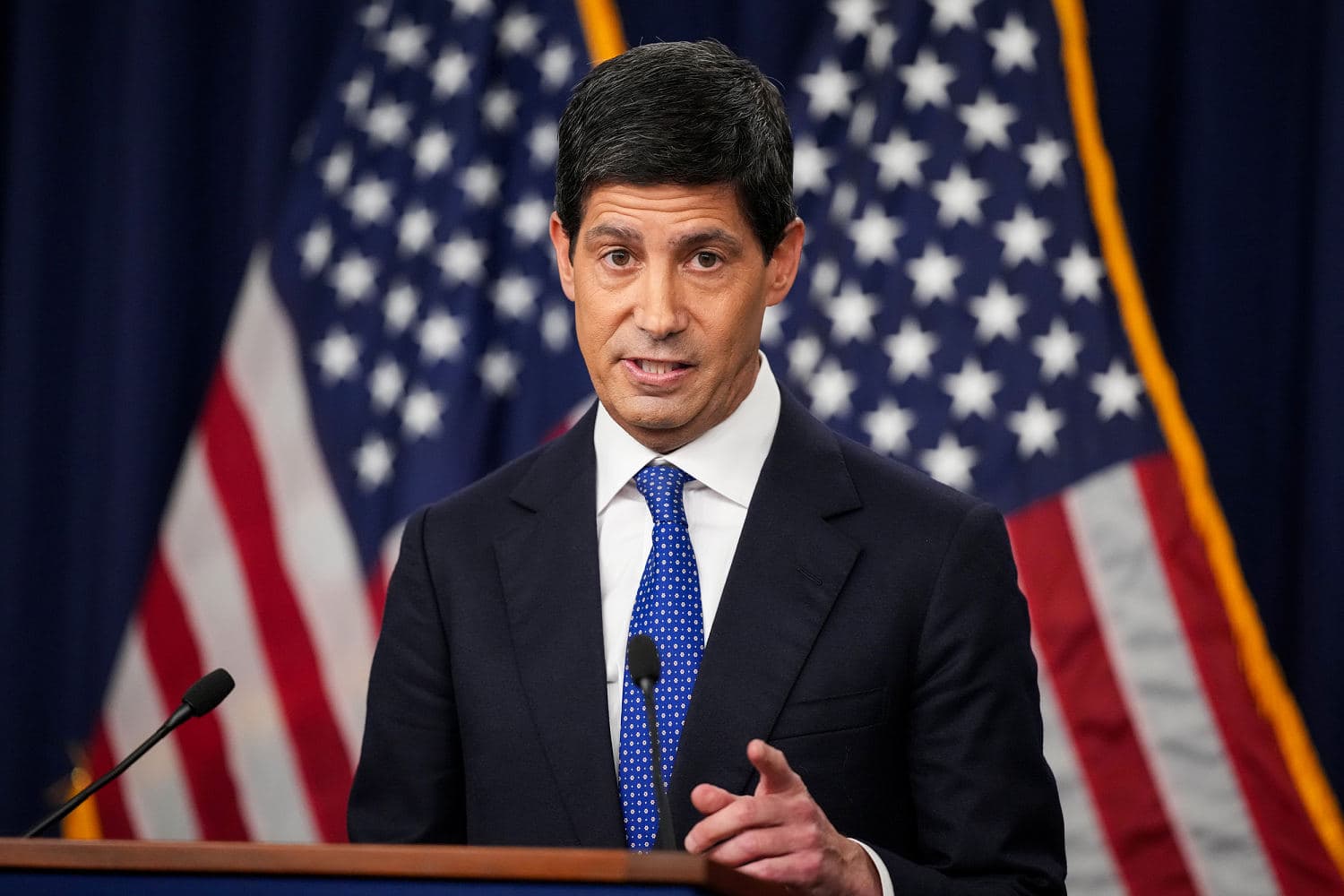
- Rates held steady: Chairman Kevin Warsh announced the structural adjustment on October 28, 2026, directly following an FOMC decision to maintain prevailing policy rates.
- The cadence shifts: The procedural reform reduces total annual rate-setting decisions from the standard eight down to seven in 2027, reaching six by 2028.
The context you actually need
- A pattern set in 1981: The FOMC has operated on an eight-meeting schedule for over four decades, institutionalizing a six-week cycle that conditioned modern trading desks to price policy on ultra-short horizons.
- Warsh's operational pivot: Since assuming leadership in May 2026, Chairman Kevin Warsh has paired this schedule compression with tighter forward guidance and shorter policy statements, reversing years of central bank verbosity.
- Divergence from peers: This structural timetable distances the Federal Reserve from institutions like the Bank of England and the Bank of Japan, creating asynchronous windows for international monetary policy.
What's really happening
The procedural shift from eight rate-setting votes to six by 2028 is not an administrative detail; it is an incentive overhaul for global debt markets. Since 1981, the six-week FOMC cadence has created an operational environment where market participants hyper-fixate on near-term language shifts rather than macroeconomic fundamentals. By removing the rate vote and statement from two sessions per year, the Fed is introducing deliberate gaps into that feedback loop.
The mechanical logic relies on data accumulation. A six-week window frequently offers only a single consumer price index release, one nonfarm payrolls print, and volatile early estimates of gross domestic product. Central bankers operating on that timeframe face systemic pressure to react to noise rather than signal. Extending the effective evaluation window to eight or ten weeks between voting sessions allows policymakers to ingest multiple reporting periods. This design explicitly curtails the market's expectation that the Fed will intervene or adjust policy trajectories based on high-frequency, single-month statistical anomalies.
Under Kevin Warsh, this procedural update complements an intentional contraction in overall communications. The central bank has shortened its post-meeting policy statements and scaled back forward guidance. Forward guidance was built to anchor long-term expectations during zero-bound regimes, but in normalized environments, it often handcuffs policymakers to obsolete paths. By reducing the frequency of actionable statements, the FOMC lowers its institutional liability to market pricing.
The strategic sessions that replace these voting meetings provide the committee with space to deliberate longer-horizon challenges without the pressure of an immediate market-moving press conference. The incentive structure for commercial banks, asset allocators, and corporate treasuries fundamentally changes under this framework. When rate cuts or rate hikes occur less frequently, every single vote carries higher structural significance, while the interim months require capital allocators to manage risk based on balance-sheet durability rather than Fed backstops.
This model essentially redistributes operational risk back to financial institutions. Market participants can no longer position for programmatic central bank fine-tuning every 45 days. Instead, global balance sheets must adjust to prolonged spans where official borrowing costs remain fixed, regardless of interim financial market volatility.
Who feels it first (and how)
- Fixed-income traders and macro desks: Desks optimized to trade six-week liquidity cycles must reprice rate-probability curves around extended inter-meeting intervals.
- Corporate treasurers: Borrowers planning commercial paper rollovers or syndicated bond offerings lose the predictability of eight distinct rate-evaluation windows each year.
- Dubai and GCC wealth allocators: Sovereign vehicles and regional balance sheets tied to the US dollar must navigate fewer, but higher-impact, global capital flow recalibrations and energy pricing shifts.
- Global macro hedgers: Cross-border capital allocators face asynchronous liquidity moves as the Fed's longer cycle diverges from European and Asian central bank calendars.
What to watch next
- The 2027 calendar blueprint: Watch for the official release of the 2027 schedule to see precisely which month loses its rate vote, signaling when the first extended observation window occurs.
- Inter-meeting market liquidity: Monitor short-term interest rate derivative spreads during non-voting strategy months to see if liquidity dries up or adapts smoothly without formal rate guidance.
- Central bank peer reactions: Observe whether the Bank of England or Bank of Japan signal procedural adjustments to align their decision-making timelines with Washington.
The FOMC will hold seven voting meetings in 2027 and six in 2028, with non-voting sessions reserved exclusively for long-term policy strategy discussions.
Market sensitivity to every remaining voting meeting will increase substantially, as each policy decision will anchor borrowing costs for longer baseline periods.
It remains uncertain how the FOMC will manage emergency economic interruptions during the longer pauses between formal rate-setting sessions.
Frequently Asked Questions
- Why it matters?
- The Federal Reserve is deliberately breaking a 45-year operational rhythm to force markets away from meeting-by-meeting rate dependency and toward structural economic horizons.
- What happened (in 30 seconds)?
- A phased reduction begins: The Federal Open Market Committee will keep eight annual sessions but dedicate one meeting in 2027 and two in 2028 entirely to broad policy strategy without interest rate votes or formal policy statements. Rates held steady: Chairman Kevin Warsh announced the structural adjustment on October 28, 2026, directly following an FOMC decision to maintain prevailing policy rates. The cadence shifts: The procedural reform reduces total annual rate-setting decisions from the st
- What's really happening?
- The procedural shift from eight rate-setting votes to six by 2028 is not an administrative detail; it is an incentive overhaul for global debt markets. Since 1981, the six-week FOMC cadence has created an operational environment where market participants hyper-fixate on near-term language shifts rather than macroeconomic fundamentals. By removing the rate vote and statement from two sessions per year, the Fed is introducing deliberate gaps into that feedback loop. The mechanical logic relies on
- Who feels it first (and how)?
- Fixed-income traders and macro desks: Desks optimized to trade six-week liquidity cycles must reprice rate-probability curves around extended inter-meeting intervals. Corporate treasurers: Borrowers planning commercial paper rollovers or syndicated bond offerings lose the predictability of eight distinct rate-evaluation windows each year. Dubai and GCC wealth allocators: Sovereign vehicles and regional balance sheets tied to the US dollar must navigate fewer, but higher-impact, global capital fl
- What to watch next?
- The 2027 calendar blueprint: Watch for the official release of the 2027 schedule to see precisely which month loses its rate vote, signaling when the first extended observation window occurs. Inter-meeting market liquidity: Monitor short-term interest rate derivative spreads during non-voting strategy months to see if liquidity dries up or adapts smoothly without formal rate guidance. Central bank peer reactions: Observe whether the Bank of England or Bank of Japan signal procedural adjustments
Global markets, investing, and macroeconomics from a premier financial newsroom.
"Bloomberg is respected for in-depth financial reporting and data-driven analysis."
— A47 Editor
Warsh’s ‘Forward Silence’ Risks Bigger Treasury Market Swings
Federal Reserve Chairman Kevin Warsh has proposed reducing the number of interest-rate decisions the central bank makes each year, a plan that Bloomberg reports has drawn investor concern about greater volatility in the $32 trillion Treasury market. ...
Markets, economy, and company analysis from NYT’s business desk.
"The New York Times is a globally recognized newspaper offering authoritative reporting with a center-left editorial stance."
— A47 Editor
In Moving Gradually, Fed Risks Having to Play Catch-Up to Quell Inflation
The Federal Reserve is expected to restart interest rate increases in December, with the pace of further moves dependent on incoming data, as Chairman Kevin Warsh has signaled the central bank has not yet made enough progress in taming inflation, acc...
Social/economic commentary and analysis relevant to business and markets.
"WSJ blends data-driven economic insight with commentary on policy and society."
— A47 Editor
Fed Chairman Kevin Warsh said higher rates are reaching the investment surge and yet growth is broadening beyond it, positions which cut in opposite directions as to where to set rates
Federal Reserve Chairman Kevin Warsh said higher interest rates are reaching the investment surge even as growth broadens beyond it, positions that point in opposite directions on where rates should be set. The Fed held its benchmark federal funds ra...
Markets desk coverage, trading insights, and investor updates.
"WSJ’s markets reporting provides in-depth analysis and context for investors."
— A47 Editor
The Fed’s AI Puzzle: Will High Rates Slow the Boom?
The Federal Reserve held its benchmark federal funds rate steady in a range of 3.75% to 4% after a divided 10-2 vote, with Governor Lisa Cook and Cleveland Fed President Beth Hammack dissenting in favor of a rate hike. Chairman Kevin Warsh said highe...
Stock market news, investing ideas, and trading analysis.
"TheStreet provides market news and retail-investor-focused analysis."
— A47 Editor
Fed Chair Kevin Warsh reveals October surprise inside interest-rate pause
The Federal Reserve held its benchmark federal funds rate steady in a range of 3.75% to 4% after a divided 10-2 vote, with Governor Lisa Cook and Cleveland Fed President Beth Hammack dissenting in favor of a rate hike. Chairman Kevin Warsh used the n...
Markets, economy, and company analysis from NYT’s business desk.
"The New York Times is a globally recognized newspaper offering authoritative reporting with a center-left editorial stance."
— A47 Editor
Fed Holds Rates Steady Despite Lack of Progress on Inflation
The Federal Reserve held its benchmark interest rates steady, even as inflation has not made the progress officials had hoped for, according to coverage of the base article. Fed Chairman Kevin M. Warsh said an "information-rich" period before the cen...
Global markets, investing, and macroeconomics from a premier financial newsroom.
"Bloomberg is respected for in-depth financial reporting and data-driven analysis."
— A47 Editor
The Fed Will Deliver Price Stability, Warsh Says
The Federal Reserve kept its benchmark federal funds rate unchanged in a range of 3.75% to 4% after a 10-2 vote, with Governor Lisa Cook and Cleveland Fed President Beth Hammack dissenting in favor of a rate hike. At a news conference, Chairman Kevin...
Global business headlines with AI angles.
"General business outlet that frequently covers AI."
— A47 Editor
The Fed Kept Rates Unchanged. Stocks Edged Up.
The Federal Reserve kept its benchmark interest rate unchanged at its October 27-28 meeting, in line with market expectations, while Chair Kevin Warsh said there are signs that financial conditions have tightened since the central bank hiked rates in...
Markets, economy, and company analysis from NYT’s business desk.
"The New York Times is a globally recognized newspaper offering authoritative reporting with a center-left editorial stance."
— A47 Editor
Fed Will Hold Fewer Rate-Setting Meetings Starting Next Year
Federal Reserve Chairman Kevin M. Warsh said the central bank will vote on interest rates seven times in 2027 and six times in 2028, down from the eight meetings it has traditionally held each year, as the Fed begins reducing its rate-setting schedul...
Corporate leadership, finance, technology, and market trends.
"Fortune covers financial trends, leadership, and innovation with a pragmatic editorial approach."
— A47 Editor
For the first time since 1992, a Fed governor and president dissented together, as Kevin Warsh says the ‘monetary medicine’ is starting to work
The Federal Reserve voted 10-2 to hold its benchmark federal funds rate in a range of 3.75% to 4%, leaving borrowing costs unchanged, with Governor Lisa Cook and Cleveland Fed President Beth Hammack dissenting in favor of a rate hike. It was the firs...
Global business headlines with AI angles.
"General business outlet that frequently covers AI."
— A47 Editor
Fed Chair Warsh Says Current Conditions are Helping Create a Path Toward Lower Inflation
Federal Reserve Chair Kevin Warsh said in a press conference following the central bank's policy decision that recent changes in financial and credit conditions are helping create a path toward lower inflation, while the Fed chose to leave interest r...
Global markets, investing, and macroeconomics from a premier financial newsroom.
"Bloomberg is respected for in-depth financial reporting and data-driven analysis."
— A47 Editor
Fed's Warsh Says Monetary 'Medicine' Starting to Work
The Federal Open Market Committee voted 10-2 to hold its benchmark federal funds rate in a range of 3.75% to 4%, leaving borrowing costs unchanged, with Governor Lisa Cook and Cleveland Fed President Beth Hammack dissenting. At a news conference afte...
National headlines across the United States including breaking stories and societal issues.
"NBC News is a mainstream media outlet known for comprehensive national and international news coverage with a centrist to slightly left-leaning editorial tone."
— A47 Editor
Fed plans to eliminate some rate-setting meetings, chairman says
Federal Reserve Chairman Kevin Warsh said Wednesday that the Fed plans to eliminate some rate-setting meetings over the next couple of years, according to NBC News. The announcement came the same day the Fed voted to hold interest rates steady at 3.7...
Capitol Hill news, legislation, and policy insight.
"The Hill specializes in U.S. politics and policy, with a focus on Capitol Hill developments and a reputation for insider reporting."
— A47 Editor
Watch live: Warsh speaks after Fed votes to keep interest rates steady
Federal Reserve Chair Kevin Warsh is set to speak to reporters after the central bank voted to hold interest rates steady at 3.75% to 4%, despite persistent inflation and mounting economic pressures ahead of the midterm elections. The decision follow...
Markets, economy, and company analysis from NYT’s business desk.
"The New York Times is a globally recognized newspaper offering authoritative reporting with a center-left editorial stance."
— A47 Editor
Here’s the latest.
The base article reports that Federal Reserve Chairman Kevin Warsh said last week that more had to be done to tame inflation, a neutral-toned statement covered by The New York Times within the markets category.