
US Proposes Section 301 Tariffs of Up to 20 Percent on China and 13 Trading Partners to Address Excess Industrial Capacity
Why it matters
The proposed tariff architecture signals a structural shift from targeted bilateral disputes toward systemic levies designed to penalize global supply chains absorbing China's excess industrial manufacturing.
What happened (in 30 seconds)
- New tariffs proposed across 14 trade partners: On November 25, 2026, the U.S. Trade Representative announced proposed duties of up to 20% on Chinese goods and 10% to 18% on partners including the European Union, Japan, South Korea, Vietnam, and Brazil under Section 301.
- Potential 40% threshold for Chinese imports: If the existing bilateral trade truce lapses, levies on Chinese products could scale up to 40%, stacked on top of existing 25% duties for select categories.
- Carve-outs offered alongside enforcement: The administration offered duty exemptions on roughly $30 billion worth of Chinese goods while scheduling public comment periods and hearings prior to any final implementation in early 2027.
The context you actually need
- A $1 trillion surplus tipping point: The investigation responds directly to China's goods trade surplus crossing $1 trillion in the first 10 months of 2026, driven by sustained factory output and state industrial subsidies.
- The approaching truce deadline: The measures establish immediate leverage ahead of the January 10, 2027 expiration of the 2025 bilateral trade truce, which had established temporary tariff caps.
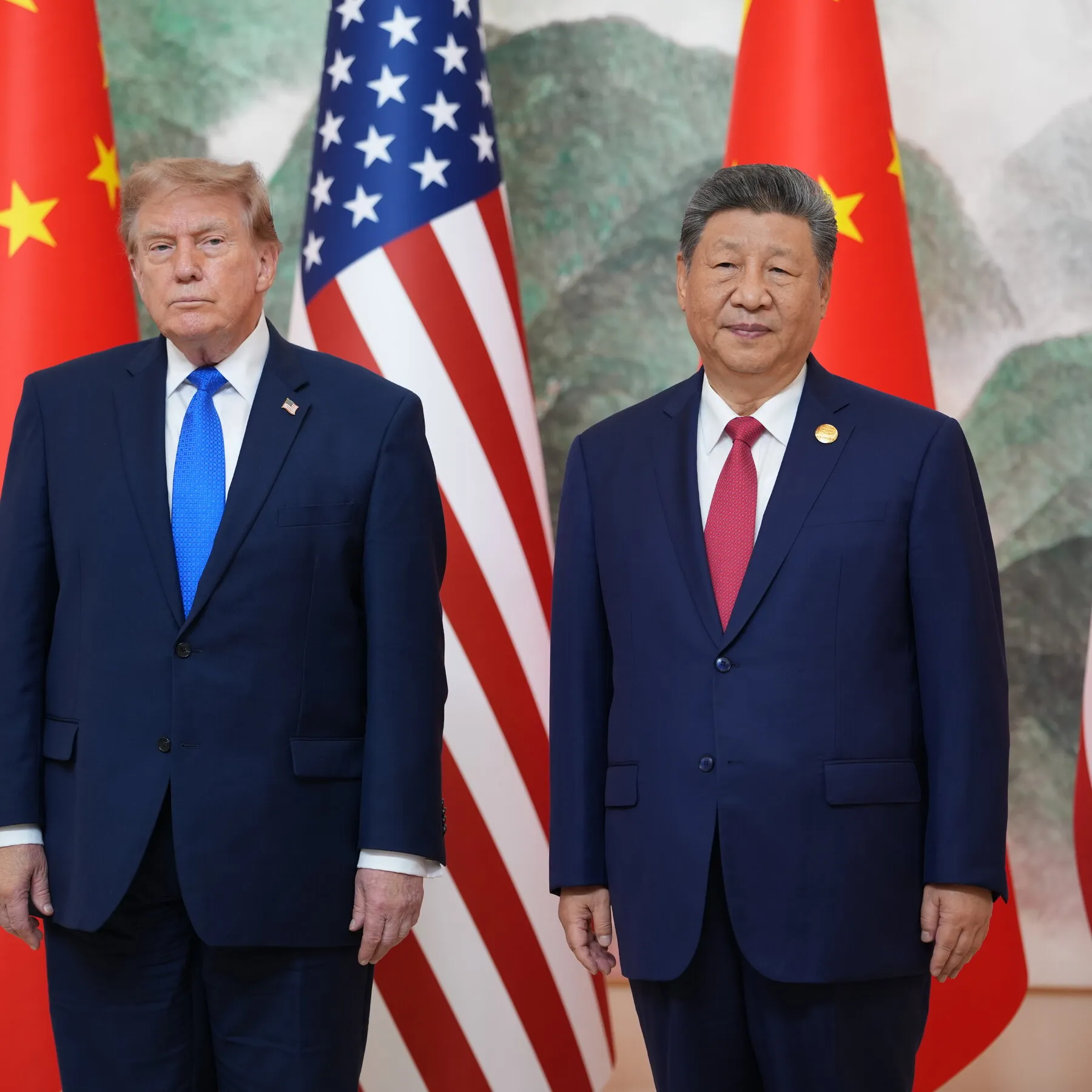
- Diplomatic summits on the calendar: The proposals land directly before a fourth bilateral meeting between Donald Trump and Xi Jinping scheduled for December at the G20 summit in Florida.
What's really happening
The mechanics of this tariff filing show a tactical evolution in trade policy: instead of isolating China in a silo, the framework systematically prices in the third-party transit routes that global manufacturers use to circumvent bilateral barriers.
By proposing duties of 10% to 18% across 13 additional trading partners—including Vietnam, South Korea, Japan, Brazil, and the European Union—the U.S. Trade Representative is targeting the re-export and intermediate processing networks that absorb Chinese factory output. China’s goods trade surplus surpassing $1 trillion across the first ten months of 2026 demonstrated to trade authorities that prior duties did not extinguish production volumes; they merely rerouted them through secondary assembly hubs across Asia and Latin America.
The timing is driven by an explicit institutional calendar. The current bilateral truce, established in 2025 to cap duty rates and manage trade flows, expires on January 10, 2027. By issuing formal Section 301 proposals in late November 2026, the administration sets up an administrative runway of public comment periods and formal hearings that prevents immediate market disruption while establishing maximum leverage. If the bilateral framework dissolves in January, baseline Chinese tariffs jump to 20%, with specific lines exposed to combined duties reaching 40% when layered over earlier 25% actions.
Simultaneously, the proposal includes exemptions on approximately $30 billion of Chinese imports. This carve-out reveals the underlying economic friction: trade officials are attempting to calibrate the threshold between penalizing foreign manufacturing overcapacity and avoiding domestic supply shortages in product lines where alternative manufacturing capacity does not exist.
For international trade corridors, the strategic outcome is margin compression. Multinational operations that relocated assembly to Vietnam or component sourcing to South Korea over the past three years now face an environment where secondary assembly jurisdictions carry their own 10% to 18% duty exposures. Global supply networks are being forced to calculate whether maintaining distributed assembly models remains cost-effective once partner-level baseline duties are factored into freight economics.
Who feels it first (and how)
- Supply chain and logistics directors: Teams managing transit through Vietnam, South Korea, and European hubs must prepare for 10% to 18% tariff bands on goods bound for U.S. ports.
- Middle East re-export hubs: Operators routing Chinese products through transshipment hubs like Dubai face higher end-market landed costs, shifting client demand toward local consumption or alternate non-U.S. corridors.
- Import-reliant procurement executives: Companies sourcing from the $30 billion exemption list must audit customs product codes immediately to secure exclusions before hearings conclude.
- Latin American agricultural and industrial exporters: Brazilian trade operators face immediate margin uncertainty, prompting government declarations that the country will not alter trade terms under external pressure.
What to watch next
- The December G20 Summit in Florida: Direct negotiations between Trump and Xi will indicate whether the Section 301 filings serve as a fixed policy transition or an aggressive negotiating posture ahead of the truce deadline.
- The January 10, 2027 Truce Expiration: The arrival of this deadline determines whether base tariffs cap at proposed rates or trigger the higher 40% stacked rates on Chinese imports.
- Public Comment and Exclusion Filings: The volume and scope of corporate requests submitted during the USTR comment period will define the exact perimeter of the $30 billion exemption list.
The U.S. Trade Representative has formally initiated Section 301 proposals targeting China at up to 20% and 13 other nations between 10% and 18%, supported by an exemption list covering $30 billion in goods.
Tariffs will not take operational effect before early 2027, as statutory notice-and-comment requirements mandate administrative hearings before final enforcement.
Whether China's promised countermeasures will target agricultural goods, intermediate manufacturing inputs, or bilateral investment flows ahead of the January deadline.
Frequently Asked Questions
- Why it matters?
- The proposed tariff architecture signals a structural shift from targeted bilateral disputes toward systemic levies designed to penalize global supply chains absorbing China's excess industrial manufacturing.
- What happened (in 30 seconds)?
- New tariffs proposed across 14 trade partners: On November 25, 2026, the U.S. Trade Representative announced proposed duties of up to 20% on Chinese goods and 10% to 18% on partners including the European Union, Japan, South Korea, Vietnam, and Brazil under Section 301. Potential 40% threshold for Chinese imports: If the existing bilateral trade truce lapses, levies on Chinese products could scale up to 40%, stacked on top of existing 25% duties for select categories. Carve-outs offered alongsid
- What's really happening?
- The mechanics of this tariff filing show a tactical evolution in trade policy: instead of isolating China in a silo, the framework systematically prices in the third-party transit routes that global manufacturers use to circumvent bilateral barriers. By proposing duties of 10% to 18% across 13 additional trading partners—including Vietnam, South Korea, Japan, Brazil, and the European Union—the U.S. Trade Representative is targeting the re-export and intermediate processing networks that absorb
- Who feels it first (and how)?
- Supply chain and logistics directors: Teams managing transit through Vietnam, South Korea, and European hubs must prepare for 10% to 18% tariff bands on goods bound for U.S. ports. Middle East re-export hubs: Operators routing Chinese products through transshipment hubs like Dubai face higher end-market landed costs, shifting client demand toward local consumption or alternate non-U.S. corridors. Import-reliant procurement executives: Companies sourcing from the $30 billion exemption list must a
- What to watch next?
- The December G20 Summit in Florida: Direct negotiations between Trump and Xi will indicate whether the Section 301 filings serve as a fixed policy transition or an aggressive negotiating posture ahead of the truce deadline. The January 10, 2027 Truce Expiration: The arrival of this deadline determines whether base tariffs cap at proposed rates or trigger the higher 40% stacked rates on Chinese imports. Public Comment and Exclusion Filings: The volume and scope of corporate requests submitted dur
Conservative-leaning political and national coverage.
"The Washington Times is a conservative-leaning newspaper known for its political coverage and advocacy of right-of-center viewpoints."
— A47 Editor
Trump's tariff do-over gets a frosty reception across Asia, with some vowing payback
The Washington Times reports that major U.S. trading partners across Southeast Asia protested President Donald Trump's planned tariff increases, a "tariff do-over" that drew a frosty reception across the region, with some governments vowing payback. ...
Markets, economy, and company analysis from NYT’s business desk.
"The New York Times is a globally recognized newspaper offering authoritative reporting with a center-left editorial stance."
— A47 Editor
Trump’s Latest Tariffs Revive Focus on Pressuring China
President Donald Trump has signaled a readiness to escalate tariffs against trading partners across Asia and beyond, reviving pressure on China. The base report, from The New York Times, notes the message was sent to economies that depend heavily on ...
Editor-curated FT homepage stories spanning markets, business, world, and opinion.
"The Financial Times is a globally respected business publication with a centrist/center-left tone and strong markets focus."
— A47 Editor
China hits back at Trump tariff threat
China has pushed back against a new tariff threat from US President Donald Trump, following a US investigation into whether countries provide their own companies with unfair subsidies. The levies are part of a broader round of proposed duties coverin...
English-language reporting on Saudi politics, policy, and society.
"Saudi Gazette reflects mainstream Saudi institutional perspectives."
— A47 Editor
Trump announces new round of tariffs on dozens of countries
The White House is preparing a new round of tariffs on China, the European Union and 12 other jurisdictions, including Japan, South Korea and Taiwan, seeking to revive President Donald Trump's trade agenda after the US Supreme Court struck down his s...