
Control Center Authorization Errors Precede Fatal High-Speed Rail Rear-End Collision Near Urda Spain
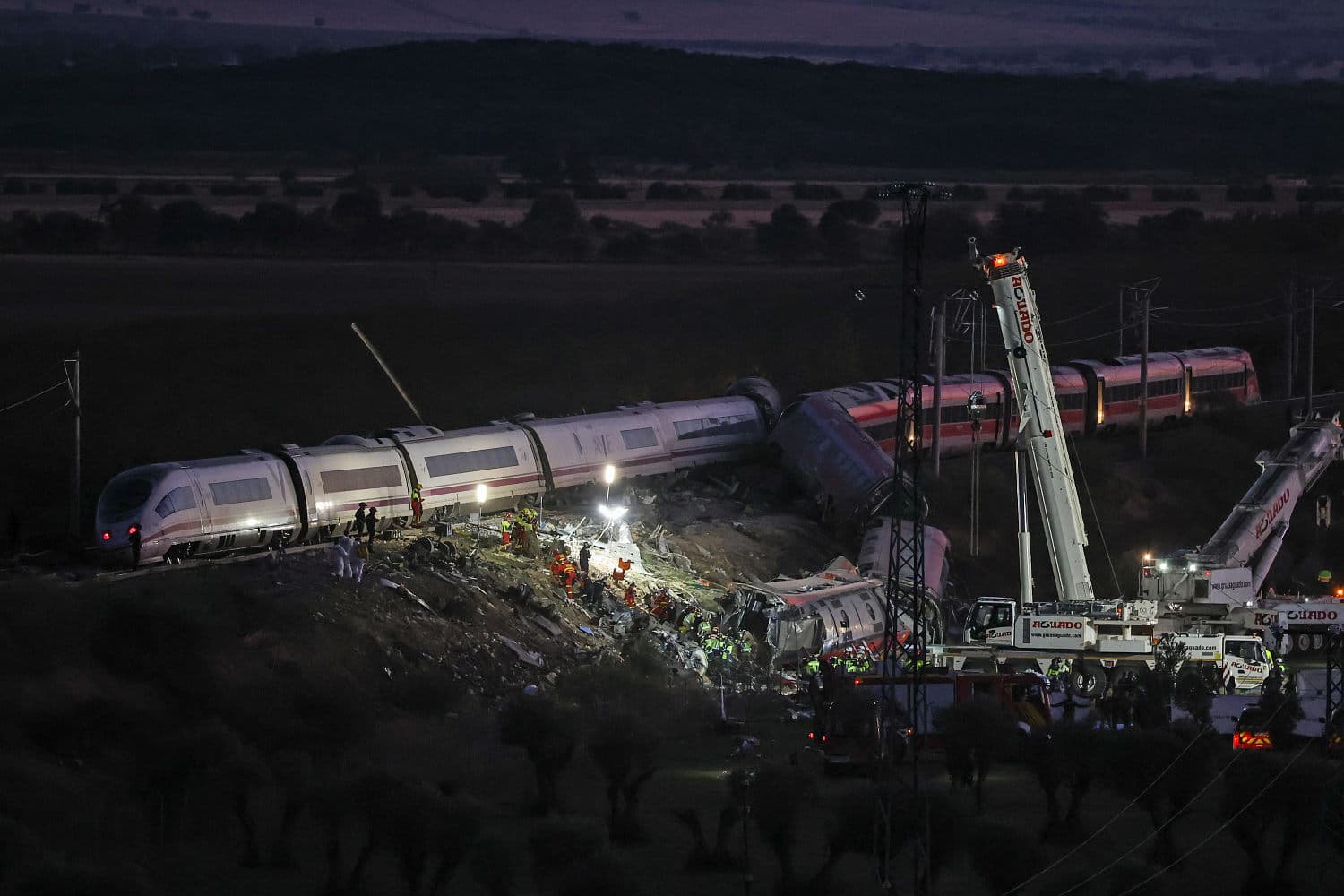
Why it matters
The failure shows that expanding Europe's largest high-speed rail corridor creates compounding systemic risks whenever manual interventions replace automated track protection.
What happened (in 30 seconds)
* A fatal rear-end collision: On October 29, 2026, at approximately 8:53 a.m., a state-owned Renfe train traveling up to 200 km/h struck a stationary Iryo passenger train near Urda on the Madrid-Seville line, killing at least 69 people and injuring dozens. * The initial software drop: A computer malfunction disabled the automated signaling system across the corridor at 8:30 a.m., forcing Madrid Atocha traffic managers to transition multiple trains to manual track authorization. * A protocol breakdown: Control center staff instructed the Renfe train to resume normal speeds under backup lateral signaling at 8:36 a.m. without confirming track clearance, even after the stationary Iryo train reported seven minutes later that it could not restart.
The context you actually need
* Network density under strain: Spain operates the largest high-speed rail network in Europe, supporting mixed-operator services across public Renfe units and private carriers like Iryo on shared trunk lines. * A recurrent corridor vulnerability: This collision marks the second fatal disaster on the Madrid-Seville alignment within ten months, following a January 2026 crash on the same line that resulted in 46 fatalities. * Safety protocol circumvention: Transportation Minister Óscar Puente confirmed that the collision resulted from an operational protocol violation by control center personnel during the manual override sequence.
What's really happening
The mechanics of this collision reflect an operational paradox common to modern transport corridors: automated systems create exceptional baseline safety, but operating models degrade rapidly when those systems fail and shift management responsibility to human dispatchers.
At 8:30 a.m., a primary signaling failure shut down automated spacing across the Madrid-Seville corridor. Modern high-speed operations rely on digital interlocks that maintain absolute physical separation between moving trainsets. When the automated signaling failed, controllers shifted the corridor to manual dispatch, operating under backup lateral signaling.
Under backup procedures, the primary failsafe shifts entirely to manual track verification. Dispatchers must establish verified track clearance before clearing a trailing train into an occupied block. At 8:36 a.m., controllers at the Madrid Atocha center cleared the trailing Renfe train to run at standard track speed.
Seven minutes later, at 8:43 a.m., the operator of the stationary Iryo train directly notified dispatch that her train could not restart, confirming the track remained obstructed near Urda. Despite this direct transmission, dispatchers issued no warning or counter-order to the approaching Renfe train. Running at up to 200 km/h without automated digital cab-braking overrides, the trailing train struck the stationary Iryo train at 8:53 a.m.
The incident highlights an operational vulnerability inside deregulated, shared-access rail corridors. When public infrastructure managers coordinate diverse operators—in this case, state-owned Renfe and private operator Iryo—dispatch centers operate under acute throughput incentives to minimize systemwide congestion during technical delays.
When digital signaling platforms drop out, controllers face conflicting pressures between maintaining operational velocity and executing slow, multi-step manual track clearance verifications. The Urda disaster demonstrates that when controllers bypass standard verification sequences to preserve schedule reliability, safety margins compress to zero.
Who feels it first (and how)
* High-speed rail passengers: Commuters and business travelers along Spain's primary Madrid-Andalusia route face extensive network suspensions, rolling cancellations, and protracted travel friction during emergency line inspections. * Rail traffic dispatchers: Controllers across European high-speed command centers face intensified legal scrutiny, revised operational authorization rules, and tightened double-check mandates for manual overrides. * Infrastructure managers and private operators: Renfe, Iryo, and network managers face compounding liability exposure, fleet availability constraints, and direct financial overhead linked to rolling safety audits.
What to watch next
* Corridor manual-override moratoriums: Watch for direct regulatory caps on maximum operating speeds during active signaling failures, which would institutionalize structural travel delays across European rail transit. * Dispatch audio forensics: Official releases from the Madrid Atocha control room voice logs will indicate whether dispatchers acted under contradictory track data displays or skipped procedural clearance calls outright. * Independent rail safety board findings: The timeline and technical conclusions of the official investigation will determine whether automated track protection hardware requires hardware-level failsafes that prevent manual clearance entirely.
At least 69 fatalities occurred near Urda; signaling systems malfunctioned at 8:30 a.m.; controllers cleared the Renfe train to run at up to 200 km/h; the stationary Iryo train notified dispatch seven minutes prior to the 8:53 a.m. impact.
Spanish rail authorities will impose lower manual speed caps nationwide, reducing network velocity whenever digital signaling fails.
It remains undetermined whether the Atocha control center software displayed the stationary Iryo train’s precise location to dispatchers when the manual speed clearance was issued.
Frequently Asked Questions
- Why it matters?
- The failure shows that expanding Europe's largest high-speed rail corridor creates compounding systemic risks whenever manual interventions replace automated track protection.
- What happened (in 30 seconds)?
- A fatal rear-end collision: On October 29, 2026, at approximately 8:53 a.m., a state-owned Renfe train traveling up to 200 km/h struck a stationary Iryo passenger train near Urda on the Madrid-Seville line, killing at least 69 people and injuring dozens. The initial software drop: A computer malfunction disabled the automated signaling system across the corridor at 8:30 a.m., forcing Madrid Atocha traffic managers to transition multiple trains to manual track authorization. A protocol breakdown:
- What's really happening?
- The mechanics of this collision reflect an operational paradox common to modern transport corridors: automated systems create exceptional baseline safety, but operating models degrade rapidly when those systems fail and shift management responsibility to human dispatchers. At 8:30 a.m., a primary signaling failure shut down automated spacing across the Madrid-Seville corridor. Modern high-speed operations rely on digital interlocks that maintain absolute physical separation between moving train
- Who feels it first (and how)?
- High-speed rail passengers: Commuters and business travelers along Spain's primary Madrid-Andalusia route face extensive network suspensions, rolling cancellations, and protracted travel friction during emergency line inspections. Rail traffic dispatchers: Controllers across European high-speed command centers face intensified legal scrutiny, revised operational authorization rules, and tightened double-check mandates for manual overrides. Infrastructure managers and private operators: Renfe, Ir
- What to watch next?
- Corridor manual-override moratoriums: Watch for direct regulatory caps on maximum operating speeds during active signaling failures, which would institutionalize structural travel delays across European rail transit. Dispatch audio forensics: Official releases from the Madrid Atocha control room voice logs will indicate whether dispatchers acted under contradictory track data displays or skipped procedural clearance calls outright. Independent rail safety board findings: The timeline and technic
National headlines across the United States including breaking stories and societal issues.
"NBC News is a mainstream media outlet known for comprehensive national and international news coverage with a centrist to slightly left-leaning editorial tone."
— A47 Editor
Audio recordings reveal decisions made moments before deadly train crash in Spain
Two high-speed trains collided in Toledo province, central Spain, on October 28, 2026, when a RENFE train struck the rear of a stopped IRYO train on the Madrid-Seville line, derailing several carriages. Initial reports of at least 10 dead rose to at ...
Comprehensive coverage of global events, politics, and international issues.
"NBC News is a mainstream outlet known for comprehensive national and international coverage with a centrist to slightly left-leaning editorial tone."
— A47 Editor
Audio recordings reveal decisions made moments before deadly train crash in Spain
Two high-speed trains collided in Toledo province, central Spain, on October 28, 2026, when a RENFE train struck the rear of a stopped IRYO train on the Madrid-Seville line, derailing several carriages. Initial reports of at least 10 dead rose to at ...
International coverage of politics, culture, and current affairs.
"BBC News is widely regarded as a reputable international news organization, known for its impartial tone and public service mandate."
— A47 Editor
Audio reveals exchanges between Spain train operators and drivers moments before deadly crash
Audio recordings published from the Spanish high-speed rail crash reportedly show exchanges between train operators and drivers moments before the collision near Toledo on Wednesday, October 28, 2026. The leaked tapes appear to show one high-speed tr...
Global news coverage with extensive reporting on Middle Eastern conflicts and geopolitics.
"Al Jazeera is a Qatar-based broadcaster known for wide regional coverage and alternative perspectives."
— A47 Editor
What we know about Spain’s second high-speed rail tragedy this year
Spain's high-speed rail network was thrown into mourning after a Renfe high-speed train struck the rear of a stopped Iryo train on the Madrid-Seville line near Urda in Toledo province on Wednesday, October 28, 2026, derailing carriages. Reported deat...
Comprehensive coverage of Middle Eastern and global issues.
"Al Jazeera is a prominent voice from the Global South, especially the Middle East, with an emphasis on underreported stories."
— A47 Editor
What we know about Spain’s second high-speed rail tragedy this year
Spain's high-speed rail network was thrown into mourning after a Renfe high-speed train struck the rear of a stopped Iryo train on the Madrid-Seville line near Urda in Toledo province on Wednesday, October 28, 2026, derailing carriages. Reported deat...
National headlines across the United States including breaking stories and societal issues.
"NBC News is a mainstream media outlet known for comprehensive national and international news coverage with a centrist to slightly left-leaning editorial tone."
— A47 Editor
At least 30 dead after two trains collide in Spain
At least 30 people were killed on Wednesday when two high-speed trains collided in central Spain, sending carriages careering off the tracks. The accident is the second major incident on the same line in less than a year, according to the base report...
Comprehensive coverage of global events, politics, and international issues.
"NBC News is a mainstream outlet known for comprehensive national and international coverage with a centrist to slightly left-leaning editorial tone."
— A47 Editor
Spain train crash leaves at least 68 dead in second major collision this year
A high-speed train collided with the rear of another train that had stopped on the Madrid-Seville line in Toledo province, central Spain, on Wednesday, October 28, 2026, derailing several carriages and killing at least 68 people, according to NBC New...