
Potential U.S. and Israeli Air Campaign Against Iran Targets Leadership, Energy, and Nuclear Sites If Talks Fail
Why it matters
The formal detailing of a multi-day joint air campaign targeting energy facilities and nuclear infrastructure establishes a defined threshold for diplomatic off-ramps, linking geopolitical risk directly to physical oil supply routes and Gulf financial stability.
What happened (in 30 seconds)
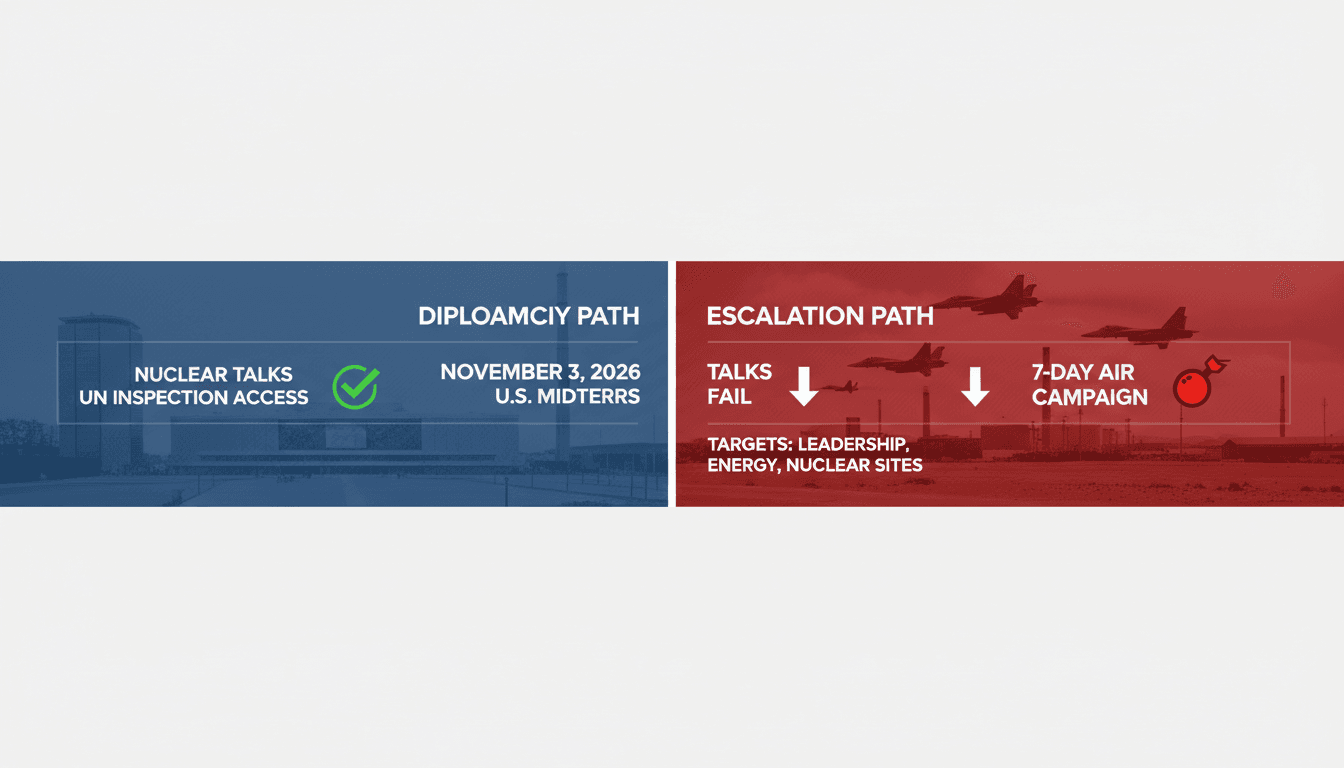
- Joint strike planning revealed: Reports from late October 2026 outline contingency frameworks prepared by the United States and Israel for a potential air campaign lasting approximately one week against Iranian leadership, energy installations, and nuclear infrastructure.
- Coordination at the command level: Israeli Chief of Staff Eyal Zamir and U.S. CENTCOM Commander Admiral Brad Cooper conducted formal discussions on October 27, 2026, establishing military alignment should current mediation falter.
- Decision contingent on diplomacy: No final strike order has been issued, leaving the execution window pegged to whether diplomatic talks secure renewed nuclear inspections following the November 3, 2026, U.S. midterm elections.
The context you actually need
- Preceding military cycles: The current prospective plans build on sequential U.S.-Israeli operations initiated in late February 2026 that targeted Iranian command nodes and nuclear sites, generating reciprocal actions across regional corridors.
- Specific negotiation terms: Diplomatic tracks led by regional intermediaries seek to exchange UN inspections of previously damaged facilities for selective sanctions relief, alongside demands regarding uranium stockpiles, maritime movement, and frozen capital.
- Energy targets enter the operational scope: Expanding contingency plans from strictly military or atomic sites to broader domestic energy facilities shifts the stakes from targeted containment to wider regional market disruption.
What's really happening
The strategic reality behind the prospective seven-day campaign is an exercise in structural leverage: setting an explicit post-November 3 deadline to force closure on nuclear inspections and stockpile concessions.
By detailing a military operation that includes energy networks alongside leadership and nuclear facilities, planners are signaling that the cost of prolonged diplomatic deadlock will not remain confined to military compounds. For Iran, the primary structural calculation centers on domestic economic preservation versus retaining its enriched uranium reserves and obtaining relief from maritime restrictions and frozen assets. For the United States and Israel, the objective is to prevent nuclear reconstitution without triggering a protracted ground engagement, relying instead on concentrated, high-tempo air assets to degrade critical state infrastructure.
The mechanism relies on conditional deterrence. The strategic timeline intentionally anchors to the conclusion of the U.S. midterm elections on November 3, 2026. This sequencing creates a defined operational runway where diplomatic mediation must either yield verifiable inspection agreements or risk transitioning into an active military phase.
If executed, targeting energy infrastructure fundamentally alters the calculus of retaliatory action. Iran has previously indicated that disruptions to its core assets could trigger countermeasures against broader regional energy and maritime transit points across the Persian Gulf. In an interconnected supply ecosystem, striking processing or export facilities does not simply disable localized production; it forces immediate re-routing of shipping vessels, raises marine insurance premiums, and strains logistical corridors that service export-dependent markets across Asia and Europe.
Because no execution directive has been signed, the release of these planning parameters functions as the final phase of coercive bargaining. Diplomatic envoys are utilizing the prospective seven-day window to compel compromise on UN monitoring access. Consequently, regional market participants are pricing not just the probability of kinetic conflict, but the administrative friction, compliance adjustments, and maritime security measures that inevitably accompany this tier of military readiness.
Who feels it first (and how)
- Energy commodity traders and procurement heads: Immediate exposure to crude pricing swings as risk premiums fluctuate based on diplomatic milestones before and after November 3.
- Persian Gulf maritime operators and logistics firms: Direct cost increases through elevated marine hull and war-risk insurance rates, alongside mandatory routing adjustments through key regional chokepoints.
- Dubai-based corporate treasurers and family offices: Heightened exposure to cross-border capital volatility, requiring proactive liquidity positioning and operational continuity reviews for Gulf-centered supply chains.
- Infrastructure and industrial asset managers: Increased spending on physical facility security, communications redundancy, and emergency fuel reserves across the wider Gulf corridor.
What to watch next
- UN inspection verification terms: Watch whether intermediate diplomatic discussions produce a formal framework for international monitors to inspect damaged atomic facilities in exchange for partial asset unfreezing.
- November 3 post-election posture: Track changes in U.S. Central Command naval and air asset deployments immediately following the midterm election cutoff date.
- Regional maritime advisory notices: Monitor official safety alerts and insurance underwriting notices issued for commercial vessels operating in the Persian Gulf and Strait of Hormuz corridors.
U.S. and Israeli military leadership coordinated detailed strike options on October 27, 2026; proposed plans encompass an estimated seven-day campaign targeting nuclear sites, leadership, and energy facilities; no strike order has been confirmed.
Diplomatic channels will experience compressed negotiation windows leading into the post-November 3 period, keeping maritime risk premiums and energy price benchmarks elevated.
Whether prospective mediation will resolve core disputes over enriched uranium stockpiles and maritime access, or if retaliatory contingency plans targeting regional energy infrastructure would immediately follow any initial strikes.
Frequently Asked Questions
- Why it matters?
- The formal detailing of a multi-day joint air campaign targeting energy facilities and nuclear infrastructure establishes a defined threshold for diplomatic off-ramps, linking geopolitical risk directly to physical oil supply routes and Gulf financial stability.
- What happened (in 30 seconds)?
- Joint strike planning revealed: Reports from late October 2026 outline contingency frameworks prepared by the United States and Israel for a potential air campaign lasting approximately one week against Iranian leadership, energy installations, and nuclear infrastructure. Coordination at the command level: Israeli Chief of Staff Eyal Zamir and U.S. CENTCOM Commander Admiral Brad Cooper conducted formal discussions on October 27, 2026, establishing military alignment should current mediation falt
- What's really happening?
- The strategic reality behind the prospective seven-day campaign is an exercise in structural leverage: setting an explicit post-November 3 deadline to force closure on nuclear inspections and stockpile concessions. By detailing a military operation that includes energy networks alongside leadership and nuclear facilities, planners are signaling that the cost of prolonged diplomatic deadlock will not remain confined to military compounds. For Iran, the primary structural calculation centers on
- Who feels it first (and how)?
- Energy commodity traders and procurement heads: Immediate exposure to crude pricing swings as risk premiums fluctuate based on diplomatic milestones before and after November 3. Persian Gulf maritime operators and logistics firms: Direct cost increases through elevated marine hull and war-risk insurance rates, alongside mandatory routing adjustments through key regional chokepoints. Dubai-based corporate treasurers and family offices: Heightened exposure to cross-border capital volatility, requi
- What to watch next?
- UN inspection verification terms: Watch whether intermediate diplomatic discussions produce a formal framework for international monitors to inspect damaged atomic facilities in exchange for partial asset unfreezing. November 3 post-election posture: Track changes in U.S. Central Command naval and air asset deployments immediately following the midterm election cutoff date. Regional maritime advisory notices: Monitor official safety alerts and insurance underwriting notices issued for commercial
Arabic-language coverage of political affairs and current events.
"Okaz political coverage typically follows mainstream Saudi framing on national and regional affairs."
— A47 Editor
ضربات محتملة على إيران تستهدف قيادات النظام ومنشآت الطاقة
Axios reported that potential U.S. military strike plans against Iran could include regime leadership, energy facilities, the nuclear program and infrastructure, citing U.S. and Israeli officials and regional sources. The scenario described involves ...
Arabic-language political and world news coverage for UAE readers.
"Emarat Al Youm world coverage usually presents international developments through a UAE and Arab audience lens."
— A47 Editor
أكسيوس: عملية عسكرية مرتقبة ضد إيران لمدة أسبوع تشمل قيادات وبنية تحتية ومنشآت نووية أكسيوس: عملية عسكرية مرتقبة ضد إيران لمدة أسبوع تشمل قيادات وبنية تحتية ومنشآت نووية
Axios reported, citing US and Israeli officials, that a planned week-long military operation against Iran would target Iranian leaders, infrastructure and nuclear facilities, according to a report carried by Emarat Al Youm. The base report frames the...
Jordanian news and regional updates.
"Roya News is a Jordanian outlet focused on breaking news and local affairs."
— A47 Editor
أكسيوس: تنسيق عسكري أمريكي إسرائيلي لضربة جوية ماحقة ضد إيران عقب الانتخابات النصفية
Axios reported, citing an exclusive intelligence report, that the United States and Israel are coordinating military planning for a major air strike against Iran following the midterm elections; the base article's summary indicates the report was pub...