
EU Halves Duty-Free Steel Import Quotas to Protect Local Industry
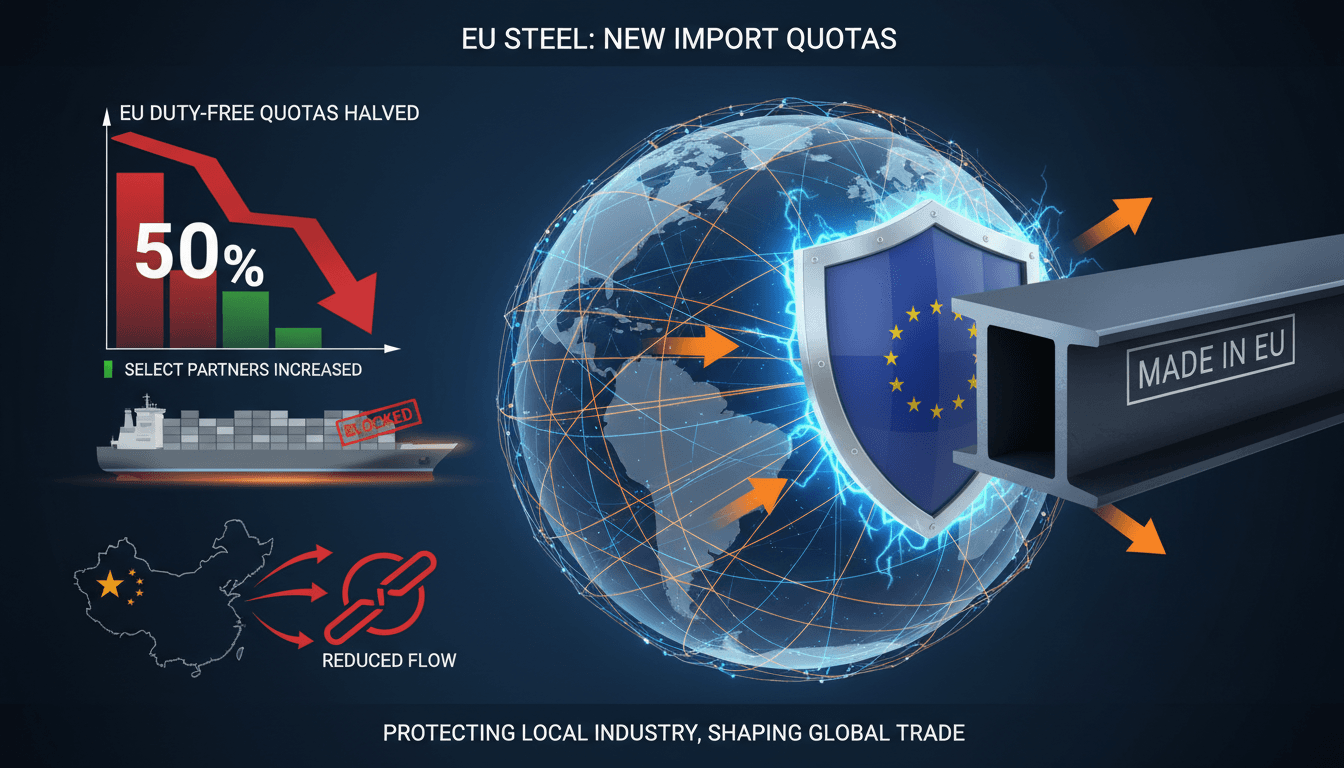
Here's what it means for you.
The European Union's decision to halve its duty-free steel import quotas signals a significant shift in trade policy aimed at protecting local industries. This move is particularly relevant for stakeholders in the steel sector, as it may reshape market dynamics and competitive landscapes. Companies reliant on steel exports to the EU should prepare for potential challenges as trade tensions escalate.
What happened
The European Union has enacted a substantial reduction in its duty-free steel import quotas, cutting the overall amount by 50%. This decision also includes increased allowances for select trading partners, such as the UK, which will benefit from more favorable import rates. The new regulations are set to take effect on June 30, 2026, marking a pivotal change in the EU's approach to steel imports.
This reduction is primarily aimed at safeguarding the EU's domestic steel industry from overcapacity, particularly due to imports from countries like China. Tata Steel UK, a major player in the sector, has reported a staggering 60% reduction in its duty-free export capacity as a direct consequence of these new quotas.
The Context
The EU's latest measures are designed to protect local steel industries from the adverse effects of global competition and overcapacity. With the steel market facing pressures from imports, particularly from China, the EU's decision reflects a growing concern among member states about the sustainability of their domestic industries. Thirteen countries with free trade agreements with the EU will experience a smaller quota reduction of one-third, indicating a nuanced approach to international trade relations.
The timing of this decision is critical, as it comes amid rising tensions in global trade. Stakeholders in the steel industry, including producers and policymakers, will need to navigate the implications of these changes carefully. The reduction in quotas could lead to increased trade disputes, particularly with countries that rely heavily on steel exports to the EU.
Takeaway
As the EU implements these new quotas, the landscape of the steel industry may undergo significant changes. Stakeholders should closely monitor reactions from affected steel producers and trading partners, as well as any potential retaliatory measures from countries impacted by the quota changes. The situation may lead to heightened trade tensions, necessitating strategic adjustments from companies involved in steel production and export.
Looking ahead, the EU's decision could prompt a reevaluation of trade agreements and relationships within the steel sector. Industry players must remain vigilant and adaptable to the evolving trade environment as the new regulations come into effect.
UK and international business news, economics, and corporate coverage.
"The Guardian’s business section covers finance and markets with a progressive editorial tone."
— A47 Editor
EU halves duty-free steel quota but UK and other partners given better rate
The European Union has announced a significant reduction in its duty-free steel import quota, cutting it by half, while offering higher import volumes to thirteen trading partners, including the UK. This decision reflects ongoing adjustments in trade...
International coverage from The Guardian's global desks.
"The Guardian is known for its progressive editorial stance and in-depth analysis."
— A47 Editor
EU halves duty-free steel quota but UK and other partners given better rate
The European Union has announced a significant reduction in its duty-free steel import quota, cutting it by half, while offering higher import volumes to thirteen trading partners, including the UK. This decision reflects ongoing adjustments in trade...
Global political, business, and cultural coverage from WSJ international desks.
"The Wall Street Journal offers extensive international reporting with a reputation for financial insight and a center-right editorial stance."
— A47 Editor
EU to Limit Tariff-Free Steel Imports, Hike Duties When They Apply
The European Union has announced a limit on tariff-free steel imports starting Wednesday, aiming to safeguard its steel industry from overcapacity issues. This decision reflects ongoing concerns about the impact of global steel production on local ma...
Global markets, investing, and macroeconomics from a premier financial newsroom.
"Bloomberg is respected for in-depth financial reporting and data-driven analysis."
— A47 Editor
EU Cuts Tariff-Free Steel Quota 33% For Close Trade Partners
The European Union has announced a 33% reduction in its tariff-free steel import quota, reserving half of the quotas for countries with existing free-trade agreements. This measure aims to protect local industries from the influx of cheap steel impor...