
Saudi Arabia's inflation rate rises to 1.8% in May 2026
Here's what it means for you.
The rise in Saudi Arabia's inflation rate to 1.8% signals potential shifts in consumer behavior and economic stability. As essential service costs increase, particularly in housing and utilities, consumers may adjust their spending patterns, impacting various sectors. Policymakers may need to consider interventions to stabilize prices and support economic growth.
What happened
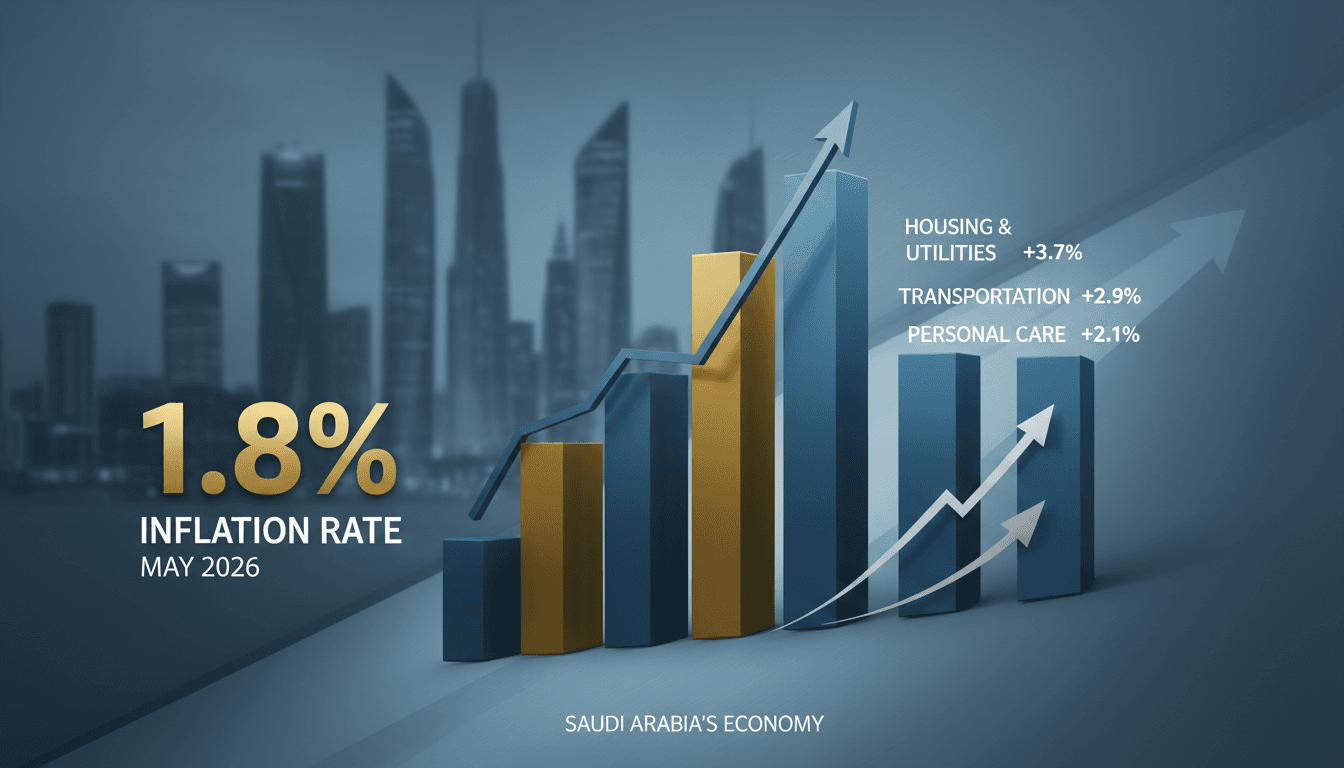
In May 2026, Saudi Arabia's annual inflation rate reached 1.8%, marking a significant increase from previous months. This rise is primarily attributed to a 3.7% increase in housing and utility costs, which are critical components of the Consumer Price Index. Additionally, transportation prices rose by 1.5%, while personal care services experienced a notable 5.6% increase.
The Wholesale Price Index (WPI) also reflected these trends, increasing by 4.6% year-on-year. This upward movement in wholesale prices indicates broader inflationary pressures affecting the economy. As a result, consumers may face ongoing challenges with rising costs across essential services.
The Context
The inflationary pressures in Saudi Arabia are closely tied to the dynamics of the housing market and essential services. With housing, water, and electricity prices rising significantly, stakeholders must monitor how these changes affect consumer purchasing power. The increase in transportation and personal care costs further complicates the economic landscape, potentially leading to shifts in consumer spending.
As inflation impacts various sectors, it raises questions about the government's role in stabilizing prices. The timing of these changes is critical, as they coincide with broader economic trends and consumer sentiment. Understanding these factors will be essential for businesses and policymakers alike.
Takeaway
Looking ahead, continued monitoring of inflation trends will be crucial for assessing their impact on consumer behavior and economic growth in Saudi Arabia. Potential government interventions may be necessary to stabilize housing and utility prices, which could influence overall economic health. Stakeholders should remain vigilant as these developments unfold, particularly regarding consumer spending patterns in response to rising costs.
As inflationary pressures persist, the implications for the economy will require careful analysis and strategic responses from both the public and private sectors.
Business and economy coverage focused on Dubai, the UAE, Saudi Arabia, and the wider Middle East.
"Arabian Business is a well-known regional business outlet with strong focus on Gulf markets, leadership, and investment stories."
— A47 Editor
Saudi Arabia inflation rises to 1.8 per cent in May as wholesale prices jump 4.6 per cent
Saudi Arabia's annual inflation rate rose to 1.8% in May 2026, with wholesale prices increasing by 4.6% year-on-year, according to official data from the General Authority for Statistics (GASTAT). This uptick in inflation is primarily attributed to a...
English-language reporting on Saudi politics, policy, and society.
"Saudi Gazette reflects mainstream Saudi institutional perspectives."
— A47 Editor
Saudi inflation rises by 1.8% in May, driven by hike in housing, water, and electricity prices
Saudi Arabia's annual inflation rate rose by 1.8% in May 2026 compared to May 2025, driven primarily by a 3.7% increase in housing, water, and electricity prices, as reported by the General Authority for Statistics (GASTAT). Other contributing factor...
English-language reporting focused on Saudi Arabia and regional affairs.
"Saudi Gazette provides English-language coverage that often aligns with mainstream Saudi news priorities."
— A47 Editor
Saudi inflation rises by 1.8% in May, driven by hike in housing, water, and electricity prices
Saudi Arabia's annual inflation rate rose by 1.8% in May 2026 compared to May 2025, driven primarily by a 3.7% increase in housing, water, and electricity prices, as reported by the General Authority for Statistics (GASTAT). Other contributing factor...
Pan-Arab news coverage spanning politics, business, sports, and regional affairs.
"Asharq Al-Awsat reflects a broad Arab editorial perspective with strong attention to regional geopolitics."
— A47 Editor
التضخم السعودي يواصل استقراره... والإيجارات ترفع ضغط الأسعار
The inflation rate in Saudi Arabia remained stable at 1.8% year-on-year in May, indicating a balanced economic environment despite ongoing pressures from rising rental prices.
Regional and international reporting focused on Middle Eastern politics, diplomacy, and economics.
"Asharq Al-Awsat is a Saudi-owned international newspaper reflecting mainstream Gulf political perspectives."
— A47 Editor
Saudi Arabia's Inflation Edges Up to 1.8% in May
Saudi Arabia's annual inflation rate increased to 1.8% in May 2026, primarily driven by a 3.7% rise in housing, water, and electricity prices, as reported by the General Authority for Statistics (GASTAT). This marks a notable shift in the economic la...
Pan-Arab news coverage spanning politics, business, sports, and regional affairs.
"Asharq Al-Awsat reflects a broad Arab editorial perspective with strong attention to regional geopolitics."
— A47 Editor
التضخم في السعودية يرتفع بشكل طفيف إلى 1.8 % خلال مايو
The consumer price index in Saudi Arabia recorded a slight increase of 1.8% in May 2026 compared to the same month in the previous year. This rise in the inflation rate reflects ongoing economic trends and consumer price movements within the country.