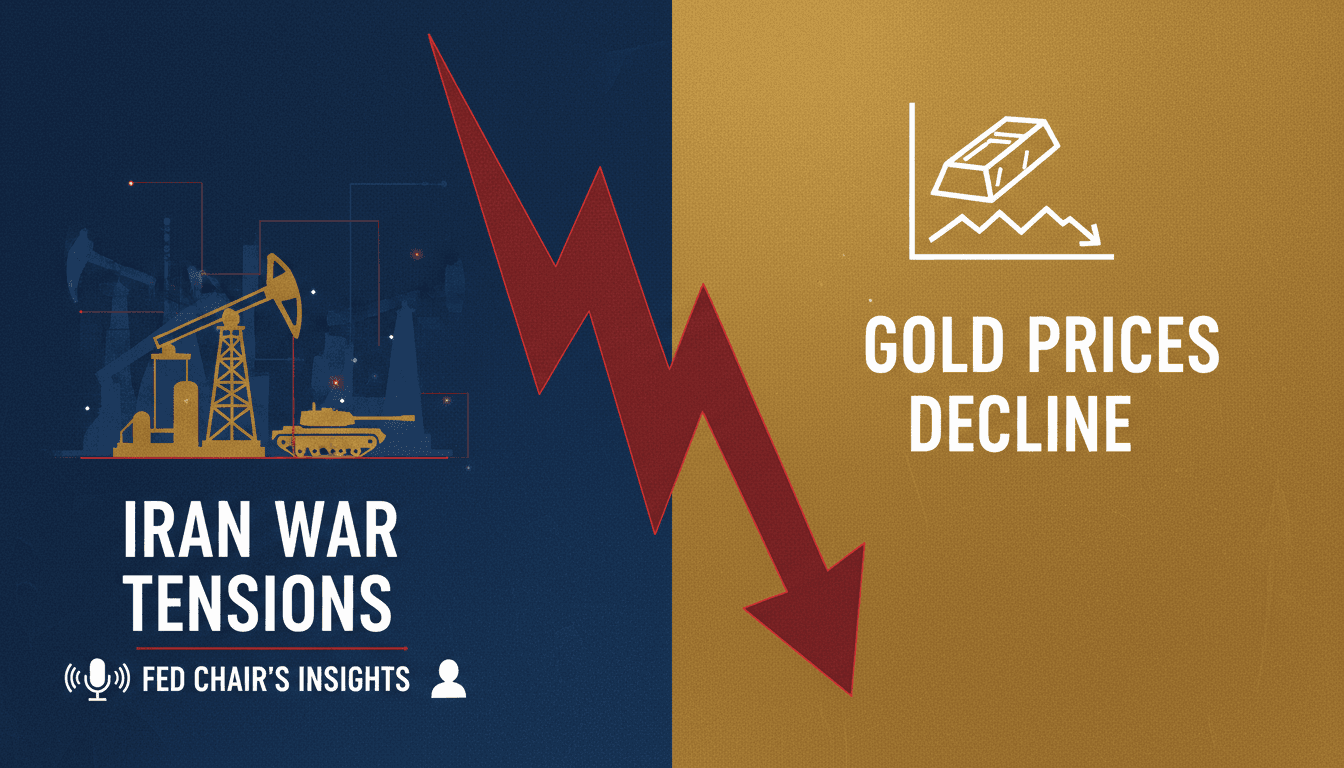
Federal Reserve Holds Interest Rates Steady Amid Highest Dissent Since 1992

Here's what it means for you.
If you’re borrowing money or investing, the Federal Reserve's decision impacts your costs and potential returns.
Why it matters
The Federal Reserve's interest rate decisions directly influence borrowing costs, consumer spending, and overall economic growth.
What happened (in 30 seconds)
- The Federal Open Market Committee (FOMC) voted 8–4 to maintain the federal funds rate target at 3.5–3.75 percent.
- This dissent marks the highest number of opposing votes since 1992, indicating internal divisions over monetary policy.
- Inflation remains elevated, driven by global energy price increases, complicating the Fed's dual mandate of price stability and maximum employment.
The context you actually need
- Persistent inflation has been above the Fed's 2 percent target, largely due to geopolitical tensions affecting energy prices.
- Economic indicators show solid GDP growth but low job gains, creating a challenging environment for policymakers.
- Previous meetings have maintained rates amid similar uncertainties, leading to increasing debates within the committee about the appropriate policy stance.
What's really happening
The FOMC's decision to hold the federal funds rate steady at 3.5–3.75 percent reflects a careful balancing act amid conflicting economic signals. On one hand, the U.S. economy is experiencing solid growth, with GDP expansion indicating resilience. On the other hand, job gains have been sluggish, and unemployment remains stable, creating a dual-mandate tension for the Fed. The committee's focus on price stability is underscored by persistent inflation, which has been exacerbated by rising global energy prices linked to geopolitical uncertainties in the Middle East.
The dissenting votes—four in total—highlight a significant division among committee members. Three officials opposed the easing bias in the statement, while one advocated for an immediate rate reduction. This level of dissent is notable, as it is the highest since October 1992, suggesting that there are differing views on how to navigate the current economic landscape. Chair Jerome H. Powell emphasized a data-dependent approach, indicating that future decisions will be guided by incoming economic data rather than a predetermined path.
The elevated inflation, driven by energy costs, poses a challenge for the Fed. As energy prices rise, consumer spending power may be eroded, leading to potential slowdowns in economic activity. This situation creates a complex environment for the Fed, as it must weigh the risks of further tightening against the need to support economic growth. The committee's decision to maintain rates reflects a cautious approach, aiming to avoid exacerbating inflation while also not stifling growth.
In the broader context, the Fed's decision has implications for global markets. For instance, Dubai residents may benefit from elevated oil prices, which boost UAE hydrocarbon revenues. However, the UAE dirham's peg to the U.S. dollar means that high U.S. interest rates will continue to affect borrowing costs in the region, potentially cooling real estate and consumer spending.
Who feels it first (and how)
- Homebuyers: Higher borrowing costs may lead to increased mortgage rates, affecting affordability.
- Investors: Stock and bond markets may react to the Fed's signals, influencing investment strategies.
- Businesses: Companies relying on loans for expansion may face higher costs, impacting growth plans.
- Consumers: Elevated rates can lead to reduced consumer spending, affecting retail and service sectors.
What to watch next
- Inflation trends: Continued monitoring of inflation data will be crucial to gauge the Fed's next moves.
- Job market performance: Changes in job gains and unemployment rates will influence the Fed's policy decisions.
- Global energy prices: Fluctuations in energy costs could impact inflation and economic stability, prompting potential Fed responses.
The federal funds rate remains unchanged at 3.5–3.75 percent.
Future Fed decisions will be data-dependent, focusing on inflation and employment metrics.
The long-term impact of geopolitical tensions on energy prices and inflation remains uncertain.
Frequently Asked Questions
- Why it matters?
- The Federal Reserve's interest rate decisions directly influence borrowing costs, consumer spending, and overall economic growth.
- What happened (in 30 seconds)?
- The Federal Open Market Committee (FOMC) voted 8–4 to maintain the federal funds rate target at 3.5–3.75 percent. This dissent marks the highest number of opposing votes since 1992, indicating internal divisions over monetary policy. Inflation remains elevated, driven by global energy price increases, complicating the Fed's dual mandate of price stability and maximum employment.
- What's really happening?
- The FOMC's decision to hold the federal funds rate steady at 3.5–3.75 percent reflects a careful balancing act amid conflicting economic signals. On one hand, the U.S. economy is experiencing solid growth, with GDP expansion indicating resilience. On the other hand, job gains have been sluggish, and unemployment remains stable, creating a dual-mandate tension for the Fed. The committee's focus on price stability is underscored by persistent inflation, which has been exacerbated by rising global
- Who feels it first (and how)?
- Homebuyers: Higher borrowing costs may lead to increased mortgage rates, affecting affordability. Investors: Stock and bond markets may react to the Fed's signals, influencing investment strategies. Businesses: Companies relying on loans for expansion may face higher costs, impacting growth plans. Consumers: Elevated rates can lead to reduced consumer spending, affecting retail and service sectors.
- What to watch next?
- Inflation trends: Continued monitoring of inflation data will be crucial to gauge the Fed's next moves. Job market performance: Changes in job gains and unemployment rates will influence the Fed's policy decisions. Global energy prices: Fluctuations in energy costs could impact inflation and economic stability, prompting potential Fed responses.
Currency market headlines, FX rates, central-bank chatter, and macro drivers moving major pairs.
"Investing.com’s forex stream is useful for fast updates across USD, EUR, JPY, GBP and emerging-market FX."
— A47 Editor
Dollar marginally extends gains after Fed holds rates steady, but sees dissents
The U.S. dollar has marginally extended its gains following the Federal Reserve's decision to hold interest rates steady, a move that was widely anticipated by market analysts. This decision reflects the Fed's cautious approach amid ongoing economic ...
National headlines across the United States including breaking stories and societal issues.
"NBC News is a mainstream media outlet known for comprehensive national and international news coverage with a centrist to slightly left-leaning editorial tone."
— A47 Editor
Fed keeps interest rates steady
The Federal Reserve has decided to keep interest rates steady, maintaining its current monetary policy amid ongoing economic assessments. This decision reflects the Fed's cautious approach as it navigates complex economic indicators and inflationary ...
Markets, economy, and company analysis from NYT’s business desk.
"The New York Times is a globally recognized newspaper offering authoritative reporting with a center-left editorial stance."
— A47 Editor
What to know about the Fed’s rate decision.
The Federal Reserve has decided to hold interest rates steady, marking a significant moment as it reflects the most divided board vote since 1992 amidst ongoing economic uncertainties and elevated inflation levels. This cautious approach indicates th...
Oil, metals, and agriculture: supply/demand headlines, OPEC chatter, inventories, and price action.
"Solid tape for energy and metals traders tracking macro and micro catalysts."
— A47 Editor
Gold adds slightly to losses after Fed holds rates steady, but sees four dissents
Gold prices have slightly increased losses following the Federal Reserve's decision to hold interest rates steady, with four dissenting votes among policymakers. This decision reflects ongoing economic uncertainty and influences market dynamics, part...
Major U.S. developments and regional news.
"ABC News delivers broad national coverage with a mainstream editorial stance, focusing on accessibility and balanced reporting."
— A47 Editor
Federal Reserve keeps key rate unchanged even as four officials dissent, most in almost 34 years
The Federal Reserve has decided to keep its key interest rate unchanged, despite dissent from four officials, marking the highest level of dissent in nearly 34 years. This decision reflects ongoing concerns about inflation and economic stability.
Key macro releases (CPI, jobs, PMIs), surprise indexes, and market implications.
"Great for data-print awareness and instant read-through to rates and risk assets."
— A47 Editor
Instant view: Fed holds rates steady, but board vote is most divided since 1992
The Federal Reserve has decided to hold interest rates steady, reflecting the most divided board vote since 1992, amid ongoing economic uncertainties and elevated inflation levels. This decision was anticipated by market analysts and indicates a caut...
News from the United States including domestic politics, society, and culture.
"Global News is a mainstream Canadian media outlet generally considered to have a centrist editorial stance, covering news with a focus on factual reporting and national interest."
— A47 Editor
Powell says he’ll stay at U.S. Fed after divided board holds interest rate
Jerome Powell announced he will remain on the board of the U.S. Federal Reserve after his term as chair concludes next month, amidst ongoing legal challenges from the Trump administration. This decision follows the Fed's recent choice to maintain int...
Global markets, investing, and macroeconomics from a premier financial newsroom.
"Bloomberg is respected for in-depth financial reporting and data-driven analysis."
— A47 Editor
Fed Leaves Rates Unchanged, Four Officials Dissent
The Federal Reserve has decided to keep interest rates unchanged in a range of 3.5% to 3.75%, marking a significant moment as four officials dissented, the highest number of dissenting votes since 1992. This decision reflects ongoing economic uncerta...
Arabic-language economic and business reporting with strong UAE market relevance.
"Emarat Al Youm business coverage often centers UAE property, banking, consumer issues, and economic policy."
— A47 Editor
الفيدرالي الأميركي يثبت أسعار الفائدة الفيدرالي الأميركي يثبت أسعار الفائدة
The U.S. Federal Reserve has decided to keep interest rates unchanged, aligning with market expectations. This decision comes amid ongoing economic assessments and signals a cautious approach to monetary policy as the economy continues to navigate va...