
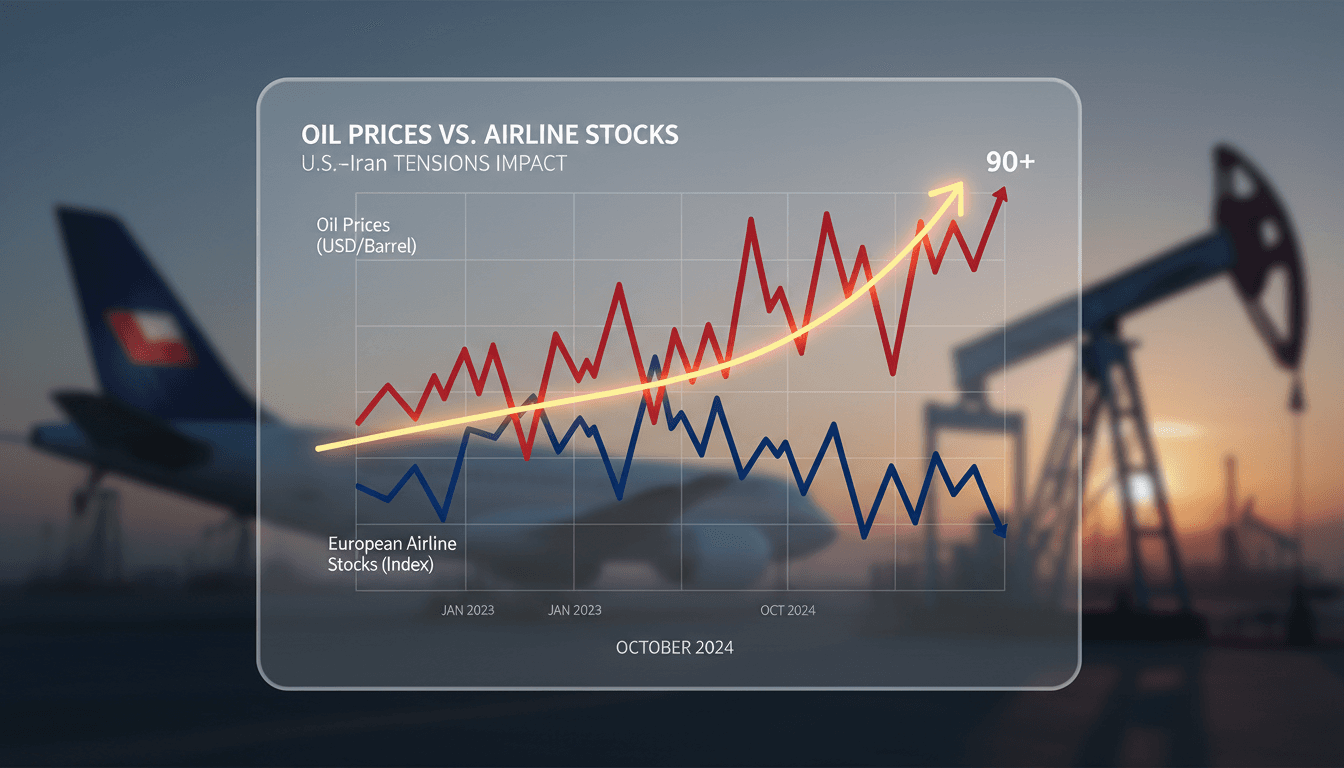
European airline stocks decline as oil prices rise amid U.S.-Iran tensions
Here's what it means for you.
The recent surge in oil prices, driven by escalating tensions between the U.S. and Iran, poses significant challenges for the European airline sector. Investors are likely to reassess their strategies as rising fuel costs threaten profit margins and economic growth. This situation may lead to increased volatility in the market, particularly for companies sensitive to fuel prices. As oil prices exceed $90 a barrel, the implications for inflation and consumer spending become more pronounced. Stakeholders across various sectors will need to navigate these turbulent waters carefully.
What happened
European airline stocks have experienced a notable decline as oil prices surged above $90 a barrel, a significant increase attributed to escalating tensions between the U.S. and Iran. The pan-European STOXX 600 index fell by 0.2% in early trading, reflecting the broader market's reaction to these geopolitical developments. Travel and leisure stocks, particularly Ryanair, were notably impacted, with the airline reporting a 34% decline in first-quarter profit due to higher fuel costs.
This spike in oil prices marks the first time Brent crude has reached this level in a month, raising concerns about inflation and economic growth across Europe. The market is responding to these developments, with investors closely monitoring the situation.
The Context
The backdrop of this decline is rooted in the recent escalation of tensions between the U.S. and Iran, which has heightened geopolitical risks and contributed to the rise in oil prices. As energy stocks gained 1.4% despite the overall market decline, it highlights the complex dynamics at play in the energy sector. The timing of these events is critical, as they coincide with a broader economic landscape that is already sensitive to inflationary pressures.
The European market is particularly vulnerable to fluctuations in fuel costs, making the current situation a focal point for investors and policymakers alike. The upcoming European Central Bank's policy meeting will be crucial in determining how these developments will influence monetary policy and economic outlook.
Takeaway
In the coming weeks, investors will be keenly observing the impact of rising oil prices on economic growth and inflation. The situation is fluid, and the potential for further volatility in the European market remains high, especially in sectors that are heavily reliant on fuel. Earnings reports from major U.S. technology companies may also provide additional context for market movements.
As stakeholders navigate these challenges, the focus will be on how geopolitical tensions continue to shape economic conditions. The interplay between oil prices and market stability will be a key area to watch.
Pan-Arab news coverage spanning politics, business, sports, and regional affairs.
"Asharq Al-Awsat reflects a broad Arab editorial perspective with strong attention to regional geopolitics."
— A47 Editor
مخاوف النفط والتضخم تقود تراجعاً طفيفاً للأسهم الأوروبية
European stocks experienced a slight decline on Monday amid escalating tensions between the United States and Iran, which led to rising oil prices and heightened inflation concerns.
Business, markets, economy, and corporate news with strong UAE and regional relevance.
"Emirates 24|7 business coverage tends to center UAE markets, property, regulation, and regional economic developments."
— A47 Editor
European shares slip as oil rises above US$90 on Middle East concerns
European shares experienced a slight decline as oil prices surged above $90 a barrel, driven by escalating tensions between the United States and Iran, which have raised concerns about inflation and economic growth. The pan-European STOXX 600 index f...
Markets desk coverage, trading insights, and investor updates.
"WSJ’s markets reporting provides in-depth analysis and context for investors."
— A47 Editor
European Airline Stocks Drop After Oil Rises on U.S.-Iran Attacks
European airline stocks experienced a decline as oil prices surged following heightened tensions between the U.S. and Iran over the weekend, reflecting investor concerns about geopolitical instability.