
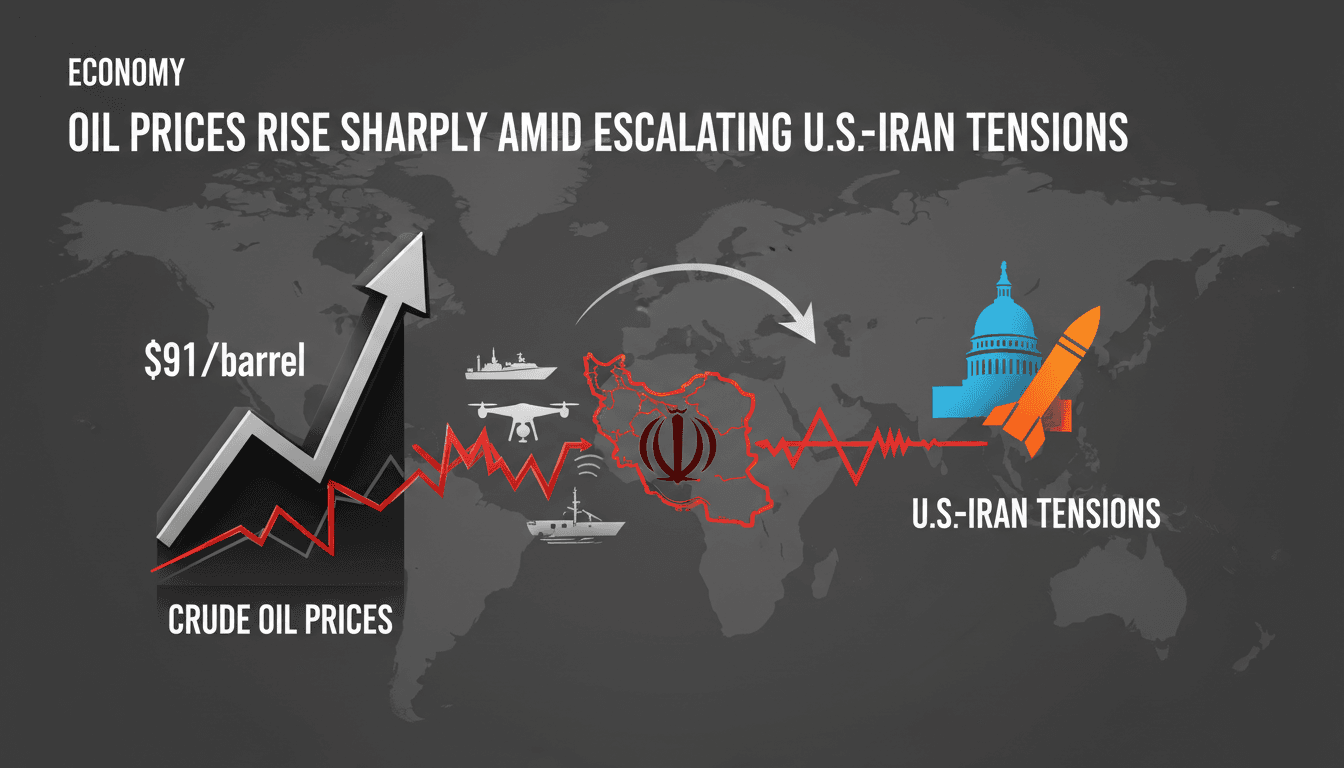
Oil prices rise sharply amid escalating U.S.-Iran tensions
Here's what it means for you.
The recent surge in crude oil prices signals heightened market volatility, which could impact both consumers and businesses. As Brent crude exceeds $91 a barrel, stakeholders in various sectors should prepare for potential fluctuations in energy costs. This situation underscores the interconnectedness of geopolitical events and economic stability, particularly in energy-dependent markets. Investors and policymakers alike must remain vigilant as the U.S.-Iran conflict evolves, as it may lead to further instability in oil prices and broader economic implications.
What happened
Crude oil prices have surged significantly due to escalating hostilities between the U.S. and Iran. Brent crude has now surpassed $91 a barrel, marking its highest level since June. This increase reflects the market's reaction to the ongoing conflict, which has intensified in recent weeks.
Despite efforts for a ceasefire and indications from Iran about a willingness to resume negotiations with the U.S., market volatility remains high. Investors are reacting cautiously to the developments, leading to fluctuations in oil futures and broader financial markets.
The Context
The rise in oil prices is closely tied to the ongoing tensions between the U.S. and Iran, which have been a significant factor in global oil markets. The recent fighting has created uncertainty, prompting investors to reassess their positions. As Brent crude reaches a one-month high, the implications for global economic stability become increasingly pronounced.
The situation is further complicated by the potential for renewed negotiations, which could either stabilize or further disrupt the market. Stakeholders must consider the broader geopolitical landscape as they navigate these developments, particularly in energy-dependent sectors.
Takeaway
Looking ahead, the ongoing conflict in the Middle East is likely to continue influencing oil prices and market stability. Investors should monitor potential developments in U.S.-Iran negotiations, as these could have significant ramifications for oil futures. Additionally, fluctuations in oil prices may affect stock and bond markets, as seen in recent trading sessions.
As the geopolitical landscape shifts, stakeholders must remain prepared for continued volatility in oil prices, which could impact global markets and economic conditions.
Markets desk coverage, trading insights, and investor updates.
"WSJ’s markets reporting provides in-depth analysis and context for investors."
— A47 Editor
Oil Settles Higher on Middle East Escalation
Crude oil futures settled higher amid escalating military tensions between the U.S. and Iran, as mediators sought a 10-day ceasefire and a return to diplomatic talks. This increase in oil prices reflects market volatility driven by geopolitical uncer...
Global business headlines with AI angles.
"General business outlet that frequently covers AI."
— A47 Editor
Iran Suggested It Could Go Back To Negotiating With The U.S. As Clashes Escalate. Oil Prices Are Pairing Gains
Oil prices are experiencing gains following a statement from an Iranian official indicating a potential return to negotiations with the U.S., contingent on national interests. This development comes amidst escalating clashes between the two nations, ...
Regional coverage and analysis focused on politics, diplomacy, and business across the Middle East.
"Al-Monitor is known for analytical reporting on Middle East politics and policy developments."
— A47 Editor
Oil hits one-month high as Mideast war keeps investors on edge
Brent crude oil prices surged to their highest level since June, exceeding $91 a barrel, amid escalating military tensions between the United States and Iran. Renewed hostilities have raised concerns among investors about the potential for a prolonge...
Global markets, investing, and macroeconomics from a premier financial newsroom.
"Bloomberg is respected for in-depth financial reporting and data-driven analysis."
— A47 Editor
Stocks, Bonds Fall as US-Iran Risks Whipsaw Oil: Markets Wrap
Recent volatility in oil prices has led to declines in stock and bond markets, primarily driven by escalating tensions between the U.S. and Iran, overshadowing efforts to pause military actions in the region.