
Increase in Ship Transits Through Strait of Hormuz Amid US Support and Peace Framework
Here's what it means for you.
The recent increase in ship transits through the Strait of Hormuz signals a potential shift in the dynamics of global shipping and energy markets. With US support for shipowners and a draft peace framework in place, there is cautious optimism among stakeholders. This development could lead to greater stability in the region, impacting energy prices and international trade. As tensions between Iran and the US continue to evolve, the situation remains fluid. Monitoring these changes will be crucial for businesses and policymakers alike.
What happened
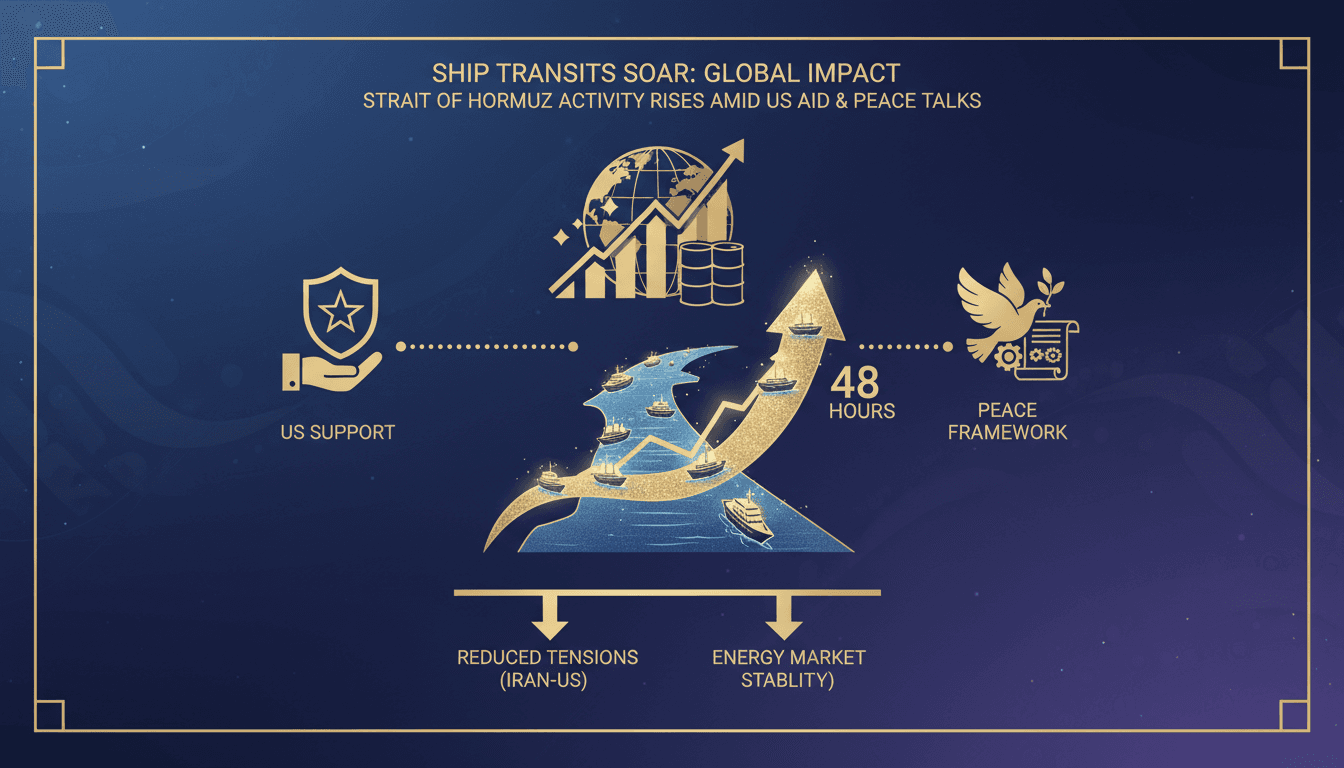
In the last 48 hours, ship transits through the Strait of Hormuz have risen significantly, driven by US assistance to shipowners and the introduction of a draft peace framework. This increase is particularly notable among non-Iranian vessels, which have surged by 30%. The uptick in traffic reflects a shift in shipping dynamics and a potential easing of regional tensions.
The US is actively providing information to support shipowners navigating this critical maritime route. As a result, optimism is growing among shipowners regarding the stability of their operations in the strait.
The Context
The Strait of Hormuz is a vital passage for global oil shipments, making its stability essential for international energy markets. The recent announcement of a draft US-Iran peace framework aims to address ongoing tensions and facilitate smoother navigation through the strait. This initiative comes at a time when disruptions have already begun to affect global markets and consumer prices.
The increase in non-Iranian vessels transiting the strait indicates a significant shift in shipping dynamics. Stakeholders are closely watching these developments, as they could have far-reaching implications for energy supply and pricing.
Takeaway
The situation in the Strait of Hormuz remains dynamic, with the potential for both increased stability and further disruptions. As diplomatic efforts continue, it will be important to monitor developments in US-Iran negotiations regarding the strait. Changes in global energy prices may also arise as shipping routes stabilize.
Stakeholders should remain vigilant, as the outcomes of these negotiations could significantly impact the broader energy market landscape.
Global markets, investing, and macroeconomics from a premier financial newsroom.
"Bloomberg is respected for in-depth financial reporting and data-driven analysis."
— A47 Editor
Strait of Hormuz Ship Transits Are Rising Thanks to US Help
Shipowners are experiencing a rise in optimism regarding traffic through the Strait of Hormuz, with increased vessel transits reported this week, aided by U.S. support providing critical information for safe navigation.
English-language news from Qatar covering domestic and regional affairs.
"Gulf Times reflects Qatari perspectives on regional developments."
— A47 Editor
Bigger proportion of non-Iran ships crossing Hormuz strait: data
Recent data from Lloyd's List Intelligence indicates that the proportion of non-Iranian ships transiting the Strait of Hormuz has increased, highlighting a shift in maritime traffic patterns in this critical waterway.
Corporate finance news, M&A, deals, and executive interviews.
"Finance Monthly serves a professional readership with corporate finance coverage."
— A47 Editor
Hormuz Crisis Sends New Shockwaves Through Energy and Consumer Markets
The ongoing crisis in the Strait of Hormuz has intensified, causing significant disruptions in energy and consumer markets as tensions between the US and Iran escalate. Recent reports indicate a drastic reduction in commercial shipping traffic throug...